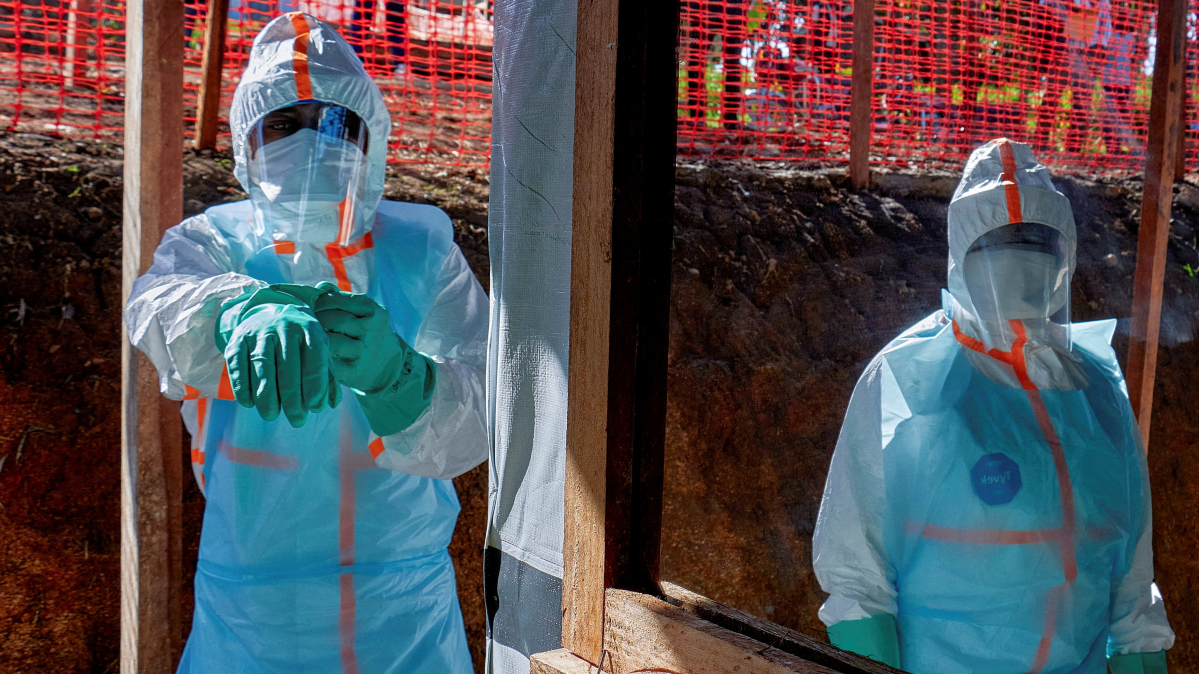
China is sending doctors, medical teams and emergency supplies to help combat a growing Ebola outbreak in Central Africa, joining an international effort to contain the disease before it spreads further.
China pledges support
China's Foreign Ministry spokesperson, Lin Jian, said at a press briefing that Beijing sympathises deeply with those affected and is ready to stand by Africa in its time of need.
He announced that China will send medical expert teams to the Democratic Republic of Congo (DRC), which is at the centre of the outbreak, and provide emergency humanitarian assistance. Chinese medical workers, he added, are already on the ground working alongside local health teams. China is also supporting the African Union's health body and the Africa Centres for Disease Control and Prevention.
This is not the first time China has stepped in during an Ebola crisis. In 2015, when Ebola tore through West Africa and killed more than 11,000 people in one of the deadliest outbreaks in history, China provided significant financial aid, medical supplies and personnel to Guinea, Sierra Leone and Liberia - the three countries hardest hit at the time.
Beijing has also deployed medical teams to Africa during other health emergencies and maintains a network of health cooperation agreements across the continent. That history lends weight to its latest pledge.
Outbreak spreads across borders
The current outbreak began on 15 May, when health authorities in the DRC confirmed cases in Ituri Province in the country's north-east.
It is the DRC's 17th Ebola outbreak since the virus was first identified there in 1976 - a sobering reminder of how frequently the region has had to battle the disease.
What makes this outbreak particularly challenging is the strain involved. Unlike some previous Ebola outbreaks, this one is caused by the Bundibugyo strain, for which there is currently no approved vaccine and no specific treatment. Doctors can manage symptoms and provide supportive care, but there is no medicine that directly targets this version of the virus.
As of 2 June, the DRC had confirmed 282 cases, with Ituri Province the worst affected. Uganda has reported nine confirmed cases, at least three of them in people who had recently travelled from the DRC - a sign that the virus is already crossing borders.
More than 200 people have died and nearly 1,000 cases are suspected across both countries.
Conflict complicates containment efforts
Containing the outbreak is proving difficult. Ituri Province is one of the most unstable parts of the DRC, with nearly 1.9 million people in need of humanitarian assistance and hundreds of thousands displaced by ongoing conflict.
Health workers have faced security threats, while the province's medical infrastructure is being stretched to its limits. Severe cuts to global aid funding in recent years have further weakened frontline health systems, leaving fewer resources available when they are needed most.
International response intensifies
The World Health Organization (WHO) declared the outbreak a global health emergency on 17 May - its highest level of alert, reserved for situations where a disease poses a serious international threat and requires an urgent, coordinated response.
WHO's Director-General personally visited the affected area in Ituri Province at the end of May to assess the situation.
Other countries are also responding. The U.S. has committed significant funding - more than $460 million in total - and has already shipped tonnes of medical supplies to affected areas, with more on the way. Treatment clinics are being established across the worst-hit provinces.
China has called on the wider international community to do more, saying concrete action is needed now to help the DRC and other affected African countries bring the outbreak under control.
With no vaccine available for this strain of the virus, and with conflict and poverty hampering containment efforts, the speed and scale of the international response in the coming weeks could prove decisive.


















What is your opinion on this topic?
Leave the first comment