Georgia faces rising diplomatic pressure as Western partners urge alignment against Russia. Tensions grew after the UK sanctioned TV channels Imedi and POSTV, prompting Georgia to summon the British Ambassador for clarification.
In recent days, attention has focused on three key issues: calls for Georgia to join sanctions against Russia, a proposed European Union sanctions package that included restrictions on the Kulevi port but was ultimately blocked, and the United Kingdom’s decision to sanction two pro-government television channels over alleged disinformation.
Calls for Georgia to join sanctions on Russia
UK Ambassador to Georgia Gareth Ward said publicly that “no one is asking Georgia to open a second front” against Russia, rejecting claims circulating in Georgian political debate that Western partners expect Tbilisi to enter a direct military confrontation.
Instead, he urged Georgia to align with European sanctions and ensure that Russia does not benefit from oil and gas revenues or gain access to military supplies through Georgian channels.
Ward stressed that Russia’s full-scale invasion of Ukraine is particularly relevant for Georgia, noting that around 20 per cent of Georgian territory remains under Russian military control following the 2008 war.
French Ambassador Olivier Courteau echoed that position, saying Russia must be contained not only in Ukraine but also in countries such as Georgia and Moldova.
However, Parliament Speaker Shalva Papuashvili said that imposing bilateral sanctions on Russia could escalate tensions and potentially lead to war. Prime Minister Irakli Kobakhidze similarly argued that Georgia’s priority is stability and avoiding steps that could trigger military or economic retaliation.
EU Ambassador Pavel Herchinsky recently noted that while the European Union reduced trade ties with Russia at significant economic cost, trade between Georgia and Russia has grown in recent years - a comment that further intensified the political exchange.
Kulevi port and the blocked EU sanctions package
The debate coincides with divisions within the European Union over its proposed 20th sanctions package against Russia.
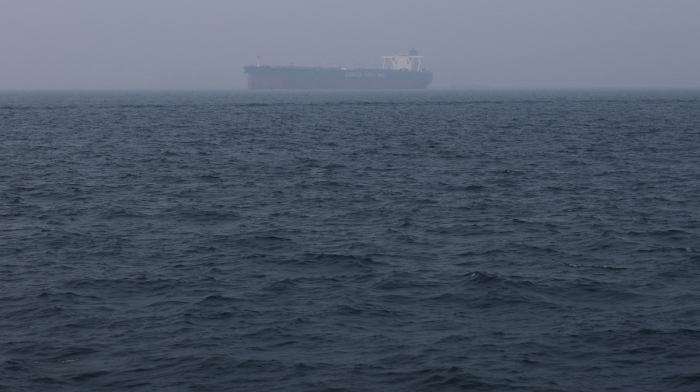
German Ambassador Peter Fischer confirmed that the package included a legislative proposal, supported by evidence, to impose restrictions on Kulevi port - a Black Sea oil terminal forming part of the Middle Corridor trade route between Europe and Asia.
The package was blocked by Hungary and Slovakia. Fischer noted that Hungary is often described by Georgian officials as a political ally within the EU, but cautioned that relying on a single member state would not be sufficient to advance Georgia’s EU accession, which requires unanimity.
EU representatives said discussions on the sanctions package are ongoing. Georgian authorities have provided detailed information about Kulevi’s infrastructure and assurances that it will not be used to circumvent sanctions. For now, the port remains unaffected.
UK sanctions on Imedi and POSTV
Separately, the United Kingdom imposed sanctions on Georgian broadcasters Imedi TV and POSTV, describing them as organisations involved in spreading Russian disinformation about the war in Ukraine.
On 25 February, Georgia’s Foreign Minister Maka Bochorishvili announced that the British Ambassador, Gareth Ward, had been summoned to the Ministry of Foreign Affairs in Tbilisi to explain the decision.
The Minister said Georgia is seeking clarification on the legal and factual basis for the sanctions, especially given concerns related to media freedom and freedom of speech standards.
The announcement was made during an interview on Rustavi 2’s programme 'Night Courier'.
The measures include asset freezes, restrictions on financial services and director disqualifications. The UK government said the channels were “deliberately spreading misleading information” to Georgian audiences.
German Ambassador Peter Fischer said that, in his view, the channels broadcast limited news content and promote narratives closely aligned with Russian positions. He linked disinformation to broader elements of Russia’s war strategy.
Leaders of the ruling Georgian Dream party rejected the sanctions. Prime Minister Irakli Kobakhidze said media freedom would be fully protected in Georgia and that no journalist would face restrictions. He argued that the UK’s decision would have no practical effect within the country and instructed state and private companies to continue co-operating with both broadcasters.
First Vice-Speaker Gia Volski described the UK’s move as politically motivated and said it was intended to influence public opinion in a country that “stands on a national position”. He called the situation within European and British bureaucracies “tragic” and said the sanctions were unfair and shameful.
The developments leave Georgia in a sensitive position, balancing Western expectations, domestic political commitments, economic realities and security concerns. The summoning of the British Ambassador underscores Tbilisi’s insistence on maintaining media freedoms and signals that Georgia may push back diplomatically if sanctions are perceived to infringe on domestic law or sovereignty.










What is your opinion on this topic?
Leave the first comment