When a NATO-led coalition helped to overthrow Muammar Gaddafi’s dictatorship in Libya in 2011, it looked like the sun had risen on a new era. But within years, the nation was gripped by a second civil war, declining living standards and collapsing institutions. Could Iran follow suit?
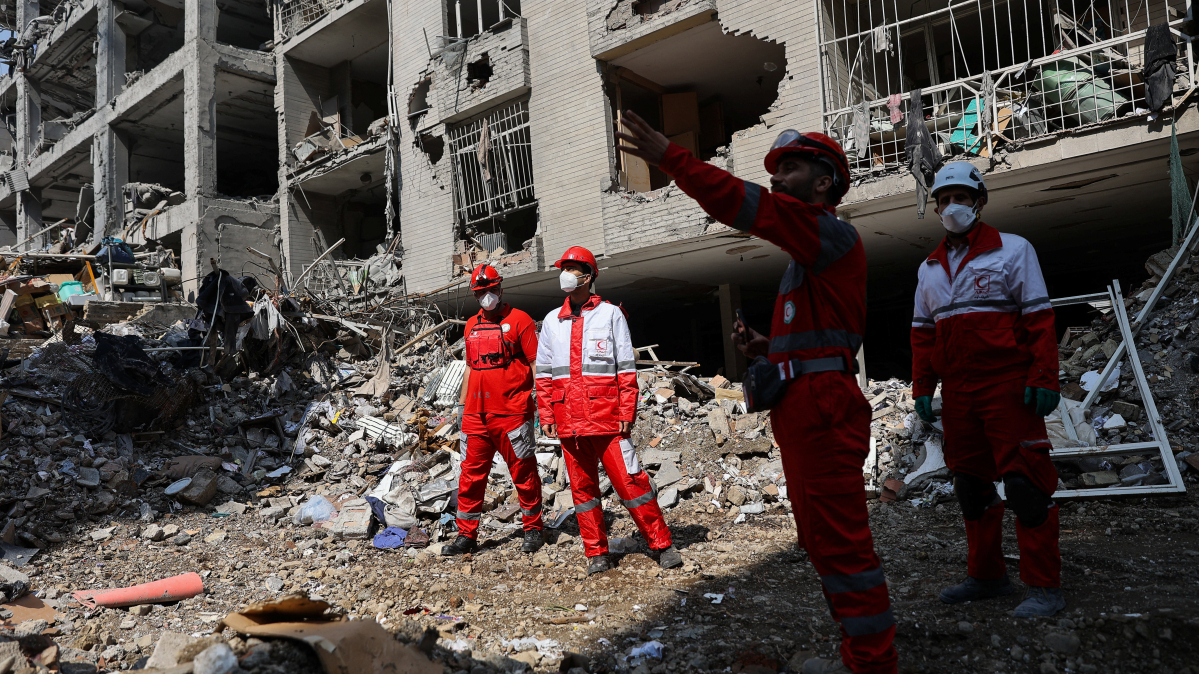
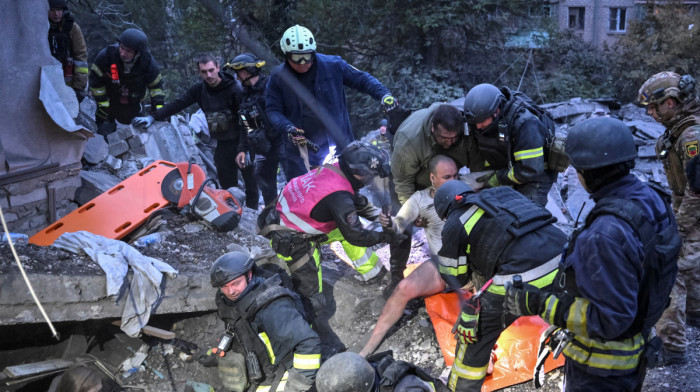
As the U.S. and Israel’s military campaign against Iran intensifies and the number of the Islamic Republic’s top officials killed increases, AnewZ spoke to Mohammad Reza Farzanegan, Professor of Economics of the Middle East at Philipps-Universität Marburg, about what the future holds for the country when the bombing stops.
The risk of civil war in the event of the Islamic Republic’s collapse would be “relatively high,” Farzanegan said, pointing to “ethnic fragmentation” in the country of 93 million, as well as the variety of competing armed groups which could emerge.
“Some of them would support the values of the Islamic Republic and attempt to restore it. Other groups might receive support from external governments and would attempt to gain control of the country in order to transfer power to a Western-supported authority,” Farzanegan said.
While Reza Pahlavi, the U.S.-based son of Iran’s last Shah has positioned himself as a viable figure to lead a transitional government, Farzanegan said that there was “no clear evidence” about the extent of his social support either inside or outside the country.
Farzanegan added that Pahlavi’s association with the U.S. and Israeli governments had created “a paradoxical image of a potential leader who claims strong attachment to Iran while being associated with actors that are bombing the country.”
The People’s Mojahedin Organisation of Iran, a formerly Maxist-Islamist dissident group based in Albania, would also “likely come into conflict with monarchist groups,” Farzanegan said. While Pahlavi does not publicly advocate for the restoration of the monarchy, as son of the last Shah he remains associated with the institution.
Farzanegan added that Russian and Chinese interests should also not be underestimated.
Downward pressure on living standards risks further destabilising the situation, according to him.
“The middle class has been weakened by years of sanctions, economic crisis, and political instability. A stable political order typically relies on a relatively strong and economically secure middle class, he said.
For now though the Islamic Republic is “showing resilience,” Farzanegan said.
The killing of former Supreme Leader Ali Khamenei and large-scale destruction of infrastructure has “strengthened” the hardline Islamic Revolutionary Guard Corps (IRGG), and led to an uptick in nationalistic feeling.
“How long this resistance can be sustained remains an open question. It will largely depend on the economic situation, which was already weak before the war,” Farzanegan added.










What is your opinion on this topic?
Leave the first comment