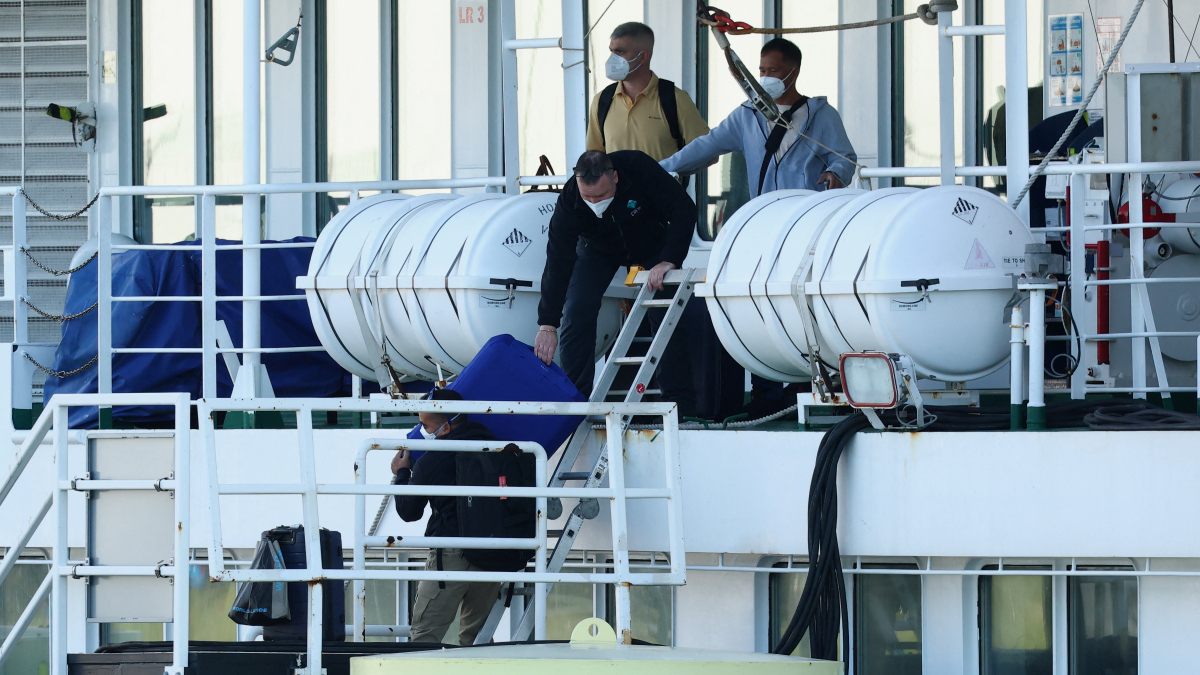
A luxury polar expedition vessel linked to a hantavirus outbreak has arrived in Rotterdam, where health authorities have placed the final 27 people on board into quarantine and have begun containment measures.
The Dutch-flagged MV Hondius is set to undergo full disinfection after docking on Monday, following an incident that has left three people dead and several others infected during the voyage.
Authorities confirmed that the ship was carrying around 150 passengers and crew from 23 countries when severe respiratory illnesses were first reported to the World Health Organisation (WHO) on 2 May.
Three deaths and multiple confirmed cases
Health officials say eight confirmed and two probable cases have been identified on board, according to the WHO.
Three passengers have died. The bodies of a Dutch couple have already been repatriated, while a German passenger is to be cremated in the Netherlands before her ashes are returned home.
Officials said the situation is being closely monitored, but stressed the overall public health risk remains low.
'No risk for Rotterdam,' say authorities
Dutch health authorities moved to reassure the public as the ship arrived in port.
“There is no risk for Rotterdam and no risk in that sense,” said Tjalling Leenstra, Head of the National Coordination Centre for Communicable Disease Control at the RIVM public health institute.
He added that all those who may have been exposed are now under monitoring or quarantine.
Disinfection of vessel underway
The MV Hondius, operated by Oceanwide Expeditions, will undergo a full sanitation process expected to take up to a week.
Officials said specialist teams in protective clothing will clean all surfaces, including ventilation systems, and assess each cabin individually.
“Cabins of people who tested positive would be considered high-risk areas,” said RIVM spokesperson Coen Berends.
Rare virus linked to Andes strain
The outbreak involves the Andes strain of hantavirus, which is primarily found in parts of South America and is typically spread by rodents. Human-to-human transmission is considered rare but possible after close contact.
Health authorities emphasised that incubation can last up to six weeks and that there is no specific treatment for the infection.
The WHO said the situation should not be compared to the COVID-19 pandemic, reiterating that the broader public health threat remains low.
International evacuation operations and ongoing monitoring
The vessel had previously been stranded near Cape Verde after authorities refused permission for passengers to disembark.
Evacuation operations were coordinated with the WHO and European authorities, with Spain involved in managing transfers via the Canary Islands before the ship continued to Rotterdam with a reduced crew and medical staff.
Passengers and crew exposed during the voyage are now being monitored across several countries as tracing efforts continue.


















What is your opinion on this topic?
Leave the first comment