Apple changes fees for alternative app stores in EU
Apple has announced a major overhaul of its business terms for apps distributed in the European Union, introducing a ...
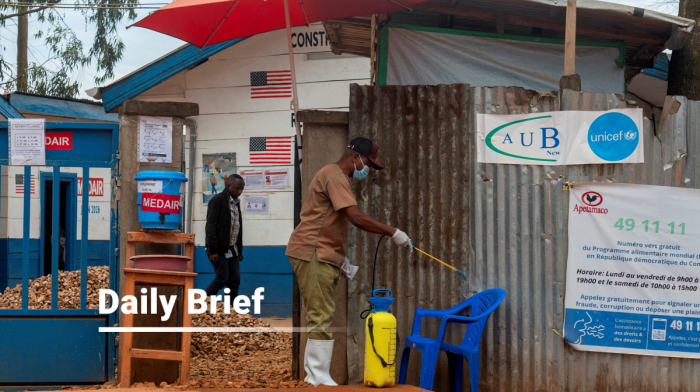
The Democratic Republic of the Congo’s Ebola outbreak has surpassed 5,000 confirmed cases, with the death toll reaching 2,378, according to the latest government data.
The outbreak, which was declared on May 15, has now become the largest Ebola epidemic in the DR Congo’s history by number of cases and deaths, surpassing the country’s previous worst outbreak in 2018-2020.
The latest figures show 5,021 confirmed cases across 55 health zones in six provinces, with a case-fatality rate of nearly half - 47.4 per cent.
The outbreak is concentrated in northeastern DR Congo, with Ituri province serving as its epicentre. It has also spread to Bas-Uélé, Haut-Uélé, North Kivu, South Kivu and Tshopo.
Health officials have warned that efforts to contain the outbreak are struggling to keep pace with the spread of the virus.
Weak health infrastructure, community resistance, instability and protests by health workers have complicated efforts to identify cases, trace contacts and provide treatment. The outbreak is also spreading in remote and conflict-affected areas, making access more difficult.
WHO Director-General Tedros Adhanom Ghebreyesus has warned that the outbreak is “far from being under control”, with the virus gaining ground faster than response efforts.
The outbreak is caused by the Bundibugyo species of Ebola, a relatively rare strain for which there is currently no approved vaccine or treatment. Clinical trials for vaccines and treatments are underway.
The current epidemic is now the second-largest Ebola outbreak recorded globally, behind the 2014-2016 West Africa epidemic, which killed more than 11,000 people. WHO has warned that the Cong's outbreak could eventually surpass that toll if transmission is not brought under control.
U.S. President Donald Trump says Washington is not seeking an extension of its memorandum of understanding with Iran, claiming the U.S. already controls the Strait of Hormuz through its naval blockade.
Iran has said the Strait of Hormuz will remain closed until the U.S. fulfils the terms of an interim deal, including lifting the maritime blockade and sanctions and releasing Iran’s frozen assets.
Ukraine has targeted at least 20 Wildberries warehouses across Russia since 18 July, disrupting a major logistics network. Kyiv says the strikes aim to disrupt alleged military-linked supplies, while the attacks have caused billions of dollars in losses and wider economic pressure.
Russia said its air defences downed 180 drones over the Moscow region overnight, with 620 drones reportedly targeting the area, according to Moscow Mayor Sergei Sobyanin.
German Chancellor Friedrich Merz is facing growing pressure as his approval ratings fall and the far-right Alternative for Germany (AfD) party gains support.
The Democratic Republic of Congo says the number of confirmed Ebola cases has risen to more than 5,000, with more than 2,300 deaths. Delayed detection, weak surveillance, funding shortages and conflict have allowed the virus to spread faster than in any previous epidemic at the same stage.
Australia warned on Monday (3 August) of a wider spread of H5N1 bird flu after its first confirmed mass mortality event among seabirds killed about 50 greater crested terns off the coast of South Australia, south of Adelaide.
Cancer patients in Sudan are struggling to access life-saving treatment as soaring medication costs, power shortages and damaged hospital infrastructure deepen the country's healthcare crisis after more than three years of war.
The world risks a resurgence of the HIV epidemic after international funding fell by nearly a fifth last year, according to a new report from UNAIDS, which warned that decades of progress against the disease could be reversed without renewed global support.
A global shift towards healthier diets, more efficient farming and reduced food waste could cut greenhouse gas emissions from agriculture-related land-use change by 85% by 2050, according to a study published last week in the journal Nature.
You can download the AnewZ application from Play Store and the App Store.
What is your opinion on this topic?
Leave the first comment