U.S. efforts to squeeze Iran’s economy through an oil blockade and sanctions are becoming increasingly difficult for Tehran to withstand, according to three senior Iranian sources. Washington is escalating pressure in hopes of securing concessions in future negotiations.
⦿ 23:29 GMT | UPDATE
Yemen carries out 15 airstrikes on Houthi positions
Anadolu
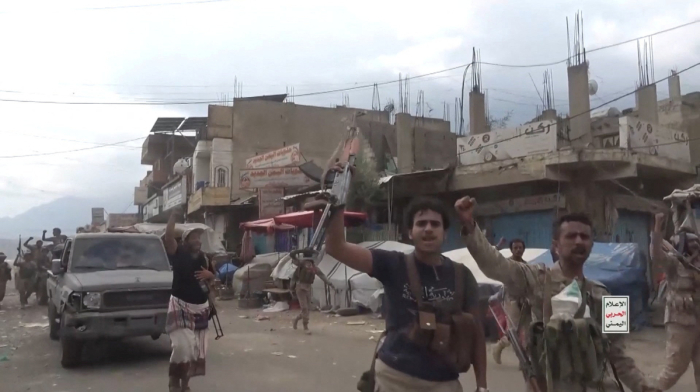
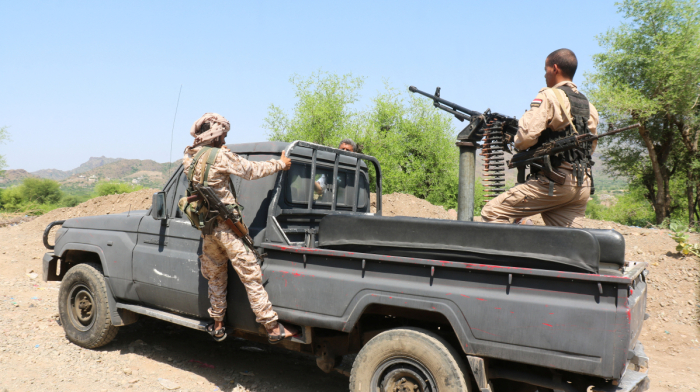
Yemen carried out 15 airstrikes on Houthi positions in Taiz and Al-Hudaydah provinces on Friday, its first reported use of military aircraft since fighting intensified in July.
The strikes targeted Houthi positions, gatherings and vehicles along the western coast, according to the Yemeni Army Media Center.
Fighting has intensified in Taiz and neighbouring Al-Hudaydah, near the strategic Bab al-Mandab Strait, with clashes reported on several fronts since Thursday.
The Houthis have not yet commented.
⦿ 22:45 GMT | UPDATE
Erdoğan, UAE president discuss Iran-U.S. tensions
Turkish Presidency
Turkish President Recep Tayyip Erdoğan and UAE President Sheikh Mohamed bin Zayed Al Nahyan discussed tensions between Iran and the U.S. during a phone call on Friday.
Erdoğan said Ankara would continue diplomatic efforts to de-escalate the conflict and stressed Türkiye’s opposition to attacks on countries in the region.
The two leaders also discussed regional developments and expanding cooperation between Türkiye and the UAE, particularly in defence and the economy.
⦿ 22:37 GMT | UPDATE
Sanders hits back at Vance for saying Iran conflict is not a ‘war’
U.S. Senator Bernie Sanders has criticised Vice President JD Vance for rejecting the term “war” to describe the six-month U.S.-Iran conflict.
“Please explain that to the families of the 19 U.S. service members who lost their lives or the thousands of people who have been killed across the region,” Sanders wrote on X.
Vance said on Thursday he would not describe the fighting as a war, a position President Donald Trump has also backed.
⦿ 22:20 GMT | UPDATE
Qatar rejects Iran’s claim strikes only targeted U.S. military sites
Anadolu
Qatar has rejected Iran’s claim that its strikes on the country were limited to U.S. military facilities, saying official records submitted to the UN document attacks on civilian, commercial and residential areas.
Foreign Ministry spokesman Majed Al-Ansari accused Tehran of selectively quoting a Qatari security assessment, saying Iranian attacks had caused damage and injuries and included strikes on gas facilities at Ras Laffan.
Qatar said it was not a party to the conflict and described attacks on its territory and civilian infrastructure as violations of international law.
⦿ 21:40 GMT | UPDATE
Iran army says it could launch ‘pre-emptive operations’ against perceived threats
IRIB
Iranian army spokesperson Brigadier-General Mohammad Akrami-Nia said Iran could carry out pre-emptive operations wherever it perceives a threat, describing the approach as part of a broader shift in the country’s military doctrine.
Akrami-Nia said Iran was moving from a traditionally defensive posture towards a more offensive doctrine, while arguing that any pre-emptive action would be carried out within the framework of international law and in defence of the country.
⦿ 21:26 GMT | UPDATE
U.S. sanctions further restrict Iranian students’ access to English exams
Iranian students are facing further restrictions on English-language proficiency tests after the U.S. suspended a sanctions exemption that had allowed certain educational services in Iran.
Pearson said that from September 8 it would no longer schedule or deliver exams for candidates who are residents of Iran unless they can prove primary residency outside the country. Existing bookings for affected candidates will be cancelled.
The move follows the suspension of TOEFL and GRE testing inside Iran by ETS. Duolingo has gone further, barring people using Iranian government-issued identification from taking its English test even outside Iran.
The National Iranian American Council has criticised the restrictions and argued that some measures amount to “overcompliance” with U.S. sanctions.
⦿ 20:26 GMT | UPDATE
Yemeni warplanes strike Houthi positions in Taiz
Anadolu
Yemeni warplanes struck Houthi positions in western Taiz on Friday, marking their first involvement in fighting in the province since the conflict escalated in July, according to the army.
The military said the aircraft provided air support to ground forces and targeted Houthi positions on the Hays front.
The Houthis have not immediately commented on the strikes.
⦿ 20:07 GMT | UPDATE
Trump says U.S. may strike Iran’s Pickaxe Mountain ‘very soon’
Reuters
U.S. President Donald Trump said Washington could strike Iran’s heavily fortified Pickaxe Mountain site “very soon,” as he reiterated that Tehran would not be allowed to obtain a nuclear weapon.
“We may hit Pickaxe Mountain very soon,” Trump told reporters, referring to the deeply buried complex near Iran’s Natanz uranium enrichment facility.
Trump has previously threatened to target the site, which has remained a focus of concern over its potential role in Iran’s nuclear programme.
⦿ 18:57 GMT | UPDATE
Iran praises China’s call for new Middle East security
Mohammad Bagher Ghalibaf via X
Iranian parliament speaker Mohammad Bagher Ghalibaf welcomed China’s call for a new security architecture in the Middle East.
Ghalibaf said China’s emphasis on “common security” reflected a principle Iran had long supported, adding that countries in the region should take security matters into their “own hands”.
Chinese President Xi Jinping made the proposal during a state visit to Egypt, saying Beijing was ready to support regional security arrangements based on the UN Charter and international law and free from “external interference”.
⦿ 17:43 GMT | UPDATE
Iran says reconstruction of energy facilities largely complete
Anadolu Agency
Iranian Oil Minister Mohsen Paknejad said much of the country’s oil and gas refining infrastructure damaged in U.S.-Israeli attacks since 28 February had been rebuilt.
Speaking to the Oil Ministry’s Shana news platform, Paknejad said crude oil exports continued throughout the war despite repeated attacks on Kharg Island, Iran’s main oil export terminal. He said the island had been struck more than 550 times, while workers continued loading tankers.
Paknejad said reconstruction of damaged refineries began two to three days after the attacks and that a large portion of the work had since been completed. He added that the results should become visible in the coming months as Iran seeks to increase gas production.
⦿ 15:48 GMT | UPDATE
IAEA board set to consider referring Iran to U.N. Security Council
Reuters
The United States, Britain, France and Germany are seeking an International Atomic Energy Agency board resolution next week to report Iran to the U.N. Security Council, according to diplomats and a draft seen by Reuters.
The move would mark the first such referral in 20 years and comes amid an ongoing standoff over Tehran’s refusal to allow IAEA inspectors access to nuclear sites damaged in Israeli and U.S. strikes. The agency has also been unable to verify the status of Iran’s enriched uranium stockpiles.
The draft calls on Iran to urgently address what it describes as non-compliance with its safeguards obligations and provide the IAEA with assurances over the accuracy and completeness of its nuclear declarations.
Any concrete Security Council action against Iran is unlikely, however, as Russia and China, both permanent council members, could veto measures.
⦿ 14:20 GMT | UPDATE
U.S. imposes fresh Iran-related sanctions
Reuters
The United States imposed fresh Iran-related sanctions and issued a new general licence on Friday (4 September), according to a posting on the U.S. Treasury Department’s website.
⦿ 12:56 GMT | UPDATE
Israel announces killing of Hamas commander in southern Gaza
IDF via X
The Israeli army said its forces killed Muhammad Mahmoud Marshad al-Qadi, a commander in Hamas’s special forces unit, in Khan Younis.
The military said al-Qadi participated in the 7 October attacks and was partly responsible for hostages held by Hamas in Rafah. It also alleged that he had been involved in efforts to rebuild Hamas’s military capabilities.
⦿ 11:58 GMT | UPDATE
Iran FM Araghchi posts sarcastic response to Jordanian counterpart
Iranian Foreign Minister Abbas Araghchi has questioned his Jordanian counterpart, accusing Jordan of not respecting Iranian or Arab sovereignty.
In a post on X, Araghchi sarcastically asked Ayman Safadi how long Tehran should wait before responding to U.S. attacks facilitated by or launched from American bases in the Middle East, including Jordan.
He was responding to comments by Safadi, who said Iran's rapid attacks on Arab countries after the U.S. strikes came too quickly to be classed as retaliatory and were part of a premeditated policy.
⦿ 09:37 GMT | UPDATE
Losses from Iran war estimated at $1.89 billion, Lloyd's says
Insurers could face $1.89 billion (£1.4 billion) in losses from the Iran conflict, Jim Bichard, Chief Financial Officer at Lloyd's, the world's largest insurance marketplace, has said.
Bichard told industry publication Insurance Business that the losses were not entirely related to the Strait of Hormuz in a interview published on Friday.
“It's not all marine business. It's a mix of marine war, and because it's some physical damage on land, that would be more political violence and terrorism losses," he said.
⦿ 09:10 GMT | UPDATE
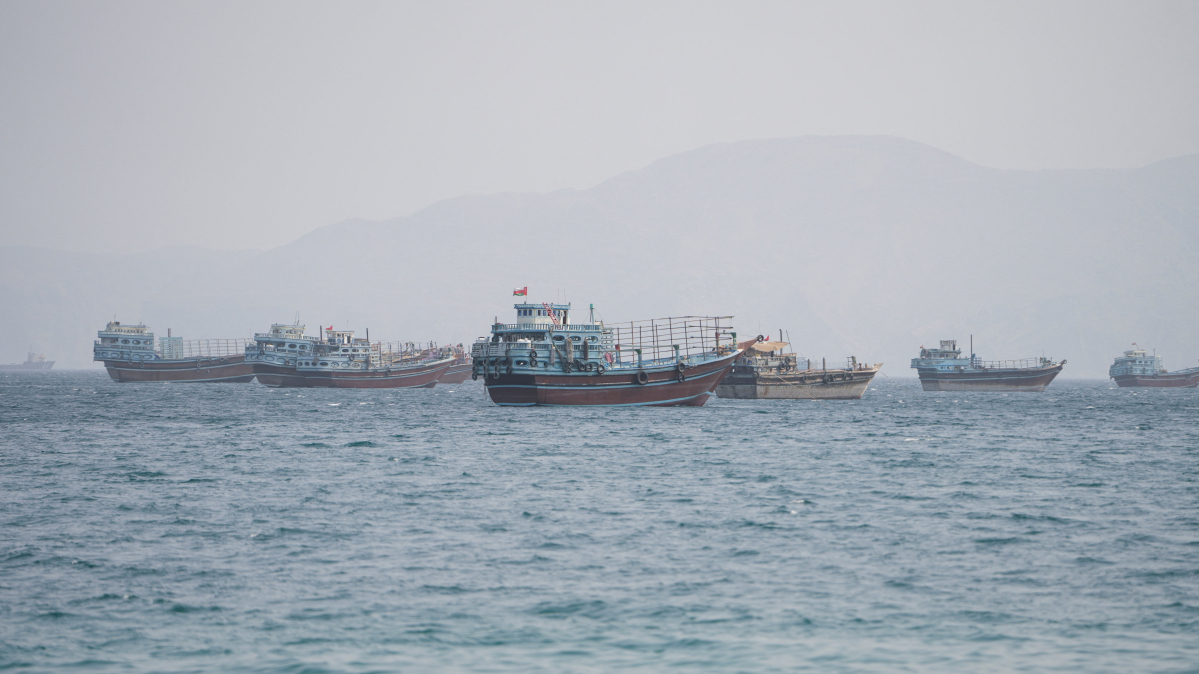
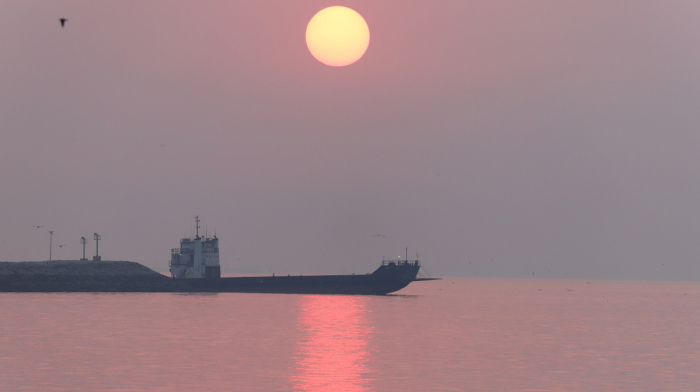
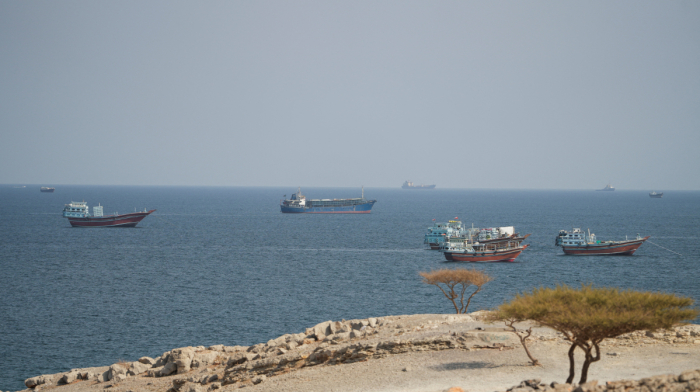
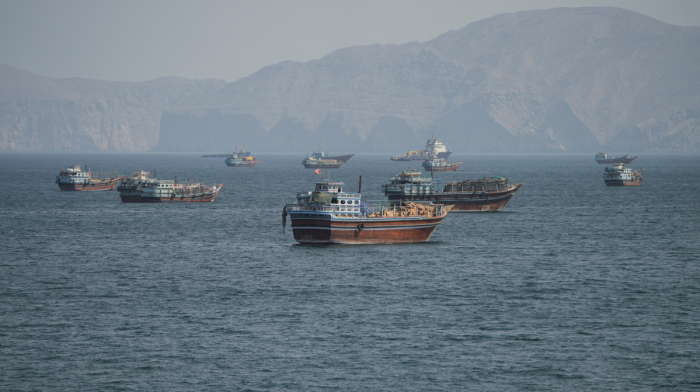
Hormuz Strait shipping traffic remains below normal
Shipping traffic through the Strait of Hormuz has remained below normal levels, according to preliminary tracking data.
Data compiled by Kpler and cited by Reuters showed that four commodity vessels crossed the waterway on Thursday, down from nine the previous day and well below the 10-day average of around 15 vessels.
The total number of crossings could change, as some vessels switch off their transponders while sailing.
⦿ 08:27 GMT | UPDATE
Iran condemns U.S. strikes as 'war crimes'
Gholamhossein Darzi, Iran’s ambassador and Chargé d’Affaires to the United Nations, strongly condemned what he described as U.S. attacks in a letter to the UN chief and the Security Council.
Darzi said the attacks included a strike on a house in Hormuzgan Province during a wedding ceremony, describing the incident as an example of war crimes.
“The Islamic Republic of Iran strongly condemns this heinous and horrific crime,” Darzi said, arguing that targeting civilians, including children, violates international humanitarian law and constitutes a war crime.
He also said Iran had exercised restraint and acted in accordance with international law, but warned that Tehran would take “necessary and proportionate measures” in self-defence to protect its people, sovereignty and territorial integrity.
⦿ 07:10 GMT | UPDATE
Iran embassy criticises U.S. over deadly attacks on weddings
The Iranian Embassy in London accused the U.S. military of a long history of deadly attacks on wedding ceremonies in Afghanistan, Iraq, Yemen and, more recently, Syria.
In a post on X on Thursday, the embassy described the reported U.S. strike on a wedding ceremony in Kohstak Port, Sirik County, as part of a broader pattern of attacks by U.S. forces and its allies in different countries.
The embassy called for those responsible to be held accountable, ending its message with: “Stop war crimes and prosecute war criminals.”
⦿ 05:56 GMT | UPDATE
Iran says attacks on U.S. forces in Qatar targeted only military sites
Iranian Foreign Ministry spokesperson Esmaeil Baghaei said Friday that an official Qatari report submitted to the International Telecommunication Union (ITU) confirms Iran’s attacks on U.S. forces stationed in Qatar were exclusively aimed at American military installations.
Baghaei contrasted Iran’s targeting of military sites with what he called repeated U.S. strikes on civilians and civilian infrastructure.
In a separate post marking the anniversary of the death of Rais Ali Delvari and Iran’s National Day of Resistance Against British Colonialism, Baghaei criticised recent remarks by U.S. Treasury Secretary Scott Bessent.
He said U.S. officials should look beyond childhood memories and accused Washington of waging an unlawful war intended to bring Iran to its knees through what he called “maximum brutality.”
⦿ 04:54 GMT | UPDATE
EU joins 'Operation economic outcast' against Iran
U.S. Treasury Secretary Scott Bessent has announced that the EU has officially joined the economic isolation campaign against Iran.
In a post on X, Bessent said the United States was standing firmly alongside its allies to prevent Iran’s “murderous regime” from exploiting the global financial system to fund its nuclear ambitions, weapons programme and terrorist proxies. He said the campaign would continue until “every remaining economic lifeline” was severed.
⦿ 03:48 GMT | UPDATE
Oil prices climb as tensions raise supply concerns
Oil prices rose on Friday and were on track for their biggest weekly gain since mid-July, as renewed U.S.-Iran hostilities heightened concerns over potential disruptions to Middle East oil supplies.
Brent crude futures gained 15 cents, or 0.2 per cent, to $95.67 a barrel, while U.S. West Texas Intermediate (WTI) crude rose 26 cents, or 0.3 per cent, to $91.56.
Brent was up 7.1 per cent over the past week, while WTI gained 9.8 per cent, putting both benchmarks on track for their strongest weekly increases since the week ending 20 July.
⦿ 03:42 GMT | UPDATE
South Korea prepares for Strait of Hormuz deployment
Anadolu
The South Korean military is making "concrete preparations" to deploy troops to the Strait of Hormuz, according to a report Thursday.
"We are making concrete preparations to dispatch naval forces to the Strait of Hormuz," a National Defence Ministry official told Australia's broadcaster SBS.
The report said the deployment, which is underway, includes P-8 maritime patrol aircraft, an explosive ordnance disposal team and a logistics support ship.
⦿ 02:45 GMT | UPDATE
U.S. investigating reported strike on Iranian wedding, Vance says
Anadolu
U.S. Vice President JD Vance said Washington was investigating reports that an alleged U.S. strike hit a wedding gathering in Iran, reportedly killing and wounding civilians.
Vance said he was “extremely sceptical” of Iranian state media reports and insisted the U.S. does not target civilians, while acknowledging that “sometimes things happen” during military operations.
He also said Washington would not resume negotiations with Tehran unless Iran stops attacking commercial shipping.









What is your opinion on this topic?
Leave the first comment