Iranian President Pezeshkian has confirmed the killing of intelligence minister Esmail Khatib calling it a "cowardly assassination", following reports that Israel carried out an overnight strike.
⦿ 20:00 GMT | UPDATE
That concludes today’s live coverage of the escalating Middle East conflict. We will continue to monitor developments across Iran, Israel, the Gulf, and surrounding regions, with updates on military strikes, diplomatic efforts, and energy impacts as they unfold. Stay tuned for the latest reports.
⦿ 19:59 GMT | UPDATE
Saudi Arabia intercepts four missiles aimed at Riyadh
Saudi Arabia’s Defence Ministry said on Wednesday that its air defences successfully intercepted and destroyed four ballistic missiles launched toward the capital, Riyadh.
Debris from one of the missiles fell near a refinery south of the city, the ministry added.
⦿ 19:46 GMT | UPDATE
Europe extends advisory to avoid Iran, Israel and Gulf airspace
Reuters
Europe’s aviation safety regulator, the European Union Aviation Safety Agency (EASA), has extended its Conflict Zone Information Bulletin covering the Middle East and Persian Gulf airspace, advising airlines to avoid flying over most of the region due to heightened military activity.
The advisory, which identifies high risks to civilian flights over countries including Iran, Israel and several Gulf states, is now valid until 27 March.
Civil operators are warned not to operate in the affected airspace at any flight level and to closely monitor developments as the situation evolves.
⦿ 19:35 GMT | UPDATE
Qatar intercepts Iranian missiles, Ras Laffan industrial city hit
Reuters
Qatar came under an Iranian missile attack on Wednesday evening, the country’s Defence Ministry said.
Five ballistic missiles were launched toward Qatar; armed forces intercepted four, while one fell in Ras Laffan Industrial City, causing a fire. Civil defense teams have since brought the blaze under preliminary control, the Ministry of Interior said.
QatarEnergy described the strike on Ras Laffan as causing “extensive damage.”
Qatar’s Ministry of Foreign Affairs condemned the strikes, calling them a “flagrant violation of the state’s sovereignty” and a direct threat to national security. The ministry said Iran’s continued targeting of civilian and energy infrastructure in Qatar and neighbouring countries is “pushing the region towards the abyss” and undermines regional and international stability.
⦿ 19:19 GMT | UPDATE
EU's Kaja Kallas calls for safe passage through Strait of Hormuz
Reuters
European Union foreign policy chief Kaja Kallas spoke with Iranian Foreign Minister Abbas Araghchi on Wednesday, emphasizing that safe passage through the Strait of Hormuz is a priority for Europe.
An EU official told Reuters that Kallas urged Iran to stop attacks on critical infrastructure in the region and stressed the bloc’s support for de-escalation and a diplomatic resolution to the war.
The call occurred prior to the execution of a European citizen in Iran, which the EU condemned in the strongest terms.
⦿ 19:09 GMT | UPDATE
Iran: Attacks on energy sites could have uncontrollable consequences
Masoud Pezeshkian via X
Iranian President Massoud Pezeshkian condemned strikes on the country’s energy infrastructure, including the South Pars gas field, calling the attacks “aggressive actions” that could lead to “uncontrollable consequences” affecting the entire world.
I strongly condemn attacking Iran’s energy infrastructure. Such aggressive acts will yield nothing for the Zionist–American enemy & their supporters. This will complicate the situation & could have uncontrollable consequences, the scope of which could engulf the entire world. https://t.co/FGtTZZjA6Y
— Masoud Pezeshkian (@drpezeshkian) March 18, 2026
In a post on X, Pezeshkian said the attacks would not benefit the “American Zionist enemy and their supporters” but would instead further complicate the situation.
⦿ 19:04 GMT | UPDATE
Iran’s FM denounces Israel’s assassinations as ‘moral collapse’
Abbas Araghchi via X
Iranian Foreign Minister Abbas Araghchi criticized Israel over the killing of three senior Iranian figures in the past two days, calling the strikes a “calculated moral collapse.”
Israel has no regard for the repercussions of the normalization of its heinous methods of terror. But the international community should not disregard that recklessness; as for every action there will inevitably and always be a reaction. pic.twitter.com/MJaeAA9tYc
— Seyed Abbas Araghchi (@araghchi) March 18, 2026
In a post on X, Araghchi accused Israel of dragging its U.S. partner “into an ever deeper moral and political abyss” and compared the operations to a hypothetical “kill list” targeting top U.S. leaders, describing the actions as “colder than hypocrisy.”
⦿ 18:49 GMT | UPDATE
Iran weakened by war but can still attack U.S. and allies
Reuters
U.S. Director of National Intelligence Tulsi Gabbard told the Senate Intelligence Committee on Wednesday (17 March) that Iran’s government, while degraded by the ongoing Operation Epic Fury, remains intact and capable of striking U.S. and allied interests in the Middle East.
Gabbard warned that if Tehran survives the current campaign, it could spend years rebuilding its missile and drone capabilities.
The hearing, Gabbard’s first major public appearance since the war began on 28 February, also highlighted threats from China, Russia, and North Korea, but lawmakers focused on the Iran conflict.
⦿ 18:46 GMT | UPDATE
Residents told to shelter as Bahrain sirens go off
Ministry of Interior of the Kingdom of Bahrain via X
Sirens were triggered across Bahrain on Wednesday, prompting the Interior Ministry to urge citizens and residents to stay calm and head to the nearest safe location.
The ministry’s advisory was posted on X, but no further details about the cause of the alert were immediately provided.
The siren has been sounded . Citizens and residents are urged to remain calm and head to the nearest safe place.
— Ministry of Interior (@moi_bahrain) March 18, 2026
⦿ 18:39 GMT | UPDATE
Israel claims killing of commander of Iran-linked ‘Imam Hussein Division’
IDF via X
The Israel Defense Forces claims it has killed Hassan Ali Marwan, describing him as the commander of the “Imam Hussein Division,” a force it says is used by Iran’s Quds Force to carry out attacks.
🔴ELIMINATED: Hassan Ali Marwan, the commander of the “Imam Hussein Division” within a week of eliminating his predecessor
The “Imam Hussein Division” is a military force used by the Iranian Quds Force to advance the interests of the Iranian terror regime and to carry out… pic.twitter.com/1iMY4Hsgx8
— Israel Defense Forces (@IDF) March 18, 2026
In a post on X, the military said Marwan was responsible for coordinating with senior figures in Hezbollah and the Quds Force, and oversaw missile, drone and rocket launches toward Israel. The IDF said his killing came within a week of the elimination of his predecessor.
There has been no immediate confirmation of the claim from Iran or Hezbollah.
⦿ 17:39 GMT | UPDATE
VP Vance says Kent resignation ‘good thing’ amid Iran war dispute
Reuters
U.S. Vice President JD Vance said the resignation of former counterterrorism chief Joe Kent was a “good thing,” stressing that officials must support President Donald Trump’s decisions even if they disagree.
Speaking in Michigan, Vance said Trump welcomes differing views internally but expects unity once decisions are made, adding that those unable to implement policy should step aside. Kent resigned citing disagreements over the Iran war.
Saudi air defences intercept ballistic threat over Riyadh
Reuters
Saudi air defences intercepted a “ballistic threat” over Riyadh on Wednesday, state media said, after loud explosions were heard and residents received emergency alerts warning of a hostile aerial threat.
A follow-up message said the danger had passed and urged people to avoid the impact site. Witnesses reported seeing apparent missile interceptions near the Diplomatic Quarter.
The incident comes as Saudi Arabia prepares to host a meeting of Arab and Islamic foreign ministers to discuss regional security amid the ongoing Iran war.
⦿ 17:15 GMT | UPDATE
Bushehr nuclear plant intact after nearby hit, IAEA says
Reuters
The International Atomic Energy Agency (IAEA) said a structure about 350 metres from Iran’s Bushehr nuclear power plant reactor was hit and destroyed, but there was no damage to the reactor itself and no injuries to staff.
Director General Rafael Grossi said the incident caused no radiological impact, however, concerns grow over the risks of strikes near nuclear facilities.
⦿ 17:09 GMT | UPDATE
U.S. military details scale of strikes on Iran
CENTCOM via X
The U.S. Central Command (CENTCOM) said it has struck more than 7,800 targets in Iran and damaged or destroyed over 120 Iranian vessels since the conflict began.
In a statement, the command said its forces are targeting sites linked to Iran’s security infrastructure, prioritising locations deemed to pose an imminent threat.
⦿ 16:50 GMT | UPDATE
Russia warns Middle East conflict fuelling worst energy crisis in 40 years
Reuters
Deputy PM Alexander Novak says the Middle East conflict is causing the worst energy crisis in 40 years, disrupting “at least 20 million barrels per day” through the Strait of Hormuz.
Oil prices have surged above $100/barrel, forcing countries and the IEA to release strategic reserves.
"In the context of the current Middle East conflict, this affects at least 20 million barrels per day. This is the volume of oil and petroleum products that used to pass through the Strait of Hormuz every day, as recently as 19 days ago," he said.
⦿ 16:40 GMT | UPDATE
Riyadh residents receive first-ever alerts over hostile threat
Reuters
Residents of Riyadh reported several loud bangs on Wednesday, as the city’s authorities issued phone alerts for the first time warning of a hostile aerial threat, a Reuters witness said.
The alerts coincide with the Saudi Defence Ministry’s statement that air defences are responding to a “ballistic threat” over the capital.
⦿ 16:38 GMT | UPDATE
Israel strikes two more bridges in Lebanon
Reuters
Israel’s Defence Minister, Israel Katz, said on Wednesday that the military destroyed two bridges over Lebanon’s Litani River, which he claimed were being used by Hezbollah to smuggle weapons south.
He did not give exact locations, but said the strikes sent a “clear message” to the Lebanese government that Israel will not tolerate the use of state infrastructure by Hezbollah.
⦿ 16:35 GMT | UPDATE
Saudi Arabia responding to ‘ballistic threat’ in Riyadh
Reuters
Saudi Arabia’s Defence Ministry has said its air defences are actively dealing with a “ballistic threat” over the capital, according to state television.
⦿ 16:31 GMT | UPDATE
Spain to relocate troops in Iraq amid Iran war risks
Reuters
Spain will evacuate and relocate its troops in Iraq due to the ongoing U.S.-Israeli war on Iran, Defence Minister Margarita Robles said.
Around 300 Spanish personnel serve in Iraq with the anti-IS coalition and NATO advisory missions. A 71-strong special forces unit was already temporarily moved earlier this week. Robles did not reveal new locations.
⦿ 16:23 GMT | UPDATE
Vance: Gas price measures coming soon
Reuters
U.S. Vice President JD Vance said the Trump administration will announce a “couple of things” in the next 24 to 48 hours aimed at addressing rising gas prices.
⦿ 16:17 GMT | UPDATE
Vatican urges Trump to end Iran war 'as soon as possible'
Reuters
The Vatican’s top diplomat, Cardinal Pietro Parolin, has called on President Trump to halt the conflict with Iran "as soon as possible", warning that “preventive wars” risk setting the world ablaze.
Parolin criticised the U.S.‑Israeli military campaign for undermining international law, while Pope Leo XIV called for a ceasefire and urgent dialogue, condemning civilian suffering.
"I would say to finish it as soon as possible ... and to leave alone Lebanon," Italian Cardinal Pietro Parolin, a senior advisor to Pope Leo, said in an unusually direct appeal.
"This message goes also to the Israelis," he added.
⦿ 16:14 GMT | UPDATE
Italy set to unveil fuel price cuts amid energy cost surge
Reuters
Italy is preparing urgent measures to lower fuel prices, Deputy Prime Minister Matteo Salvini said on Wednesday, as families and businesses struggle with rising energy costs linked to the Middle East war.
Salvini, speaking in Milan before meeting petrol station representatives, said a cabinet meeting is set for 7 p.m. (18:00 GMT) to finalise the package. He aims to bring diesel below €1.90 per litre, down from €2.10, though details have not been disclosed.
Italy is considering excise duty cuts funded by higher VAT revenues. Salvini also said companies including Eni ENI.MI had been called to propose solutions. “As a last resort, we could tax companies’ windfall profits, though I hope it doesn’t come to that,” he added.
($1 = 0.8687 euros)
⦿ 15:46 GMT | UPDATE
Iran weakened but still a threat, says U.S. intelligence chief
Reuters
U.S. Director of National Intelligence Tulsi Gabbard told the Senate Intelligence Committee that Iran’s government remains intact despite being “largely degraded” by the ongoing U.S.-Israel military campaign, known as Operation Epic Fury, which began on February 28
⦿ 15:05 GMT | UPDATE
Three private planes damaged by Iranian missile at Ben Gurion Airport
Reuters
Three private aircraft parked at Ben Gurion Airport near Tel Aviv suffered "severe" damage after being struck by an Iranian missile, the Israel Airports Authority said.
⦿ 14:50 GMT | UPDATE
NATO allies discuss ways to reopen Strait of Hormuz, Rutte says
Reuters
NATO allies are working together on plans to reopen the Strait of Hormuz, Secretary General Mark Rutte said on Wednesday.
Speaking to reporters during a visit to Norway, Rutte stressed the importance of restoring trade through the strategically vital waterway.
“We all agree, of course, that trade has to open up again. And what I know is that allies are working together, discussing how to do that. They're working on that collectively, to find a way forward,” he said.
⦿ 14:19 GMT | UPDATE
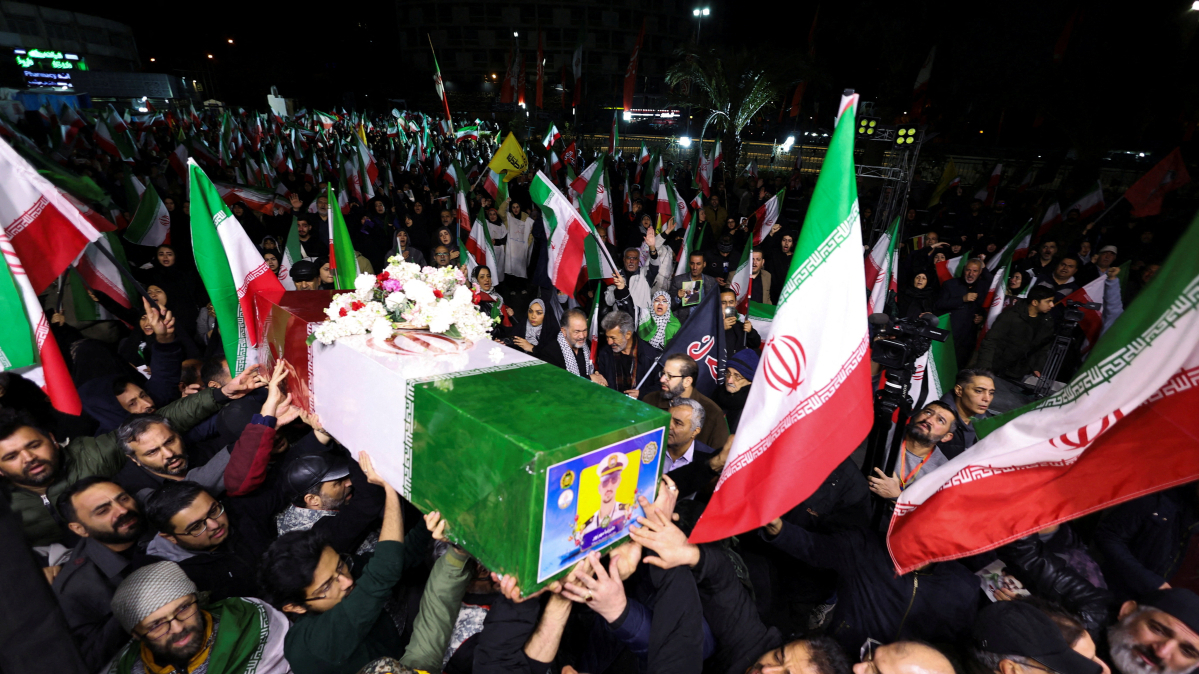
Iranian President confirms 'cowardly assassination' of Iran’s intelligence minister
Reuters
The Iranian President has confirmed that Iran’s intelligence minister, Esmail Khatib, was killed, according to a post on X.
"The cowardly assassination of my dear colleagues Ismail Khatib, Ali Larijani, and Aziz Nasirzadeh, alongside some of their family members and accompanying team, has left us in deep mourning,” said Pezeshkian in a post on X.
The announcement follows reports that Israel carried out an overnight strike targeting Khatib, marking a significant escalation in Middle East tensions.
ترور ناجوانمردانه همکاران عزیزم اسماعیل خطیب، علی لاریجانی و عزیز نصیرزاده در کنار بعضی از اعضای خانواده و تیم همراهشان داغدارمان کرد.
شهادت دو عضو کابینه و دبیر شعام و سرداران نظامی و بسیجی را به مردم بزرگ ایران تسلیت میگویم. مطمئنم راهشان محکمتر از قبل ادامه خواهد داشت.
— Masoud Pezeshkian (@drpezeshkian) March 18, 2026
⦿ 14:12 GMT | UPDATE
Iranian gas flows to Iraq halted after attack on Pars field
Reuters
Iranian gas exports to Iraq were suspended on Wednesday following an attack on Iran’s Pars gas field, a senior Iraqi official told Reuters.
Tehran provides between a third and 40% of Iraq’s gas and power needs. The official said Iran had diverted its gas supplies for domestic use in response to the incident.
Israeli media widely reported that Israel carried out the attack with the consent of the United States, though the Israeli military has not responded to requests for comment.
⦿ 14:05 GMT | UPDATE
Russia says Strait of Hormuz shipping can only be restored through talks
Reuters
Russia emphasised on Wednesday that normal shipping traffic through the Strait of Hormuz can only be restored through negotiations.
Russian Foreign Ministry spokeswoman Maria Zakharova stated that any efforts to reopen the critical waterway, a key route for global energy supplies, must be achieved via diplomatic dialogue rather than unilateral measures.
⦿ 14:03 GMT | UPDATE
Germany’s Merz holds near-daily talks on post-war Iran
Reuters
German Chancellor Friedrich Merz said Wednesday he is in almost daily contact with European leaders to discuss how to secure peace in the Middle East after the war in Iran ends.
Speaking in parliament, Merz said talks with France’s Emmanuel Macron, Britain’s Keir Starmer and Italy’s Giorgia Meloni are focused on shaping a lasting post-conflict order.
He added that Europe may consider measures such as ensuring freedom of navigation in the Strait of Hormuz, a key global energy route, if conditions allow.
⦿ 13:43 GMT | UPDATE
Qatar accuses Israel of 'dangerous' strike on shared South Pars gas field with Iran
X
Qatar publicly accused Israel of carrying out a strike on the South Pars offshore natural gas field, a critical energy asset it jointly shares with Iran.
In an official statement, Qatari Foreign Ministry spokesman Majed al-Ansari condemned the incident as a “dangerous” and “irresponsible” escalation at a time when regional tensions are already running high.
“Targeting energy infrastructure constitutes a threat to global energy security, as well as to the peoples of the region and its environment,” he warned.
“We reiterate, as we have repeatedly emphasized, the necessity of avoiding the targeting of vital facilities. We call on all parties to exercise restraint, adhere to international law, and work toward de-escalation in a manner that preserves the security and stability of the region,” al-Ansari concluded.
The Israeli targeting of facilities linked to Iran’s South Pars field, an extension of Qatar’s North Field, is a dangerous & irresponsible step amid the current military escalation in the region.
Targeting energy infrastructure constitutes a threat to global energy security, as…
— د. ماجد محمد الأنصاري Dr. Majed Al Ansari (@majedalansari) March 18, 2026
⦿ 13:23 GMT | UPDATE
Trump “has full confidence” in Gabbard after resignation shake‑up
Reuters
U.S. President Donald Trump has full confidence in Director of National Intelligence Tulsi Gabbard, White House press secretary Karoline Leavitt said in an interview with Fox News on Wednesday, defending her role within the administration amid recent turmoil.
The comments come after a top U.S. security official, Joe Kent, resigned this week over the ongoing war in Iran, marking the first high‑level departure in protest of the conflict.
⦿ 13:20 GMT | UPDATE
Russia condemns U.S.-Israeli strike near Iran’s Bushehr nuclear plant
Reuters
Russia has condemned a U.S.-Israeli strike near Iran’s Bushehr nuclear power plant, describing it as occurring just metres from an energy unit.
Speaking at a news briefing, Foreign Ministry spokeswoman Maria Zakharova called on the United States and Israel to stop attacking Iran’s nuclear facilities.
⦿ 13:14 GMT | UPDATE
UK Chancellor criticises lack of plan for Strait of Hormuz closure
Reuters
Britain’s Chancellor Rachel Reeves has described the absence of a plan from the United States and Israel to address Iran’s partial closure of the Strait of Hormuz as “frustrating.”
Speaking alongside Spanish Economy Minister Carlos Cuerpo, Reeves said: “It is frustrating that there doesn't seem to be a plan for what to do now after the very predictable closure of the Strait of Hormuz.”
⦿ 13:04 GMT | UPDATE
Iran issues evacuation warnings for Gulf energy facilities
Reuters
Iranian state media report that Iran’s Revolutionary Guards have issued evacuation warnings for several energy facilities across the Gulf, including sites in Saudi Arabia, the United Arab Emirates and Qatar.
⦿ 12:33 GMT | UPDATE
Iranian women’s football team returns home after some withdraw asylum claims
Reuters
The Iranian women’s football team has returned to Iran after five players withdrew asylum claims in Australia.
The team crossed the Turkish border at Gurbulak, completing a tense journey from Kuala Lumpur. Australia had granted humanitarian visas to six players and one staff member amid fears of persecution after some players refused to sing the national anthem at the Women’s Asian Cup.
The five returning players rejoined their squad before travelling home, while two players remain in Australia, training with a local A-League club.
Members of the Iranian women's national soccer team outside the airport after they arrived in the eastern Turkish city of Igdir, 18 March 2026.
Reuters
⦿ 12:25 GMT | UPDATE
Swedish citizen executed in Iran, Sweden condemns
Reuters
A Swedish citizen has been executed in Iran, Sweden’s Foreign Minister Maria Malmer Stenergard confirmed in a statement.
She condemned the act, saying: “The death penalty is an inhumane, cruel and irreversible punishment. Sweden, together with the rest of the EU, condemns its application in all circumstances.”
⦿ 12:23 GMT | UPDATE
Spain reaffirms support for Ukraine amid Middle East crisis
Reuters
Spanish Prime Minister Pedro Sanchez has insisted that the ongoing crisis in the Middle East will not distract Spain from its support for Ukraine in its conflict with Russia.
Speaking on Wednesday, Sanchez said: “We cannot deny that the crisis in the Middle East is monopolising conversation and precisely for that reason, I want to say to the government of Ukraine that nothing and no one will make us forget what is happening in Ukraine. We will keep our support for the Ukrainian people with the same intensity.”
⦿ 11:56 GMT | UPDATE
Russia warns Middle East crisis threatens energy security
Reuters
Russian Foreign Ministry spokeswoman Maria Zakharova has warned that the ongoing conflict in the Middle East threatens global energy security.
⦿ 11:50 GMT | UPDATE
Saudi Aramco restarts Ras Tanura refinery
Reuters
Saudi Aramco has restarted its Ras Tanura oil refinery on 13 March, after shutting the plant on 2 March following a drone attack, industry monitor IIR reported.
⦿ 11:45 GMT | UPDATE
Saudi Arabia to host Arab and Islamic ministers amid Iran war
Reuters
Saudi Arabia is hosting foreign ministers from Arab and Islamic countries in Riyadh to discuss regional security amid the ongoing war with Iran.
Attendees include representatives from Türkiye, UAE, Egypt, Bahrain, Jordan, Kuwait, Pakistan, Qatar, Syria and Azerbaijan.
⦿ 11:41 GMT | UPDATE
Oil facilities targeted in southern Iran
Reuters
Semi‑official Tasnim news agency reports attacks on oil and petrochemical facilities on Wednesday in South Pars and Asaluyeh.
⦿ 11:39 GMT | UPDATE
Germany rules out military action in Iran
Reuters
German Foreign Minister Johann Wadephul said military operation from outside would not bring positive change to Iran.
“Given the brutality of this regime, regime change is desirable,” he said at a press conference with his French counterpart, “but it has to develop from within the country. Fortunately, there are positive attempts at this.”
Germany is holding talks with the Iranian opposition to support internal efforts.
⦿ 11:06 GMT | UPDATE
Norwegian to add 120 extra flights in the Nordics after SAS cancellations
Reuters
Norwegian NAS.OL will add 120 extra flights in the Nordics, broadcaster NRK reported on Wednesday, after Scandinavian airline SAS announced it would cancel flights due to high oil and jet fuel prices caused by the Iran war.
EU eases gas import authorisation rules to secure supplies
Reuters
The European Commission instructed governments on Wednesday to be flexible in enforcing EU rules on gas imports, in a move designed to ensure the law enforcing its Russia phase-out does not inadvertently hold up deliveries needed to stabilise supplies during the Iran crisis.
EU customs authorities should approve non-Russian gas imports within 12-24 hours of a company requesting authorisation.
The simpler rules allow companies to use a single document to authorise multiple cargoes under the same gas supply contract. They also exempt companies from needing a new authorisation if LNG shipments are rerouted due to the Strait of Hormuz closure
⦿ 10:28 GMT | UPDATE
China to keep mediating Middle East ceasefire efforts
Reuters
China will continue mediating to push for a ceasefire and an end to fighting in the Middle East, its foreign minister said, adding the war should never have happened and had no reason to continue, according to a foreign ministry statement.
Foreign Minister Wang Yi made the remarks on Wednesday during a meeting in Beijing with the UAE presidential special envoy to China, Khaldoon Al Mubarak, in which he also voiced support for the UAE in safeguarding its sovereignty and security.
⦿ 10:25 GMT | BREAKING
Israel reports killing of Iran’s intelligence minister Khatib overnight
Reuters
Israel's Defence Minister Israel Katz said on Wednesday that Iranian Intelligence Minister Esmail Khatib was "eliminated" in a strike overnight.
There has been no confirmation from Iran regarding Khatib's reported death.
Katz said he and Israeli Prime Minister Benjamin Netanyahu had authorised the military to kill any other senior Iranian official being targeted without the need for additional approval.
⦿ 09:55 GMT | UPDATE
Bahrain: We have intercepted 130 missiles from Iran
Anadolu
Bahrain said they have intercepted and destroyed 130 missiles and 234 drones targeting the kingdom since the attacks began.
In a statement, they condemned the use of ballistic missiles and drones to target civilian facilities and said it is “a flagrant violation of international humanitarian law and the UN Charter.”
Regional tensions escalated when a joint strike targeting Iran from Israel and the U.S. on 28 February killed Supreme Leader Ali Khamenei.
Iran retaliated with drone and missile strikes targeting Israel, Jordan, Iraq, and Gulf countries hosting U.S. military assets.
⦿ 09:38 GMT | UPDATE
Qatar: We have intercepted nine missiles and several kamikaze drones launched at us today
Anadolu
Qatar's Ministry of Defence announced that nine missiles and a series of kamikaze drones were launched at them from Iran today.
The armed forces said they intercepted all ballistic missiles and drones.
The Department of Defence provided the information about the attacks in a statement posted on the social media account, X.
تعلن وزارة الدفاع القطرية عن تعرض دولة قطر لهجوم بعدد (9) صواريخ باليستية، وعدد من الطائرات المسيّرة من الجمهورية الإسلامية الإيرانية، اليوم الثلاثاء، ونجحت قواتنا المسلحة "بفضل من الله" بالتصدي لجميع الصواريخ الباليستية والطائرات المسيّرة.
Israel and the U.S. launched a military attack on Iran on 28 February, which killed Iranian leader Ali Khamenei and other high-ranking officials. Iran responded by attacking targets it had identified in several regional countries, including Israel, as well as Qatar, the United Arab Emirates (UAE), and Bahrain, where U.S. bases are located.
⦿ 09:10 GMT | UPDATE
The Middle East War: Vietnam and China restrict fuel supply, Cambodia turns to Singapore and Malaysia
Reuters
Vietnam and China have restricted fuel exports until at least the end of March to address potential domestic shortages.
This has resulted in Cambodia importing more fuel from Singapore and Malaysia to make up for supply shortfalls following restrictions from Vietnam and China, which made up 60% of its annual imports in 2024.
Cambodia’s energy minister, Keo Rottanak, told Reuters that the U.S.-Israel-Iran war has reduced the availability of fuel globally.
The 2026 Iran war began on 28 February 2026, when the United States and Israel launched surprise airstrikes on multiple sites and cities across Iran, killing Supreme Leader Ali Khamenei and numerous other Iranian officials. Iran responded with missile and drone strikes on Israel and U.S.assets in the region. Iran also restricted the movement of vessels through the Strait of Hormuz, responsible for about a fifth of the world's energy supply putting a strain on global fuel supply.
⦿ 08:17 GMT | UPDATE
France calls Hezbollah disarmament unrealistic amid Lebanon bombings
Reuters
It would be unreasonable to expect Lebanon's government to disarm Iran-backed Hezbollah while the country is being attacked, France's special envoy for Lebanon said on Wednesday.
"Israel occupied Lebanon for a very long time and failed to eradicate Hezbollah's military capacity. Therefore, they cannot now ask the Lebanese government to do that job in three days under bombardment," Jean-Yves Le Drian told France Info radio.
Comments came after Israeli Prime Minister Benjamin Netanyahu said on Thursday that he had warned Lebanon's government that Israel would act to disarm Hezbollah "on the ground" if Beirut failed to do so.
⦿ 07:30 GMT | UPDATE
IAEA confirms projectile hit near Iran’s Bushehr nuclear plant
X
The International Atomic Energy Agenc (IAEA) said on Wednesday that a projectile hit near Iran’s Bushehr nuclear plant, causing no damage or injuries.
Meanwhile, IAEA chief General Rafael Grossi urged maximum restraint during the conflict to prevent any risk to nuclear facilities.
The IAEA has been informed by Iran that a projectile hit the premises of the Bushehr NPP on Tuesday evening. No damage to the plant or injuries to staff reported. Director General @RafaelMGrossi reiterates call for maximum restraint during the conflict to prevent risk of a… pic.twitter.com/fhze0vOqrQ
— IAEA - International Atomic Energy Agency ⚛️ (@iaeaorg) March 18, 2026
⦿ 07:00 GMT | UPDATE
Iran says nuclear doctrine unlikely to change
Reuters
Iran's stance against the development of nuclear weapons won't significantly change, Foreign Minister Abbas Araghchi told Al Jazeera on Wednesday, cautioning that the new supreme leader is yet to publicly express his view on the matter.
Araghchi said the escalating conflict in the Gulf “was not of Tehran’s choosing” and insisted the U.S. must bear responsibility.
“We did not start it. The United States started it and is responsible for all the consequences of this war- human and financial- whether for Iran, the region, or the world,” he said.
⦿ 06:54 GMT | UPDATE
Turkish FM visits Saudi Arabia on regional tour to discuss ongoing developments
Source
Turkish Foreign Minister Hakan Fidan will attend a meeting in Saudi Arabia's capital Riyadh on Wednesday to discuss regional developments, after having announced he would hold a regional tour to seek an end to the Iran war.
Dubai Media Office: Air interceptions successful, no injuries reported
The Dubai Media Office says its air interception operations have successfully dealt with the threat.
Authorities in Dubai confirm the success of all air interception operations, with no injuries reported. Please rely on official sources for updates.
— Dubai Media Office (@DXBMediaOffice) March 18, 2026
⦿ 06:30 GMT | UPDATE
Iran links U.S. presence in Gulf cities to urban strikes
Reuters
Iranian strikes near Gulf countries' urban areas are due to U.S. forces relocating out of military bases into hotels inside cities, Foreign Minister Abbas Araghchi told Al Jazeera on Wednesday.
"Wherever there were American forces gathering, wherever there were facilities belonging to them, they were targeted. It is possible some of these places were near urban areas," the top Iranian diplomat said.
Araghchi acknowledged that regional countries are "upset and their people have been harmed or bothered" by Iranian strikes, but added that the blame lay entirely with the U.S. for starting the war on 28 February.
⦿ 06:15 GMT | UPDATE
Raid in southern Lebanon injures 11 people
X
Lebanon’s Civil Defence says 11 of its personnel were wounded in an Israeli attack on the city of Nabatieh.
While most Israeli strikes in the Beirut area have been on the southern suburbs, Israel has also launched a number of attacks in central areas of the capital since Lebanon was dragged into the war in the Middle East on 2 March.
قرابة الساعة الثامنة من مساء يوم ١٧-٣-٢٠٢٦ أُصيب أحد عشر عنصراً من عناصر الدفاع المدني من عديد مركز النبطية الإقليمي بجروحٍ متفاوتة، نتيجة غارة جوية شنّها العدو الإسرائيلي واستهدفت مبنى يقع على بُعد نحو عشرين متراً من مركز النبطية الإقليمي التابع للمديرية العامة للدفاع المدني. pic.twitter.com/MLUO0qZIjD
— الدفاع المدني اللبناني (@CivilDefenseLB) March 18, 2026
⦿ 05:41 GMT | UPDATE
NGO: The war in the Middle East could cause a severe humanitarian crisis in Sudan if...
Reuters
The Save the Children charity foundation has said that the conflict in the Middle East poses a major problem for clinics and health organisations working in Sudan, as they may run out of medical supplies within two weeks, resulting in a dire humanitarian crisis.
The ongoing U.S.-Israeli war on Iran has adversely affected global supply chains, especially the halt of shipping at the Strait of Hormuz and airspace closure in some countries in that region.
In an interview with Reuters, Willem Zuidema, Save the Children's global director of supply chain, said some $600,000 worth of essential medicines are stuck in ports in Dubai, with about 90 Sudanese government-run clinics serving roughly 400,000 patients , depending on these supplies to care for their patients. These supplies include vaccines and nutritional treatment, medicines like antibiotics, antimalarials, pain and fever medication, and paediatric injectable drugs.
Sudan's three-year conflict has displaced millions of people and triggered one of the world's largest humanitarian crises.
⦿ 05:12 GMT | UPDATE
U.S. strikes Iranian missile sites near Strait of Hormuz
The U.S. military says it struck Iranian missile sites along the Strait of Hormuz using powerful bombs designed to penetrate hardened targets.
In a post on X, U.S. Central Command said forces “successfully employed multiple 5,000‑pound deep penetrator munitions on hardened Iranian missile sites” along Iran’s coast near the strait.
Hours ago, U.S. forces successfully employed multiple 5,000-pound deep penetrator munitions on hardened Iranian missile sites along Iran’s coastline near the Strait of Hormuz. The Iranian anti-ship cruise missiles in these sites posed a risk to international shipping in the… pic.twitter.com/hgCSFH0cqO
— U.S. Central Command (@CENTCOM) March 17, 2026
UAE responds to missile and drone threats
Anadolu Agency
The UAE Ministry of Defence says its air defences are actively responding to incoming missile and drone threats from Iran.
تتعامل حالياً الدفاعات الجوية الإماراتية مع اعتداءات صاروخية وطائرات مسيرة قادمة من إيران وتؤكد وزارة الدفاع أن الأصوات المسموعة في مناطق متفرقة من الدولة هي نتيجة اعتراض كل من منظومات الدفاع الجوي للصواريخ البالستية، والمقاتلات للطائرات المسيرة والجوالة.
A drone attack hit the U.S. embassy in Baghdad and an explosion was heard in the area, security sources said early on Wednesday.
The attack came hours after the embassy compound was targeted by three explosive-laden drones, resulting in a fire near the embassy compound.
Security Alert – U.S. Embassy Baghdad, Iraq – March 17, 2026
Location: Iraq
Update to Jordan border crossing information.
Iran-aligned terrorist militias have encouraged and conducted widespread attacks on U.S. citizens and targets associated with the United States throughout… pic.twitter.com/8LP7NjO9hB
— U.S. Embassy Baghdad (@USEmbBaghdad) March 17, 2026
An Israeli airstrike hit Beirut's Bachoura neighbourhood on Wednesday (18 March), a Reuters witness said, with a loud explosion heard in the area.
The strike came after the Israeli military issued a statement urging the evacuation of a building in the central Beirut neighbourhood ahead of the attack.
Earlier on Wednesday, other Israeli strikes on Beirut killed at least six people and wounded 24 others, Lebanon's health ministry said.
⦿ 03:09 GMT | UPDATE
Australia reports Iranian projectile hit on UAE bas
Reuters
Australian Prime Minister Anthony Albanese said an Iranian projectile on Wednesday hit near its Al Minhad Air Base in the United Arab Emirates, and that all Australian defence personnel were safe.
⦿ 03:00 GMT | UPDATE
UAE commits 18 million barrels of oil to South Korea
Reuters
The United Arab Emirates has pledged to supply South Korea with 18 million barrels of additional crude oil and a shipment of naphtha, South Korea's presidential envoy to the Middle East said on Wednesday (18 March).
The envoy added that South Korea is still considering U.S. President’s call for a naval escort in the Strait of Hormuz, and noted that many countries in the region are seeking missile defence systems from South Korea.
⦿ 02:50 GMT | UPDATE
Iran strikes Tel Aviv in retaliation for killing of security chief
Reuters
Iran targeted Tel Aviv with missiles in what it said was retaliation for Israel's assassination of Iran's security chief Ali Larijani, Iranian state television reported on Wednesday.
Israel has said that Iran has repeatedly used cluster warheads, which disperse into multiple smaller explosives mid-air and spread over a wide area, making them difficult to intercept.
Top U.S. security official quits, says Iran wasn’t an immediate threat
Reuters
A top security official in U.S. President Donald Trump's administration resigned over the war in Iran on Tuesday (17 March), saying the country had posed no imminent threat to the United States.
After much reflection, I have decided to resign from my position as Director of the National Counterterrorism Center, effective today.
I cannot in good conscience support the ongoing war in Iran. Iran posed no imminent threat to our nation, and it is clear that we started this… pic.twitter.com/prtu86DpEr
— Joe Kent (@joekent16jan19) March 17, 2026
Meanwhile, Trump called it a "good thing" that Joe Kent stepped down as head of the National Counterterrorism Centre, describing him as "very weak on security."
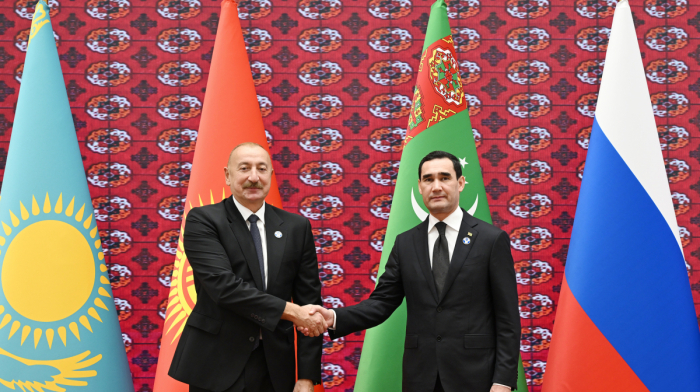
Leaders of countries from the Commonwealth of Independent States (CIS) have agreed to hold coordinated population censuses around 2030. They took the decision at the CIS Council of Heads of State meeting in Awaza, Turkmenistan on Friday, media reported.
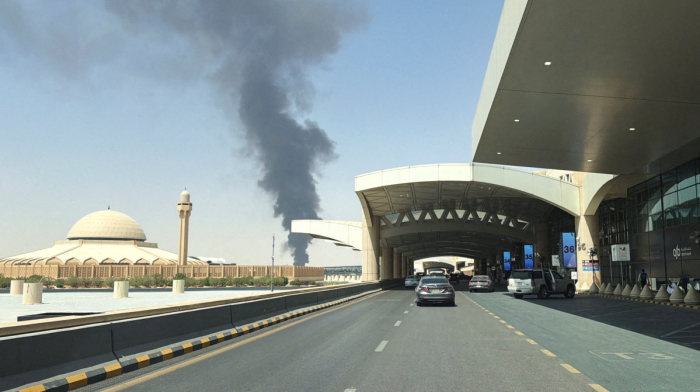
A powerful explosion has been reported at King Khalid International Airport in Riyadh, raising fresh concerns over aviation security in Saudi Arabia as tensions across the region continue to escalate.
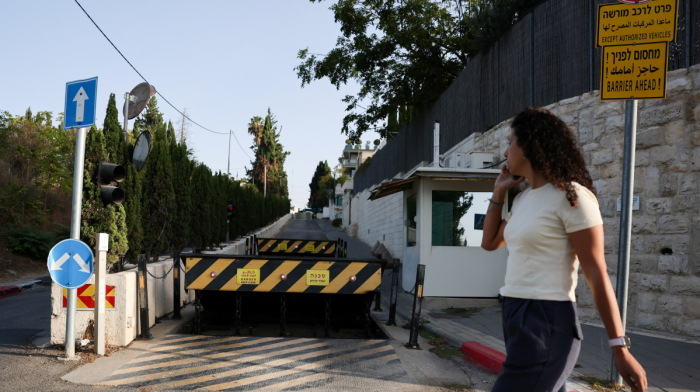
Britain and Israel have reached a temporary compromise over the future of the British Consulate General in East Jerusalem, easing a diplomatic dispute that had threatened to further strain relations between the two countries.
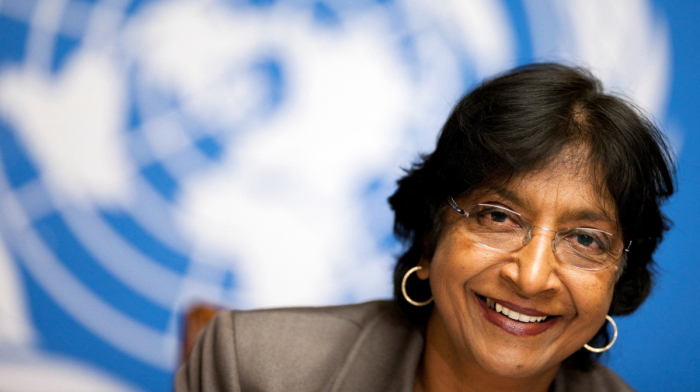
South African judge Navanethem “Navi” Pillay won the Nobel Peace Prize on Friday “for her efforts to promote peace and international law,” the Norwegian Nobel Committee said.
The U.S. has imposed sanctions on the International Criminal Court (ICC) on Friday (9 October) escalating tensions with European allies and potentially targeting companies that provide services to the tribunal. The move came hours after former ICC judge Navi Pillay won the Nobel Peace Prize.
A powerful explosion has been reported at King Khalid International Airport in Riyadh, raising fresh concerns over aviation security in Saudi Arabia as tensions across the region continue to escalate.
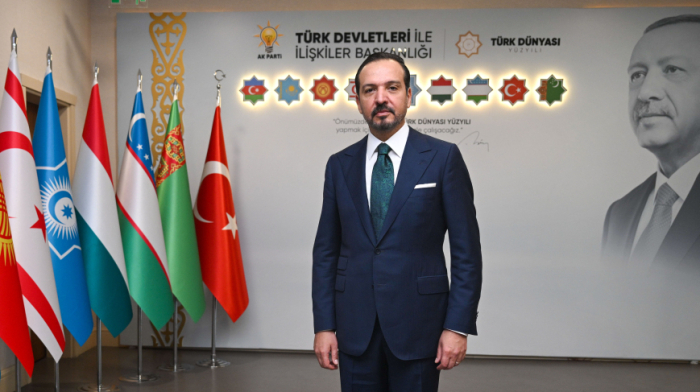
Turkic states are assessing the feasibility of passport-free travel between countries using national ID cards, Kürşad Zorlu, the Deputy Chairman of Türkiye’s ruling AK Party said on Saturday.
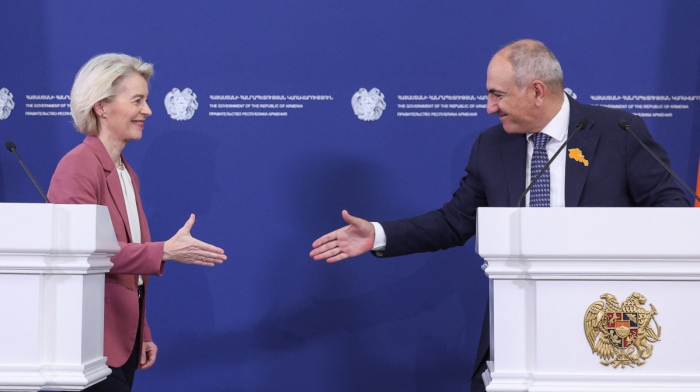
European Union measures suspending import duties on 80 per cent of Armenian exports to the bloc came into effect on Saturday. The temporary liberalisation measures are aimed at supporting Armenian producers and exporters following trade restrictions imposed on the country's products by Russia.
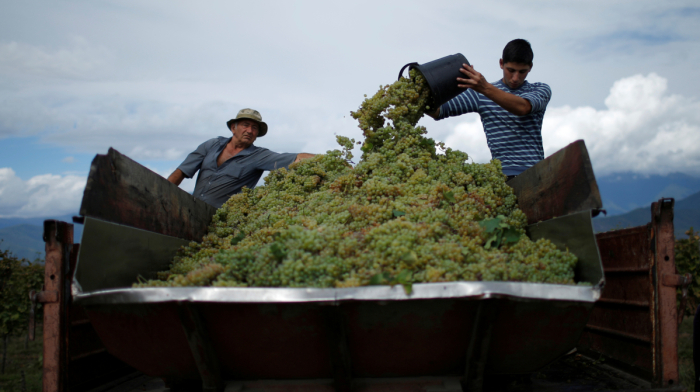
Georgia is enjoying one of its biggest and highest-quality grape harvests since independence. By 6 October, growers in the country's main wine-producing region, Kakheti, had delivered 182,210 tonnes of grapes, with 99 per cent rated medium or high quality, despite recent protests over prices.
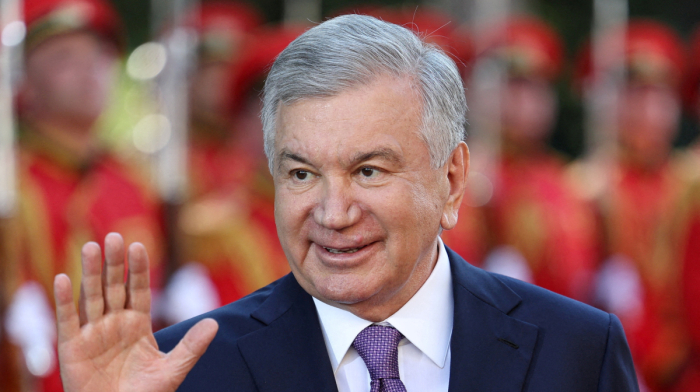
Uzbekistan has unveiled plans to deepen economic ties with Central Asia and Azerbaijan, proposing shared artificial intelligence infrastructure, a critical minerals alliance and a regional trade strategy extending to 2035.
Download the AnewZ app
You can download the AnewZ application from Play Store and the App Store.










What is your opinion on this topic?
Leave the first comment