Trump threatens severe action if Iran does not agree to ceasefire deal
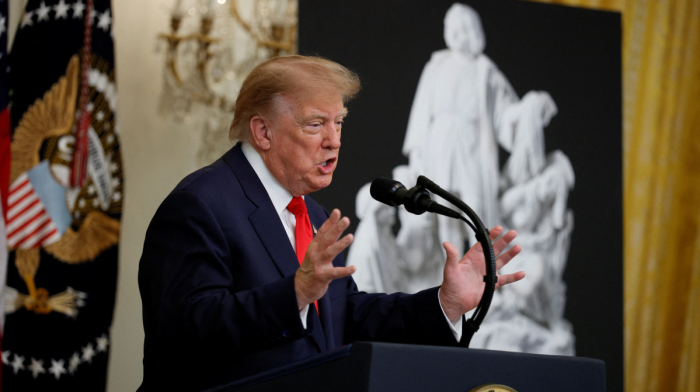
U.S. President Donald Trump warned Iran it could face devastating strikes within hours unless it agrees to a ceasefire by Tuesday night, escalating...
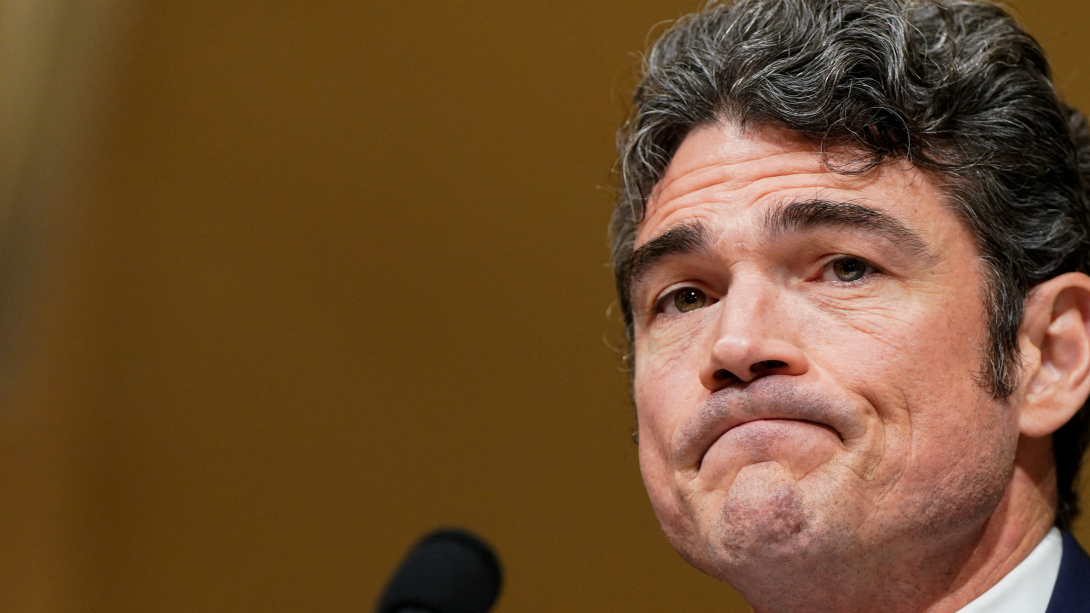
Joseph Kent, head of the U.S. National Counterterrorism Center, resigned on Tuesday (17 March), becoming the most senior official in President Donald Trump’s administration to step down over the war in Iran. Kent cited his opposition to the conflict, stating that Tehran posed no imminent threat.
In a letter to Trump posted on X, Kent wrote: “I cannot in good conscience support the ongoing war in Iran. Iran posed no imminent threat to our nation and it is clear that we entered this war due to pressure from Israel and its powerful lobby.”
Experts have noted that, under current U.S. law, a war may only be justified if an imminent threat exists, making Kent’s objections legally significant.
The White House and the Office of the Director of National Intelligence did not immediately respond to requests for comment.
Intelligence officials said they were surprised by the announcement.
Kent is known to be close to Director of National Intelligence Tulsi Gabbard, who has maintained a low profile since the conflict in Iran began. She has appeared publicly only for the dignified transfer of U.S. soldiers killed earlier this month.
Kent’s resignation marks a notable moment in the Trump administration, highlighting internal dissent over the justification for U.S. military action in Iran.

U.S. President Donald Trump on Monday told reporters that Iran could be taken out in one night, "and that night might be tomorrow night," warning Tehran it had to make a deal by Tuesday night or face wider bombing raids.
The crew of Artemis II mission are entering a pivotal phase of their journey, as they prepare to swing around the Moon and head back towards Earth. Now on the fifth day of their 10-day mission, the four astronauts are already witnessing views no human has ever seen.
U.S. President Donald Trump threatened Iran's energy and transport infrastructure in a social media post containing expletives on Sunday (5 April), as he seperately gave Iran a deadline of Tuesday to reopen the Strait of Hormuz.
A new proposal to end hostilities between the United States and Iran could come into effect as soon as Monday, potentially reopening the vital Strait of Hormuz, a source familiar with the plan said on Monday.
Oil prices rose sharply on Monday as fears deepened over potential supply shortages caused by the ongoing conflict in the Middle East, unsettling global energy markets and the row over the Strait of Hormuz, raising concerns for consumers and businesses alike.
Turkish Foreign Minister Hakan Fidan on Monday met U.S. Ambassador to Türkiye Tom Barrack, Washington’s special envoy to Syria, diplomatic sources said. Earlier, Fidan spoke by phone with his Iranian counterpart, Abbas Araghchi.
The official visit of Azerbaijan President Ilham Aliyev to Georgia marks a significant moment in South Caucasus diplomacy, highlighting a deepening strategic partnership amid global uncertainty.
Russia and Tajikistan are discussing the construction of large-scale solar power plants with a total capacity of up to 500 megawatts. The initiative builds on a memorandum signed in 2025, with both sides now working on implementation details and potential locations for the facilities.
Azerbaijan and Georgia’s leaders met on Monday (6 April) to strengthen ties as the Middle Corridor emerges as a key Asia- Europe link. Talks focused on economic cooperation, infrastructure, and regional stability amid shifting global trade dynamics.
Afghanistan’s Minister of Mines and Petroleum, Hedayatullah Badri, has invited Turkish companies to invest in the country’s oil, gas and mining sectors following talks in Kabul with Türkiye’s Chargé d’Affaires, Sadin Ayyıldız.
You can download the AnewZ application from Play Store and the App Store.
What is your opinion on this topic?
Leave the first comment