U.S. President Donald Trump threatened further strikes on Iran's Kharg Island oil export hub and urged allies to send warships to secure the Strait of Hormuz, as Tehran vowed to step up its response and the war showed no sign of ending on Sunday ( 15 March).
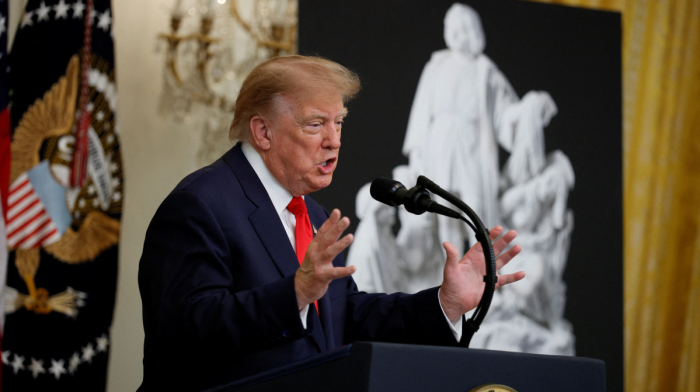
Trump said the U.S. strikes had "totally demolished" most of Kharg Island and warned that more could follow, telling NBC News, "We may hit it a few more times just for fun."
While he said Tehran appeared ready to make a deal to end the conflict, he added that "the terms aren't good enough yet."
Tehran's ability to stop shipping through the Strait of Hormuz, a major channel for oil and gas, poses a difficult problem for the U.S. and its allies. Energy prices are soaring as the war causes the biggest disruption ever in oil supply.
Trump emphasised the importance of keeping the Strait of Hormuz open and signalled U.S. support for allied efforts, writing on social media on Saturday (14 March).
As the conflict stretched into its third week, both sides appeared to be digging in for an extended fight. Iran projected defiance, rejecting the possibility of any ceasefire until U.S. and Israeli airstrikes ended.
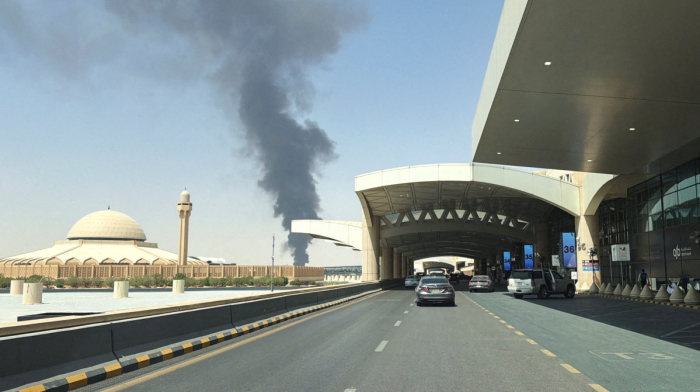
A drone attack disrupted a major United Arab Emirates energy hub on Saturday and the U.S. warned its citizens to leave Iraq after a missile attack on the U.S embassy in Baghdad overnight Friday.
Since Israel and the United States began air attacks on Iran on 28 February, the war has killed more than 2,000 people, mostly in Iran, according to reports from governments and state media.
At least 15 were killed when an airstrike hit a refrigerator and heater factory in the central Iranian city of Isfahan, the semi-official Fars news agency said on Saturday.
Iran called on civilians in the UAE to evacuate ports, docks and "American hideouts," saying U.S. forces had targeted Iran from those areas. The UAE denied that strikes on Iran's Kharg Island overnight Friday had been launched from its territory.
Calling any facility associated with the United States a "legitimate target," Iran's Islamic Revolutionary Guard Corps urged all U.S. industries to move out of the region.
Oil market disruptions are unlikely to end soon. Some oil-loading operations were suspended in the UAE's Fujairah emirate, a global ship-refueling hub, after a drone attack, industry and trade sources said on Saturday.
'Bombing the hell out of the shoreline'
In one post, Trump wrote that he hoped China, France, Japan, South Korea, Britain and others would send warships to the Strait of Hormuz. None of those countries gave any immediate indication that they would do so.
French officials said on Friday their government was pushing ahead with efforts to assemble a coalition to secure the Strait of Hormuz once the security situation stabilised.
A British Ministry of Defence spokesperson said on Saturday: "As we’ve said previously, we are currently discussing with our allies and partners a range of options to ensure the security of shipping in the region."
Supreme Leader Ayatollah Mojtaba Khamenei, who replaced his slain father, has said the Strait of Hormuz should remain closed.
Separately, Iranian Foreign Minister Abbas Araghchi dismissed speculation from U.S. Defence Secretary Pete Hegseth that Khamenei was wounded and likely disfigured. "There is no problem with the new supreme leader. He sent his message yesterday, and he will perform his duties," Araghchi told MS Now.
Kharg Island damage
Iran played down the extent of the damage on Kharg Island. The U.S. said it had targeted military, not energy industry, targets on the island, which is about 15 miles (24 km) off Iran's coastline in the Gulf.
U.S. Central Command said it hit more than 90 sites on Kharg, including naval mine storage facilities, missile storage bunkers and other military targets.
Araghchi said Iran would respond to any attack on its energy facilities. Iran's Ministry of Defence said on Saturday that nine ballistic missiles and 33 drones were launched from Iran towards the UAE.
Iran warned residents to leave areas near Jebel Ali port in Dubai, Khalifa port in Abu Dhabi and the UAE's Fujairah port and said it was targeting branches of U.S. banks in the Gulf.
Fujairah, outside the Strait of Hormuz, is the outlet for about 1 million barrels per day of the UAE's Murban crude oil- a volume equal to about 1% of global demand.










What is your opinion on this topic?
Leave the first comment