First Caspian Sea fibre-optic cable installation completed
The installation of the first fibre-optic cable across the bottom of the Caspian Sea has been completed, marking a major step in the development of a ...
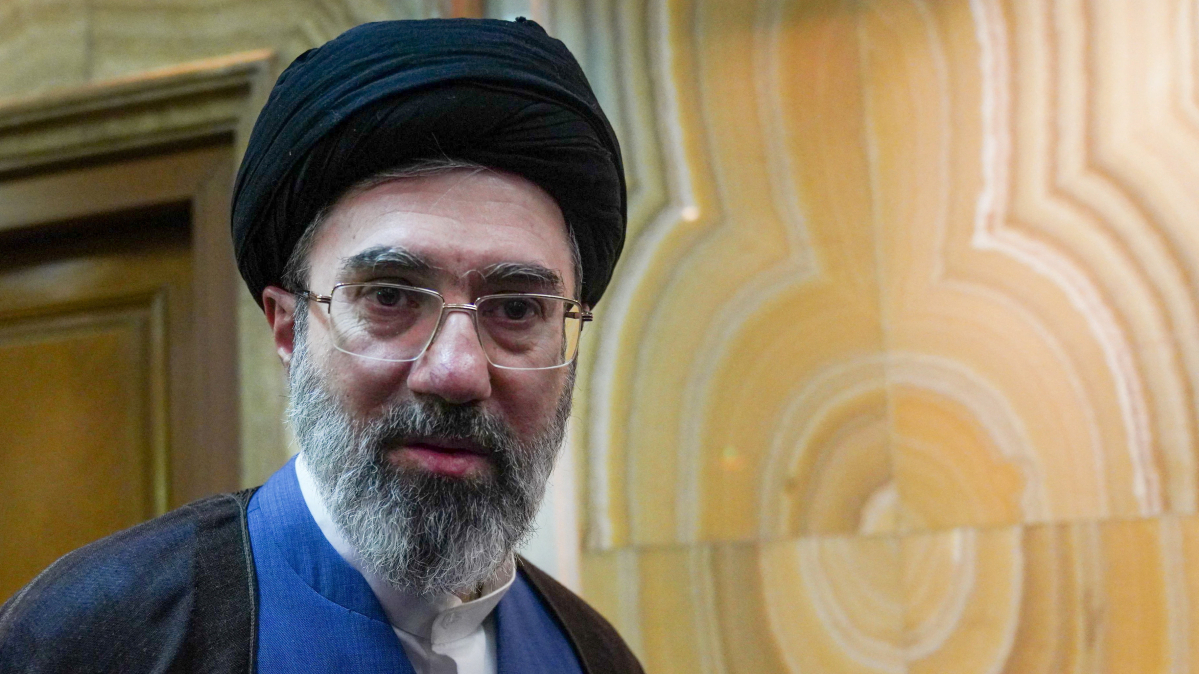
New Iranian Supreme Leader Mojtaba Khamenei has said Iran should continue ‘blocking the Strait of Hormuz’ in his first statement since his election, read out on Iranian State television on Thursday (12 March).
Khamenei, who is still yet to appear in public, told Iranians, "we will not forgo revenge for the blood of your martyrs” who have been killed in the conflict with the U.S. and Israel in the statement, which was read out by a presenter.
The price of oil rose to over $100 a barrel on Thursday as attacks on sea traffic in the Strait of Hormuz escalated. At least six ships have now been targeted in the vital sea passage, which lies between the Persian Gulf and Gulf of Oman.
In the statement, Khamenei also demanded the U.S. close its regional military bases, which have been used to launch attacks on Iran.
“I advise that they shut down those bases as soon as possible, because they must have realised by now that the claim of establishing security and peace by America was nothing but a lie,” he said.
Khamenei said Tehran would continue striking American bases in the region, while striving to avoid hitting the nations hosting such bases.
But he added: "These countries must clarify their stance regarding the aggressors against our dear homeland and the murderers of our people."
The statement began with a tribute to his father, former Supreme Leader Ali Khamenei, who was killed in U.S.-Israel airstrikes on 28 February.
"I had the privilege to visit his body after his martyrdom. What I saw was a mountain of solidity, and I heard that his remaining sound fist was clenched,” Khamenei said.
The 56-year-old added that he found out about his appointment as new Supreme Leader by the Assembly of Experts at the same time as the public via television.
Following in the footsteps of his father Khamenei and Iran’s first Supreme Leader Ruhollah Khomeini was a "difficult task," he added.
But Khamenei said he was inspired by the resolve the Iranian people had shown in the days after his father’s death. The Iranian people had shown “steadfastness, bravery, and presence,” during the period when Iran was without a leader, he said.

U.S. President Donald Trump said there was an "all-day negotiation" on Tuesday with Iran, characterising the talks positively while also threatening to hit Iran "really hard" if a deal was not reached.
Shipping traffic through the Strait of Hormuz and the Bab el-Mandeb Strait, two key maritime chokepoints in the region, decreased significantly from the previous day, according to shipping data.
Start your day informed with AnewZ Morning Brief. Here are the top news stories for the 6th of August, covering the latest developments.
Kazakhstan’s main oil export corridor was disrupted by drone strikes near Russia’s Black Sea coast in July, forcing a temporary suspension of crude loadings and raising fresh concerns over the vulnerability of regional energy infrastructure to the war in Ukraine.
Ukrainian President Volodymyr Zelenskyy has dismissed the country's ambassadors to Tajikistan, Kyrgyzstan and several other countries. The removals came after a speech on Monday in which he said embassies would be judged on their effectiveness in securing weapons for Ukraine.
Uzbekistan and Kazakhstan will remove tariff and non-tariff barriers affecting around 20 product categories from 10 August, in a move designed to facilitate cross-border trade and support businesses in both countries.
President Masoud Pezeshkian has defended his administration's economic performance under longstanding Western sanctions and severe wartime conditions, saying barter trade with neighbouring countries has expanded to help Iran cope with financial restrictions, according to his office.
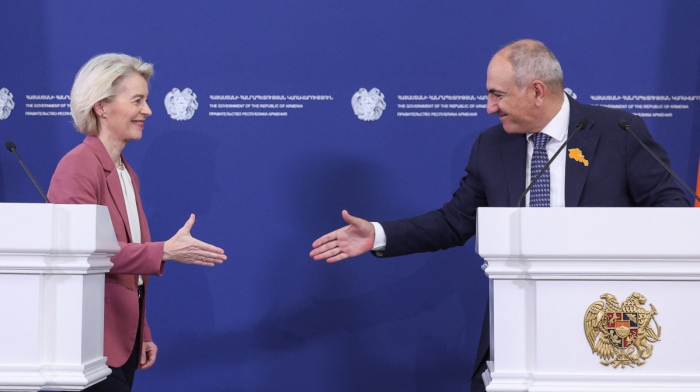
Armenian Prime Minister Nikol Pashinyan has said that Armenia currently has no option to join the European Union as an alternative to its membership in the Eurasian Economic Union (EAEU).
Tajikistan tripled fuel imports from neighbouring Central Asian countries in July after deliveries from Russia declined sharply, underscoring how disruptions to Russian exports are prompting governments across the region to seek alternative suppliers.
The installation of the first fibre-optic cable across the bottom of the Caspian Sea has been completed, marking a major step in the development of a new digital corridor connecting Europe and Asia.
You can download the AnewZ application from Play Store and the App Store.
What is your opinion on this topic?
Leave the first comment