Tehran’s right to develop and use nuclear energy for peaceful purposes is “inherent, inalienable, and non‑negotiable,” Iranian Foreign Minister, Abbas Araghchi, told the high-level segment of the United Nations Conference on Disarmament in Geneva on Tuesday (17 February).
The Conference on Disarmament, established in 1978 and regarded as the sole multilateral forum on disarmament, brings together 65 member states, including nuclear-armed powers.
Speaking at the European headquarters of the United Nations, Araghchi highlighted what he described as “unprecedented pressures and complex challenges” to international peace and security.
Among those he cited the rise of armed conflicts, weakening multilateralism, declining respect for international law, and renewed reliance by some states on nuclear weapons.
Araghchi noted that more than 12,000 nuclear warheads remain worldwide, warning that high-alert deployments and doctrines including potential “first use” pose serious global risks and contravene obligations under the Treaty on the Non-Proliferation of Nuclear Weapons (NPT).
Peaceful nuclear rights
The Iranian foreign minister reiterated that Tehran neither seeks to produce nor acquire nuclear weapons, stressing that such arms have no place in Iran’s national security doctrine. He said that under the NPT, all member states retain the right to research, produce and use nuclear energy for peaceful purposes, describing this right as “non‑negotiable.”
He added that any durable agreement must be based on reciprocal commitments and respect for the legitimate rights of all parties, noting that Iran remains committed to diplomacy.
Meanwhile, Iranian President Masoud Pezeshkian said Tehran is open to verification that it is not seeking an atomic weapon, as the Islamic Republic resumed nuclear talks with the United States.
“We are absolutely not seeking nuclear weapons,” Pezeshkian said in an interview published by AFP today, “If anyone wants to verify this, we are open to such verification to take place.”
The Iranian President reitirated that Iran is not looking to acquire nuclear weapons.
Criticism of U.S.
Araghchi also criticised the United States’ 2018 withdrawal from the Joint Comprehensive Plan of Action (JCPOA), calling it a “profound blow” to trust in multilateral commitments and highlighting the economic and humanitarian impact on the Iranian people.
He condemned what he described as a “military aggression against Iran last June,” saying it violated Article 2(4) of the UN Charter and warning that attacks on safeguarded nuclear facilities could have far-reaching environmental and regional consequences, potentially amounting to war crimes.
FM Araghchi also stressed that countries providing political, military, or intelligence support could bear responsibility under international law for aiding such acts.
Cooperation with IAEA
Araghchi reaffirmed Iran’s cooperation with the IAEA, noting that the country’s nuclear programme has been subject to extensive verification.
He said engagement with the agency must remain technical and free from political pressure and added that Tehran is working with the IAEA on a framework for inspections of facilities that have been targeted in attacks.
The Iranian foreign minister criticised perceived “double standards” regarding Israel’s nuclear capabilities, arguing that while Western governments often overlook such threats, Iran’s peaceful nuclear programme is portrayed as dangerous.
He also cited regional developments, including Israeli military operations and civilian casualties in Gaza, as evidence of broader instability.
U.S.-Iran talks
Araghchi confirmed that a second round of talks with the United States had taken place in Geneva, expressing hope for a durable, dialogue-based solution.
At the same time, he warned that Iran is fully prepared to defend itself against any threat or military action, cautioning that the consequences of an attack “would not be confined to Iran’s borders.”
In conclusion, Araghchi urged the Conference on Disarmament to overcome its long-standing deadlock and begin negotiations on a comprehensive nuclear weapons convention.
He said accountability in disarmament should be preventive rather than punitive, warning that inaction in the face of nuclear threats and violations of international law could further erode the global legal order.
Anti-government demonstrations
During Foreign Minister Araghchi’s address at the conference, a group of protesters gathered outside the European headquarters of the UN.
Demonstrators waved pre-revolution Iranian flags and held banners reading “SOS from Iran” and “I stand with the people of Iran,” while chanting slogans in Farsi against the Islamic Republic and in support of the last shah’s son Reza Pahlavi.
Earlier in the day, Araghchi participated in a second round of indirect nuclear negotiations with the United States at the Omani consulate in Cologny, on the outskirts of Geneva. As his convoy left the venue, a handful of protesters shouted slogans and were pushed back by police.
The talks, which involved U.S. special envoy Steve Witkoff and adviser Jared Kushner, focused on technical aspects of Tehran’s nuclear programme and continued diplomatic engagement mediated by Oman.
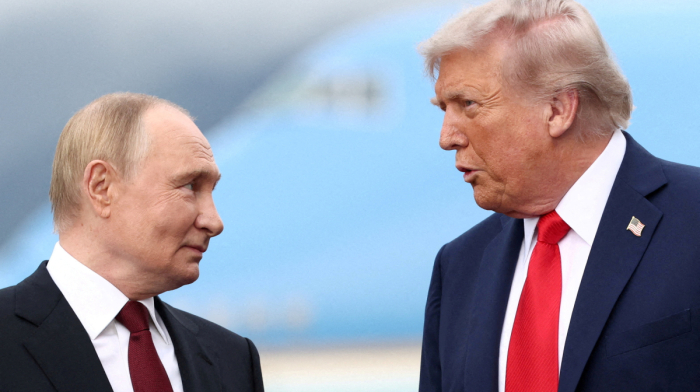
U.S. President Donald Trump has criticised Ukrainian President Volodymyr Zelenskyy for continuing to target Russia's energy infrastructure, while Russian strikes on Kyiv overnight killed at least one person and damaged a metro station.
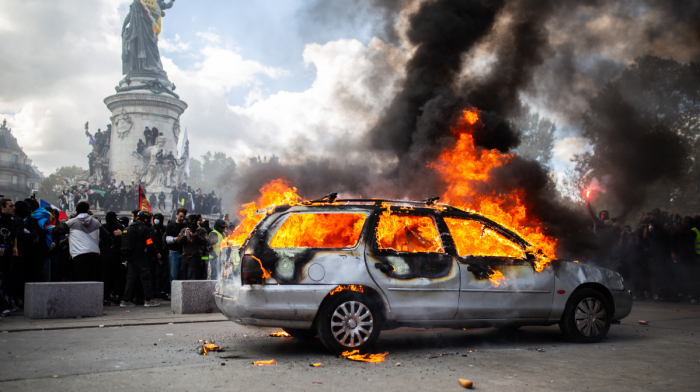
What started out as planned protests against the cost of living, declining public services and education funding in France, quickly devolved into violent riots across the country on Saturday.
The day after waiving sanctions and tariffs related to Russian exports, U.S. President Donald Trump said on Saturday he has yet to announce a final decision on the matter as Secretary of State Marco Rubio said officials want more time to evaluate the situation.
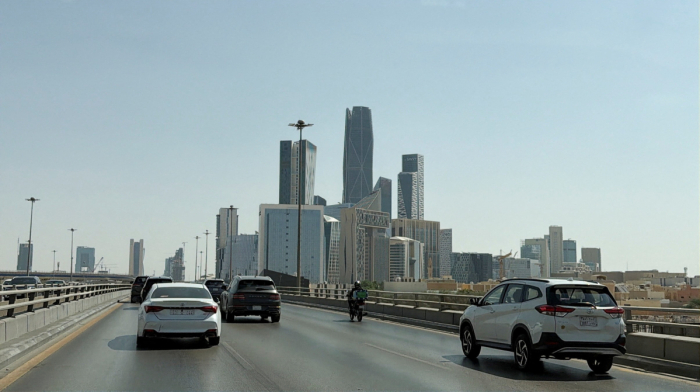
A Saudi AH-6i helicopter crashed in the Najran region of Saudi Arabia due to a technical malfunction, killing its two crew members, the Saudi-led coalition's spokesman Brigadier General Turki al-Maliki said in a statement on Sunday.
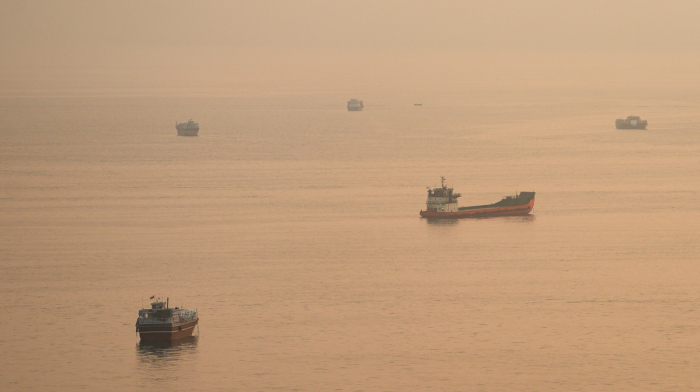
An oil tanker caught fire after striking a naval mine in the southern part of the Strait of Hormuz, Iran’s Islamic Revolutionary Guard Corps (IRGC) Navy said late Sunday.
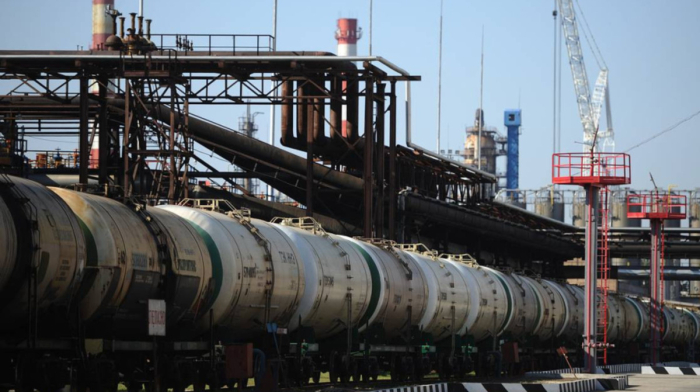
Türkiye is set to receive Russian diesel under a U.S.-backed agreement, Energy Minister Alparslan Bayraktar said on Sunday, as Ankara pushes ahead with plans to boost domestic gas production and reduce its reliance on imported energy.
An oil tanker caught fire after striking a naval mine in the southern part of the Strait of Hormuz, Iran’s Islamic Revolutionary Guard Corps (IRGC) Navy said late Sunday.
Azerbaijan exported $23.45 million worth of goods to Armenia between January and September 2026, according to data released by the State Customs Committee on 19 October.
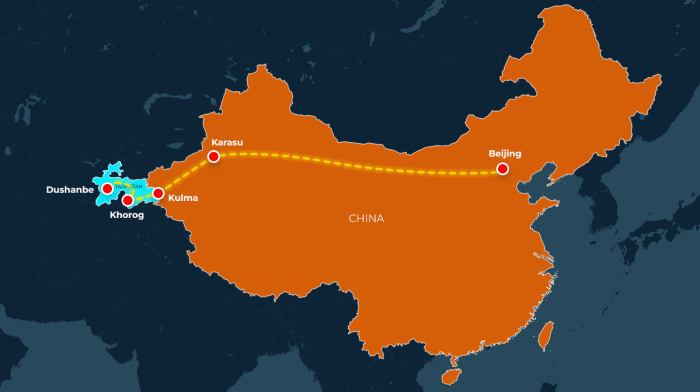
Tajikistan and China have launched a high-capacity digital corridor across the Pamir Mountains, creating a direct telecommunications link that could strengthen Tajikistan’s internet connectivity and turn the country into a key transit route for data between Central and South Asia.
A Saudi AH-6i helicopter crashed in the Najran region of Saudi Arabia due to a technical malfunction, killing its two crew members, the Saudi-led coalition's spokesman Brigadier General Turki al-Maliki said in a statement on Sunday.
Download the AnewZ app
You can download the AnewZ application from Play Store and the App Store.








What is your opinion on this topic?
Leave the first comment