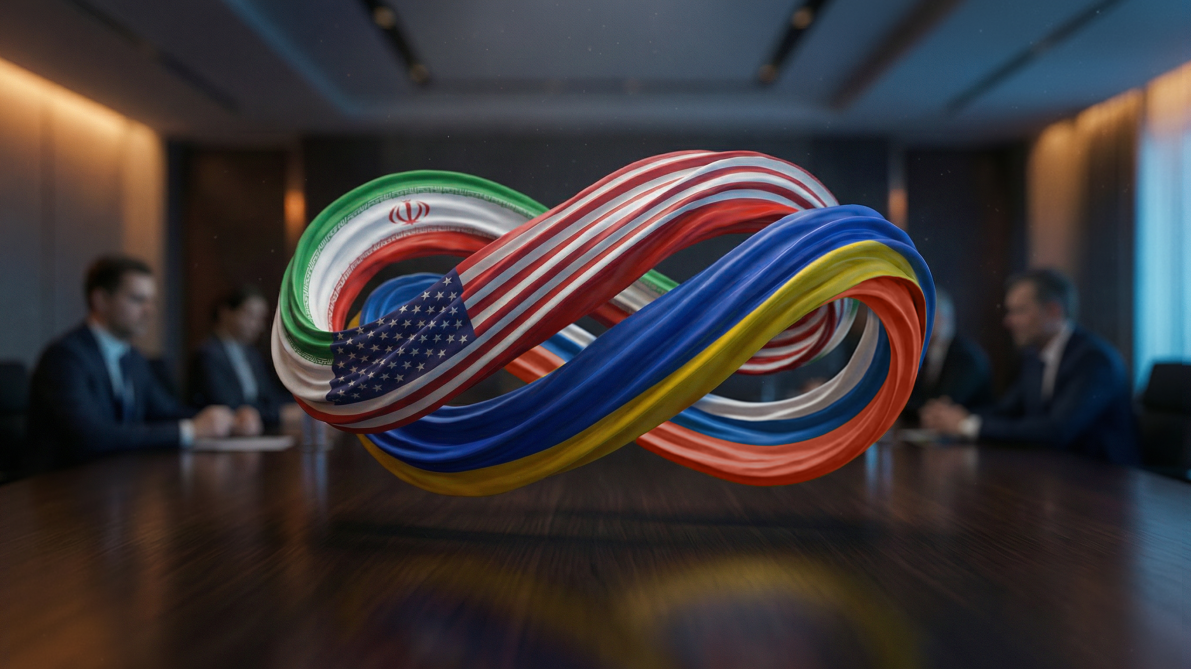
Geneva is set to host two sets of negotiations on Tuesday, with U.S. officials meeting Iranian representatives in the morning and a trilateral session on Ukraine scheduled for the afternoon. The talks aim to advance a resolution of Iran’s nuclear programme and a U.S.-brokered peace plan for Ukraine.
A U.S. delegation including Special Envoy Steve Witkoff and Jared Kushner will meet Iran’s team, expected to be led by Foreign Minister Abbas Araghchi. The discussions follow a first round in Oman on 6 February and focus on nuclear and sanctions issues.
U.S. President Donald Trump said Iran must provide “the right deal” to avoid military action.
Iran’s Deputy Foreign Minister Majid Takht-Ravanchi told the BBC that Tehran is open to compromise on uranium enrichment if the U.S. shows flexibility on sanctions, adding that “the ball is in America’s court.”
Oman's Foreign Minister Badr al-Busaidi is set to mediate the dialogue.
Moreover, messages from the U.S. were passed to Iran via Oman and delivered to Ali Larijani, adviser to Supreme Leader Ayatollah Ali Khamenei, who confirmed it on state television.
Geneva, known for hosting sensitive international negotiations, is expected to provide a neutral setting for detailed technical talks and phased diplomatic engagement.
Trilateral talks on Ukraine
Separately, Witkoff and Kushner will join representatives from Russia and Ukraine in Geneva to discuss the ongoing conflict.
The Russian delegation, including Presidential Aide Vladimir Medinsky, Deputy Foreign Minister Mikhail Galuzin, GRU chief Igor Kostyukov and Special Representative Kirill Dmitriev, will address issues including territory and energy-related ceasefire measures.
Kremlin spokesman Dmitry Peskov said the discussions would cover a broader range of topics, including “the main issues” related to territory and other demands put forward by Moscow.
The Ukrainian delegation to the Geneva talks is expected to include Rustem Umierov; Kyrylo Budanov, Head of the Office of the President of Ukraine; Andrii Hnatov, Chief of the General Staff of the Armed Forces; Davyd Arakhamiia, leader of the Servant of the People parliamentary faction; Serhii Kyslytsia, First Deputy Head of the President’s Office; and Vadym Skibitskyi, Deputy Head of Defence Intelligence.
Ukrainian President Volodymyr Zelenskyy on Sunday said he hoped the trilateral talks in Geneva “will be serious, substantive” and “helpful for all of us.”
“But honestly, sometimes it feels like the sides are talking about completely different things,” Zelenskyy added. “The Americans often return to the topic of concessions, and too often those concessions are discussed only in the context of Ukraine, not Russia.”
Among the most contentious issues is the long-term fate of eastern Ukraine, large parts of which are under Russian occupation.
Moscow is demanding that Kyiv pull its troops from the Donbas region, including heavily fortified cities sitting on valuable natural resources, as a condition for any deal. Russia is also seeking international recognition for territory it has unilaterally annexed in eastern Ukraine.
Kyiv has insisted the conflict should be frozen along current front lines and has rejected any one-sided withdrawal of forces. Ukrainian officials are also pressing for strong security guarantees to protect against future Russian attacks.
Swiss authorities have committed to ensuring the safe arrival of all delegations.
Observers will watch closely to see whether Geneva can produce tangible steps on both Iran’s nuclear programme and the ongoing war in Ukraine, building on prior rounds of dialogue and backchannel diplomacy.










What is your opinion on this topic?
Leave the first comment