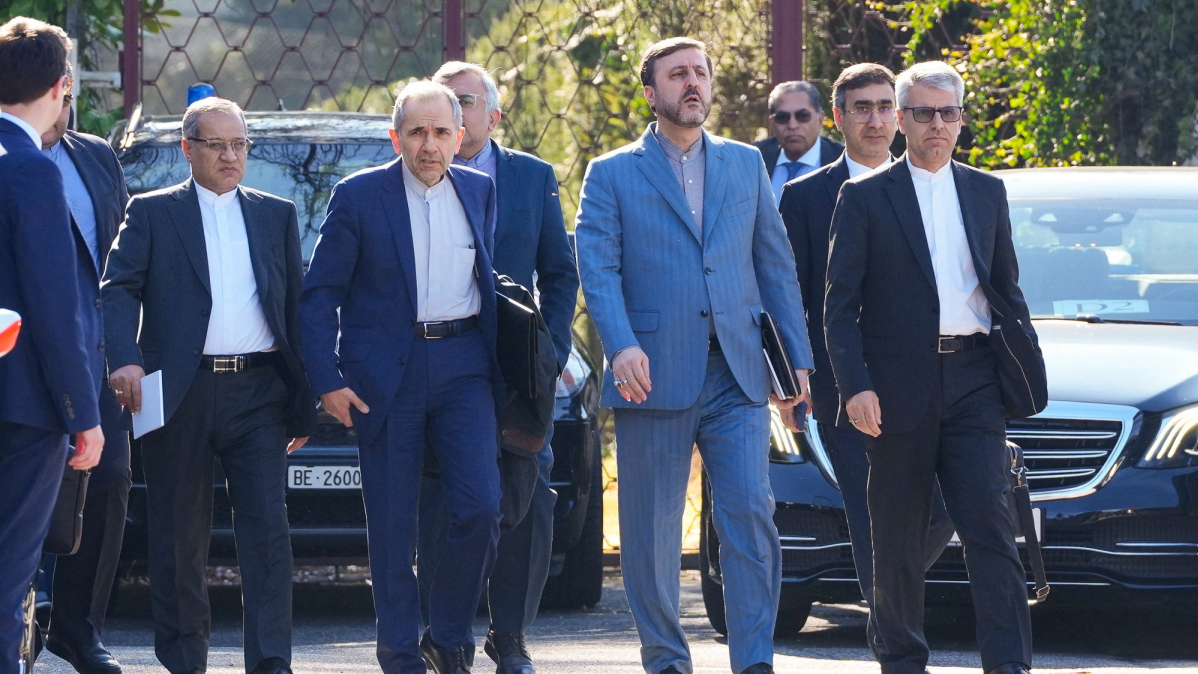
A third round of indirect nuclear negotiations between Iran and the U.S. concluded in Geneva on Thursday, with Omani mediators reporting “significant progress” but no final agreement.
Oman’s Foreign Minister Badr Albusaidi, who acted as mediator, said both sides had shown “openness to new and creative ideas” and would return to their capitals for consultations before resuming talks. Technical-level discussions are set to take place next week in Vienna.
Iran’s delegation was led by Foreign Minister Abbas Araghchi, who described the negotiations as “good” and among the most serious and longest rounds so far. He said agreement had been reached on some issues, while differences remained on others, adding that the next round would take place in less than a week.
The U.S. delegation was headed by U.S. Special Envoy to the Middle East Steve Witkoff and included Jared Kushner, Senior Adviser to U.S. President Donald Trump. There was no immediate formal reaction from Washington following the conclusion of the talks.
Focus on enrichment and sanctions
The discussions centred on sanctions relief and nuclear-related commitments, particularly Iran’s uranium enrichment programme and its stockpile of highly enriched uranium.
According to Iranian state media, Tehran reiterated its right to peaceful nuclear energy and rejected U.S. demands to fully halt enrichment on Iranian soil or transfer its stockpile, estimated at around 400 kilogrammes, out of the country. Reports suggested one option under discussion could involve a temporary suspension of enrichment for three to five years under international monitoring, after which limited enrichment at minimal levels might resume. No proposal has been formally confirmed by either side.
In return, Araghchi said Iran was seeking the lifting of sanctions that have severely strained its economy.
The head of the International Atomic Energy Agency, Rafael Grossi, also took part in the Geneva meetings. Any potential agreement would require monitoring and verification by the UN nuclear watchdog. The agency’s board is due to convene in early March.
No breakthrough yet
The indirect talks were held in two sessions in Geneva after diplomatic efforts resumed last month, including earlier rounds in Muscat. Despite a constructive tone, neither side confirmed a breakthrough on core disputes such as enrichment limits and inspection guarantees.
U.S. President Donald Trump has previously warned that without a “meaningful deal” within a 10 to 15-day timeframe, Washington would consider other options, including military action. The U.S. has reinforced its military presence in the region in recent weeks.
For decades, Washington and Israel have accused Iran of seeking to develop nuclear weapons, an allegation Tehran denies, maintaining that its programme is solely for peaceful purposes. Iran remains the only non-nuclear-armed state enriching uranium to near weapons-grade levels.











What is your opinion on this topic?
Leave the first comment