Brussels and Hanoi are set to sign a historic diplomatic upgrade. The partnership focuses on de-risking supply chains, tapping critical minerals, and expanding semiconductor capacity.
The deal is expected to secure vital supply chains for high-tech industries and bolster security cooperation in Southeast Asia.
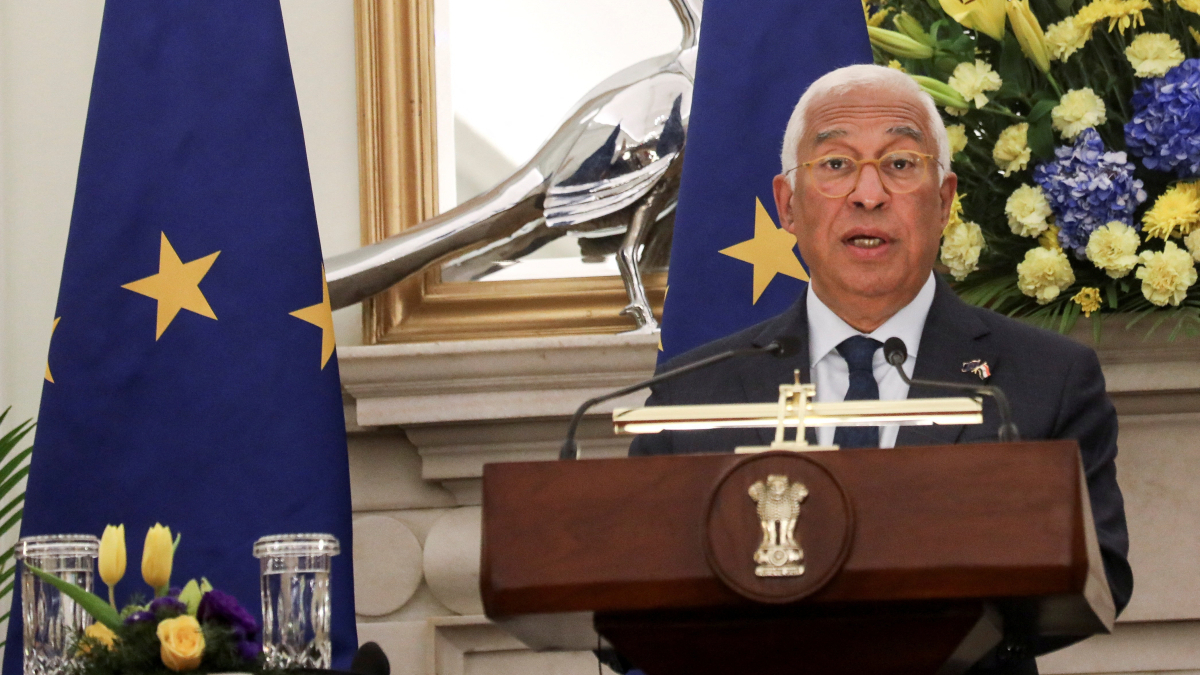
According to a draft joint statement reviewed by Reuters, the agreement is expected to be ratified on Thursday during a high-profile visit by European Council President Antonio Costa.
The move comes as Vietnam continues to skillfully navigate great power competition, reasserting its "Bamboo Diplomacy" strategy by balancing relationships with major global players.
The anticipated agreement will see the European Union explore the potential transfer of defence technology to Hanoi and deepen collaboration on "trusted" telecommunications networks.
This development is particularly poignant given recent contracts awarded to Chinese firms for Vietnam’s 5G rollout, a move that has previously raised eyebrows in Western capitals.
The timing of the signing coincides with President Costa’s meeting with Vietnam’s top leadership, just days after the ruling Communist Party reappointed President To Lam as General Secretary, solidifying his position as the country’s paramount leader.
By elevating ties to the highest level, a status Vietnam already holds with the United States, China, Russia, South Korea, India, and Australia, Hanoi is signalling its intent to diversify its economic and strategic alliances further.
While the eight-page draft document is non-binding, it carries substantial political weight. It outlines a shared vision that indirectly challenges the assertive international strategies of superpowers like China and Russia, while simultaneously offering an alternative to American protectionism.
Securing supply chains: Critical minerals and the semiconductor push
The driving force behind this deepened partnership is a mutual desire to "de-risk" economies from over-reliance on a single dominant supplier, particularly regarding the raw materials essential for the green and digital transitions.
Vietnam holds the world’s second-largest estimated reserves of rare earth elements, as well as significant deposits of gallium and tungsten. However, these resources remain largely untapped due to a lack of advanced processing technology.
Currently, China dominates the global refining capacity for these minerals, which are crucial for electric vehicle batteries, wind turbines, and advanced defence systems.
According to the draft document, the EU and Vietnam aim to aggressively promote trade and investment in technologies that support "sustainable mining and processing."
For Brussels, this is a strategic imperative. The EU’s Critical Raw Materials Act aims to secure autonomous supply chains, and Vietnam represents a friendly, resource-rich partner capable of helping Europe reduce its dependency on Beijing.
The document highlights tungsten, a hard metal vital for defence projectiles and electronics, as a key area of interest. Western diplomats have previously flagged concerns regarding Chinese attempts to acquire stakes in major Vietnamese mining operations, making EU investment a geopolitical counterweight.
Beyond raw materials, the partnership identifies the semiconductor industry as a priority pillar for cooperation. Vietnam has already established itself as a global hub for chip packaging, testing, and assembly, hosting major facilities for Intel and Amkor Technology.
However, the country holds ambitions to move up the value chain into fabrication. The draft statement notes that suppliers for ASML, the Dutch titan of chipmaking lithography machines, have already begun migrating some production to Vietnam.
Following a high-level meeting earlier this month, ASML is reportedly exploring further expansion of its supply chain in the country.
By combining European technical know-how with Vietnam’s manufacturing base, both sides hope to build a resilient semiconductor ecosystem that can withstand global trade shocks.
Strategic Autonomy: Infrastructure, 5G and geopolitics
The upgrade in relations extends well beyond trade, touching upon the sensitive nerves of national security and critical infrastructure.
The draft statement places a heavy emphasis on expanding cooperation regarding "trusted communications infrastructure," explicitly citing satellite connectivity and 5G networks.
This is a battleground sector in Southeast Asia. While European champions Ericsson and Nokia are currently involved in developing parts of Vietnam's network, Hanoi awarded smaller construction contracts to Chinese entities, including Huawei, last year.
This bifurcation reflects Vietnam's pragmatic approach to technology, yet the EU’s offer to share "non-sensitive technology and know-how" suggests a long-term effort to align Vietnam’s digital architecture closer to Western standards.
Furthermore, the European Union is keen to deploy its "Global Gateway" initiative, seen as a rival to China’s Belt and Road Initiative, to invest in Vietnam’s physical infrastructure. The document highlights specific interest in the railway sector.
This aligns perfectly with Hanoi’s ambitious plans to construct a North-South high-speed railway, a colossal project estimated to cost over $67 billion. By offering financing and engineering expertise for such projects, the EU aims to cement its tangible presence in the region.
On the geopolitical front, the partnership navigates a complex landscape. President Costa, in an op-ed published by Vietnam’s state news agency, warned against "coercive trade practices" and challenges to international law, thinly veiled references to Chinese assertiveness in the South China Sea.
The draft statement calls for stability in these contested waters, where Hanoi and Beijing have overlapping territorial claims.
Simultaneously, the document touches upon the war in Ukraine, calling for a "just and sustainable peace" and urging respect for territorial integrity.
This is a delicate subject for Vietnam, which relies on Russia for the vast majority of its military arsenal and has abstained from condemning Moscow at the UN.
By agreeing to discuss maritime security and defence technology transfers with the EU, Vietnam appears to be slowly pivoting its defence procurement strategy, reducing its historical reliance on Russian hardware in favour of diversifying its security partners.










What is your opinion on this topic?
Leave the first comment