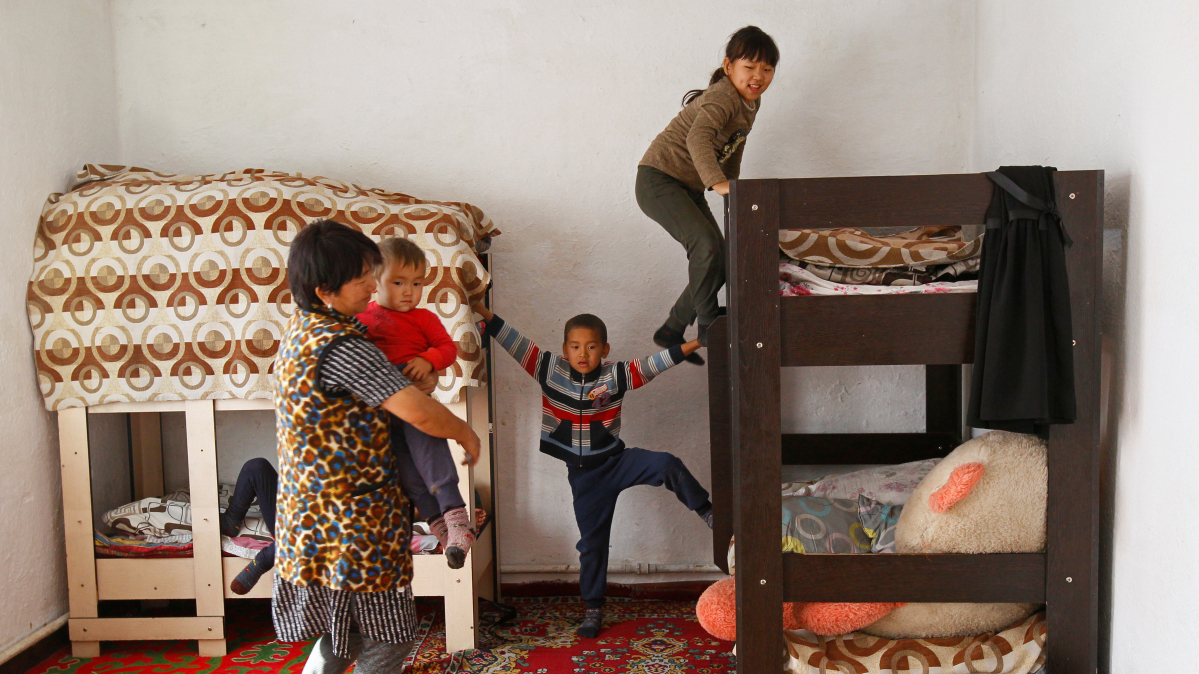
The Cabinet of Ministers of Kyrgyzstan has approved a new programme aimed at developing educational courses and training sessions for young parents.
The initiative is designed to improve awareness among young families of issues related to child upbringing, family life and parenting responsibilities. The programme is being implemented as part of the country’s Law “On Youth”, which focuses on strengthening support mechanisms for young people and families.
The document sets out a framework for the development of specialised educational programmes that will provide guidance to young parents on raising children, maintaining family wellbeing and building healthy family relationships.
Education and family support
Under the new regulation, training courses and educational programmes for young parents will be developed and delivered with the participation of government agencies and local self-government bodies.
The courses are expected to cover a range of topics, including childcare, children’s psychological development, family communication and social support mechanisms available to young families. Authorities say the initiative aims to strengthen parental knowledge and create more stable family environments.
Officials believe the programme will also help prevent social problems linked to a lack of parenting knowledge and improve the overall wellbeing of young families across the country.
Implementation and funding
According to the resolution, the programme will be financed within the limits of funds already allocated in the budgets of relevant state institutions. Additional funding may also come from other sources permitted under national legislation.
The government has tasked the Ministry of Labour, Social Security and Migration and the Ministry of Culture, Information and Youth Policy with aligning their regulations and activities with the new programme.
These institutions will play a key role in coordinating the development of training materials, organising courses and ensuring the implementation of the programme across different regions of the country.
International experience
Parenting education programmes have been introduced in many countries as part of broader family and social support policies. One of the earliest structured initiatives, Parent Effectiveness Training, was launched in the United States in the early 1960s and later spread internationally.
Today, similar courses exist in countries such as the UK, Australia and Canada, where governments and social services offer training for young parents on childcare, family communication and early childhood development. International organisations, including UNICEF and the World Health Organisation, also support parenting education programmes aimed at improving child wellbeing and strengthening family stability.
Entry into force
The resolution will come into effect ten days after its official adoption.
Authorities say the programme represents an important step towards strengthening support for young families and promoting responsible parenting as part of Kyrgyzstan’s broader youth policy framework.












What is your opinion on this topic?
Leave the first comment