A senior delegation from the OSCE Parliamentary Assembly has been holding meetings with Georgian government officials, opposition leaders and security authorities this week, as international observers attempt to gauge the country’s political climate following last year’s contentious elections.
The delegation, led by OSCE Parliamentary Assembly President Pere Joan Pons Sampietro, arrived in Georgia on 8 March for a three-day visit that includes talks with a wide range of political actors and representatives of civil society.
While such visits are part of the organisation’s regular engagement with member states, the timing is significant. Georgia remains deeply polarised politically, and debates surrounding the 2024 parliamentary elections continue to shape relations between the ruling party and the opposition.
Against that backdrop, the OSCE delegation is attempting to hear directly from different sides of the political spectrum.
Meetings across the political spectrum
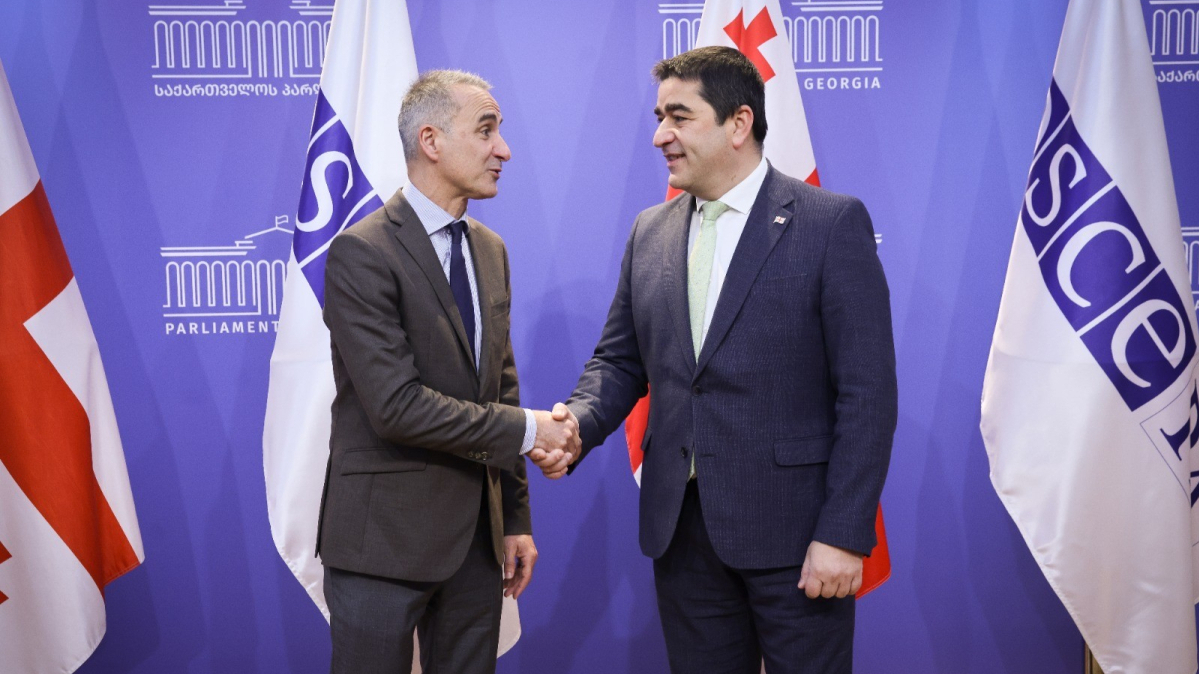
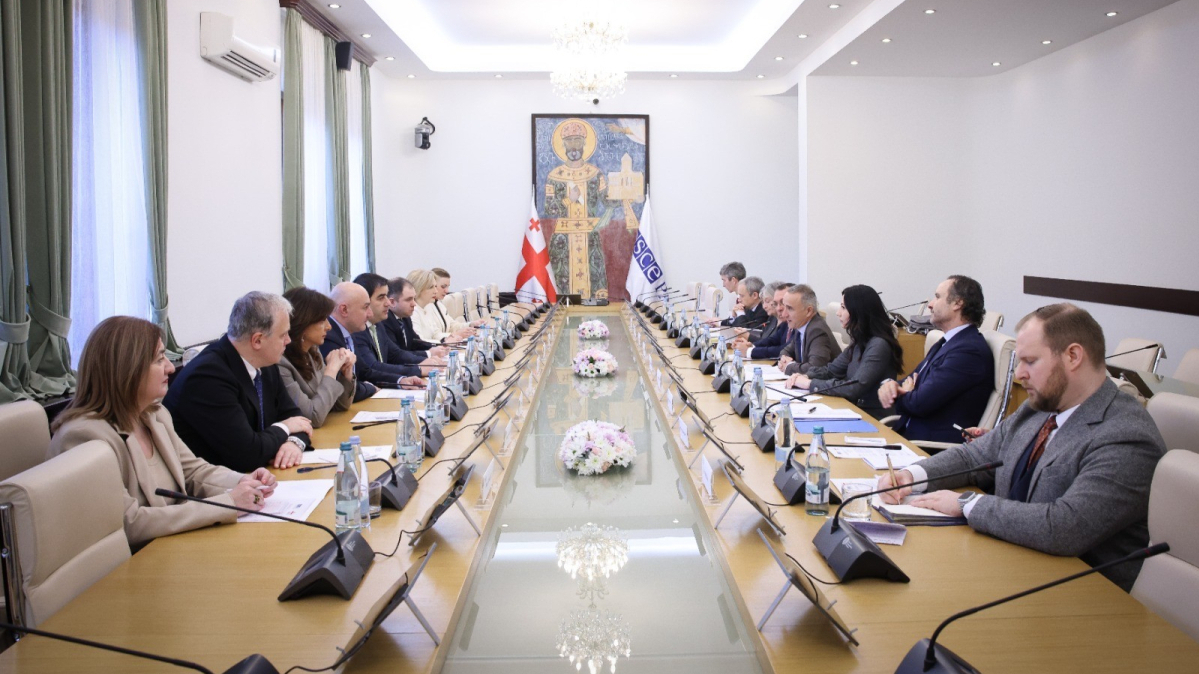
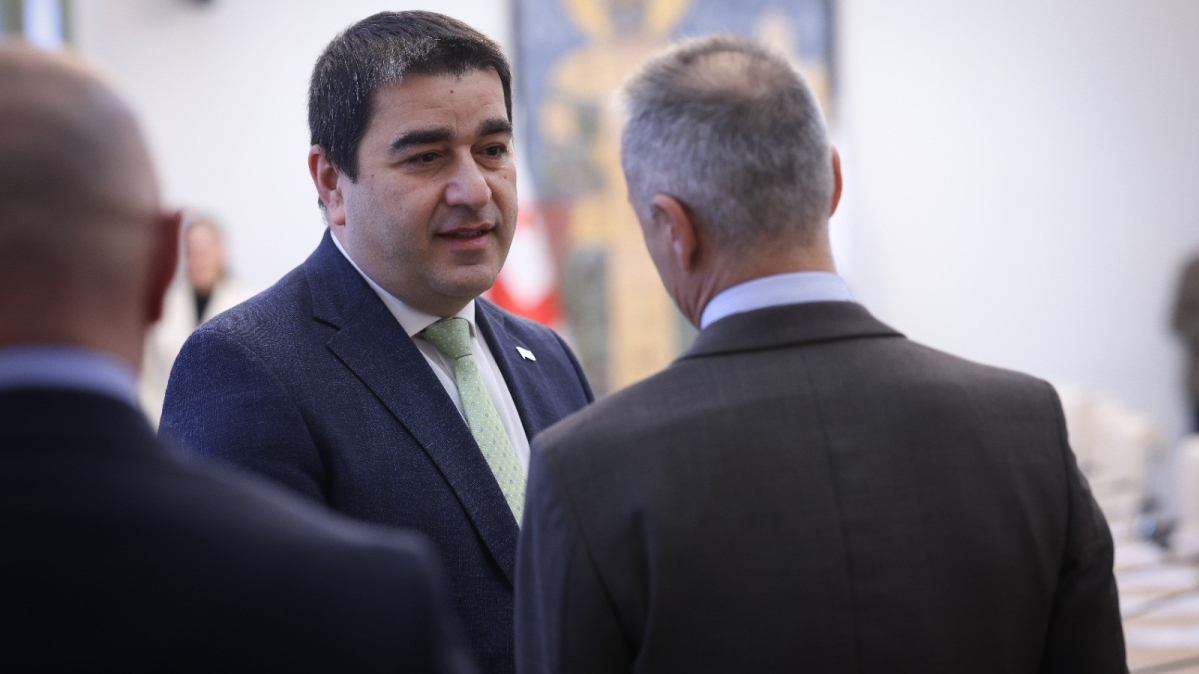
The visit began with meetings in the Georgian parliament, where the delegation held talks with Speaker Shalva Papuashvili and several members of parliament.
According to the parliament’s press service, discussions focused on the country’s political developments, legislative work and the conclusions of the OSCE/ODIHR election observation mission that monitored the 2024 parliamentary vote.
Papuashvili welcomed the delegation’s visit and emphasised the importance of dialogue with international partners. He said Georgia remains an active and committed member of the OSCE and intends to continue its cooperation with the organisation.
The meeting was also attended by Deputy Speaker Ilia Injia, head of Georgia’s delegation to the OSCE Parliamentary Assembly Nikoloz Samkharadze, committee chair Maia Bitadze and MP Eka Sepashvili.
However, the delegation’s programme has not been limited to meetings with the government.
In parallel with official talks, OSCE representatives have also met several opposition groups, including members of the Coalition for Change and representatives of the opposition party “Gakharia for Georgia”.
Among those attending the discussions were opposition politicians Zurab Japaridze, Giga Lemonjava, Nika Gvaramia, Giorgi Butikashvili and Tengo Tevzadze.
For international observers, these meetings are an essential part of understanding the political environment in Georgia, where the divide between the ruling party and the opposition has become one of the defining features of public life.
In a statement released during the visit, the OSCE Parliamentary Assembly acknowledged that political polarisation in Georgia is clearly visible and stressed that meaningful solutions for the country require engagement from all sides of the political spectrum.
Security and state institutions also involved
Alongside political meetings, the delegation has also been engaging with key state institutions.
Georgia’s Minister of Internal Affairs, Gela Geladze, met Pere Joan Pons Sampietro to discuss the ministry’s work in maintaining public order and security.
According to the interior ministry, the minister briefed the delegation on the ministry’s main priorities and ongoing reforms within the institution. Both sides also discussed cooperation between the ministry and OSCE structures.
Geladze emphasised that cooperation with the organisation remains important for Georgia and expressed readiness to deepen that partnership in the future.
The delegation also visited the presidential palace, where members held talks with Georgia’s president, Mikheil Kavelashvili.
During the meeting, the president said the visit offered an opportunity to exchange views on the political situation in the country and to strengthen cooperation with the OSCE.
Kavelashvili also reiterated that Georgia remains committed to democratic principles, the rule of law and human rights, adding that the country sees itself as a constructive participant in international dialogue.
Why the elections still matter
Much of the discussion surrounding the visit inevitably returns to Georgia’s 2024 parliamentary elections.
International observers from the OSCE’s Office for Democratic Institutions and Human Rights concluded at the time that the elections resulted in an elected government. However, the political dispute surrounding the vote has never fully subsided.
Opposition groups have continued to criticise the broader political environment in which the elections were held, while the ruling Georgian Dream party maintains that the vote was legitimate and reflects the will of voters.
Because of that disagreement, the elections remain central to Georgia’s political debate and continue to influence how international partners view developments in the country.
A visit that once failed to happen
This week’s meetings are also notable because a similar visit by the OSCE Parliamentary Assembly was cancelled last year.
At the time, political tensions in Georgia were particularly high, and the planned trip did not go ahead.
The current visit therefore carries additional weight, as it effectively restores direct engagement between Georgian political actors and international parliamentary representatives after a period of strained relations.
Different interpretations already emerging
Even before the visit concludes, political reactions have begun to emerge in Georgia.
Some analysts believe international observers may raise concerns about the country’s democratic trajectory.
Political analyst Gia Abashidze suggested that OSCE representatives could ultimately express concerns about what critics describe as democratic backsliding.
At the same time, Georgian authorities are expected to defend their policies, arguing that recent legislative changes are aimed at strengthening state sovereignty and do not contradict democratic principles.
Officials in Tbilisi have repeatedly stated that Georgia intends to continue its path of democratic development and peaceful political evolution.
A closer look at Georgia’s political landscape
For international observers, the visit provides an opportunity to better understand a country whose politics have become increasingly polarised in recent years.
By meeting both government officials and opposition leaders, the OSCE delegation is attempting to build a fuller picture of the political dynamics shaping Georgia today.
The mission will conclude on 10 March, after further meetings with political actors and representatives of civil society.
Whether the visit will help ease political tensions remains uncertain. But it has already highlighted the central challenge facing Georgia’s political system: maintaining dialogue in a deeply divided political environment.











What is your opinion on this topic?
Leave the first comment