Armenia’s upcoming elections are emerging as a defining geopolitical test, amid growing debate over the country’s future direction between Russia and the West, rising regional pressure, energy dependence concerns and shifting security alliances.
Speaking to AnewZ, Vasif Huseynov, Head of Department at the AIR Centre, said the elections go far beyond domestic politics and could influence the wider regional balance.
“Upcoming elections in Armenia are going to be a historic moment, not only for Armenia, but for the entire South Caucasus.”
He added that the outcome could shape “the future of the region in terms of its geopolitical positioning, as well as connectivity projects and post-conflict processes.”
Despite a crowded political field, Huseynov said the real competition is between two strategic approaches: the current government’s diversification policy and alternative directions proposed by opposition forces.
Russia factor and Eurasian structures
Armenia’s relationship with Russia and its role in Eurasian integration frameworks remain central to domestic political discourse.
Huseynov pointed to what he described as a gradual distancing from Moscow-led structures: “in reality, we see a little bit distancing from the Eurasian Economic Union by the Armenian side.”
He also referred to repeated Russian warnings over potential economic costs if Armenia shifts away from existing integration formats.
Energy dependence and economic diversification
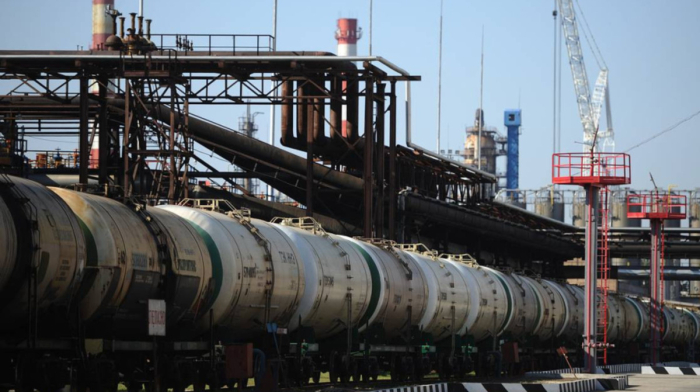
Energy dependence on Russia has historically shaped Armenia’s economic and foreign policy constraints, particularly after earlier regional conflicts. However, diversification has become a stated policy direction.
Huseynov highlighted efforts to expand trade routes through Georgia, Türkiye, and potentially towards European markets.
“It will be possible for Armenia to use the railways through Georgian territory to export its products to Türkiye, and from Türkiye to the European Union,” he said.
Security shift and defence realignment
Armenia’s security policy has also undergone noticeable changes, including reduced reliance on Russia-led security mechanisms such as the CSTO (Collective Security Treaty Organisation).
Huseynov pointed to deepening defence cooperation with France and India, including major arms acquisitions, noting that these shifts are viewed differently across the region and may carry wider security implications.
Western engagement and diplomacy
Western involvement has played an increasingly visible role in Armenia-Azerbaijan normalisation efforts.
Huseynov referred to the 2022 Prague meeting, where Armenia recognised Azerbaijan’s territorial integrity in an EU-mediated process, calling it a key diplomatic milestone.
He also pointed to growing U.S. involvement in regional connectivity and peace initiatives.
“The Western engagement has been reshaping Armenia’s foreign policy partnership, its regional standing, as well as its standing with Russia,” he said.
Election implications for the region
Huseynov said the election outcome will determine whether Armenia continues its current integration trajectory or shifts course under new leadership.
“If Prime Minister Pashinyan succeeds to remain in power, it will be a boost to post-conflict efforts for peace and cooperation in the South Caucasus,” he said, adding that constitutional reforms and connectivity projects could follow.
He warned that an opposition victory could alter the pace of ongoing negotiations and regional initiatives.
Regional connectivity context
Armenia’s emerging transport and connectivity agenda, including routes through Georgia towards Türkiye, is increasingly seen as part of a wider South Caucasus transformation, placing the elections at the centre of broader geopolitical recalibration.











What is your opinion on this topic?
Leave the first comment