As the countries of the Turkic world seek deeper economic integration, the Turkic Investment Fund (TIF) is positioning itself as a key financial vehicle for turning political cooperation into tangible development projects.
Established in 2024 as the financial institution of the Organization of Turkic States (OTS), the fund was created to support investment, connectivity and private-sector growth across a region that stretches from Türkiye to Central Asia.
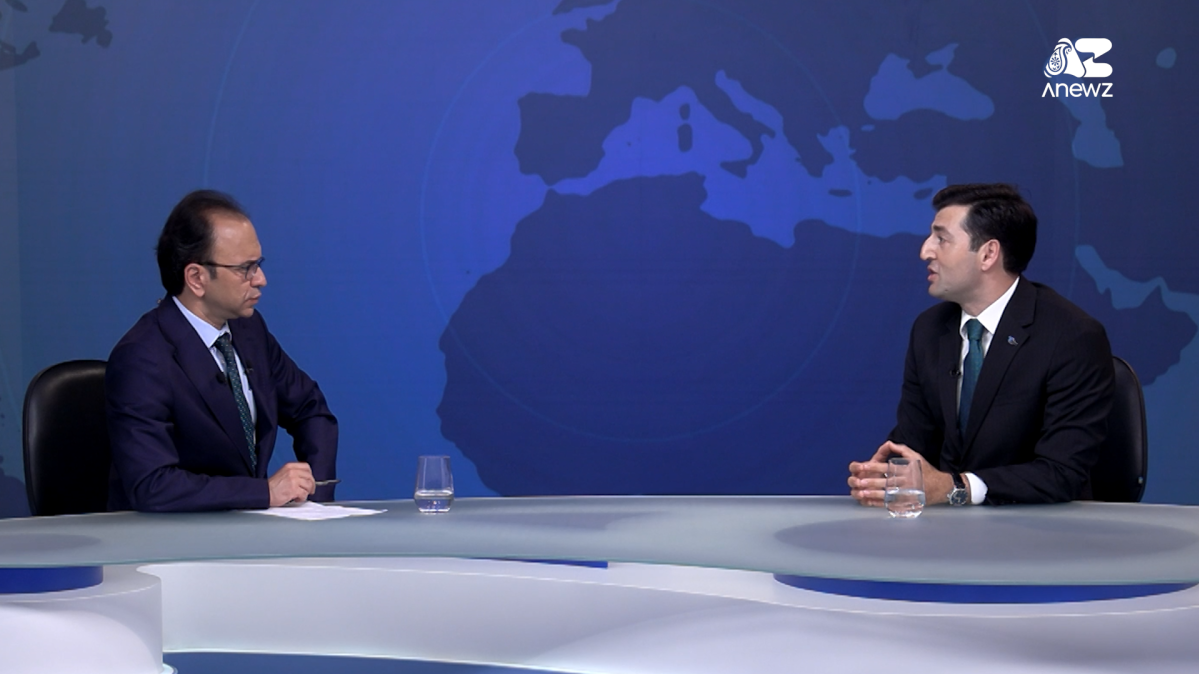
Speaking to AnewZ Special, TIF Director General Ramil Babayev said the fund's mission is to bridge the gap between the economic potential of the Turkic world and the investment needed to unlock it.
With an authorised capital of $600 million, the fund aims to support commercially viable projects that also deliver measurable development benefits. Babayev stressed that the current capital base should be viewed as a starting point rather than a limit, with plans to attract additional financing through international capital markets and partnerships with global financial institutions.
Azerbaijan at the centre of regional connectivity
According to Babayev, Azerbaijan occupies a unique position within the fund's strategy due to its role as a transport and logistics hub connecting Asia and Europe.
He highlighted opportunities in energy, electricity transmission, transport infrastructure and private-sector development, while pointing to the economic reconstruction of Karabakh and Eastern Zangezur as areas with significant investment potential.
The development of transport links, including routes connecting Azerbaijan with Türkiye and wider Central Asia, is also a priority. Babayev said such projects could strengthen the Middle Corridor, creating new opportunities for trade, logistics and regional economic cooperation.
"The Turkic Investment Fund was not established to finance isolated projects," he said. "It was established to finance regional connectivity."
First investments take shape
Although still a relatively new institution, the fund has already begun building an investment portfolio.
Among its first major commitments is participation in a $650 million financing package for Almaty International Airport in Kazakhstan. The fund plans to contribute $20 million to the project alongside international partners.
Another initiative involves a $10 million financing package for Kazakhstan's KMF Bank in partnership with the European Bank for Reconstruction and Development (EBRD). The programme is designed to support micro, small and medium-sized enterprises, particularly women-led businesses, rural entrepreneurs and companies involved in regional trade.
The fund has also signed a framework agreement with the Islamic Corporation for the Development of the Private Sector (ICD), opening the door to Sharia-compliant financing across member states. Babayev said the arrangement could mobilise up to $300 million for eligible projects throughout the region.
Focus on sustainability
Sustainability is expected to play a major role in the fund's future operations.
Babayev said the organisation views sustainability not as a standalone investment category but as a standard applied across all projects. Areas of interest include renewable energy, green energy corridors, energy storage, sustainable resource development and water infrastructure.
He drew particular attention to water security, describing it as an increasingly important challenge for Central Asia as populations grow and climate pressures increase.
The fund is also examining opportunities linked to clean energy transmission projects connecting Central Asia and Azerbaijan, which could strengthen regional energy integration while supporting the transition to lower-carbon energy systems.
Building an integrated economic space
Beyond individual investments, the broader goal is to create a more connected economic region across the Turkic world.
The OTS members collectively represent a population of more than 170 million people and an economy worth approximately $2 trillion. Yet cross-border trade and investment flows still fall short of their potential.
Babayev argued that stronger infrastructure, improved access to finance and closer cooperation between public and private sectors could help unlock new opportunities across the region.
Looking ahead, he sees the Turkic Investment Fund playing three key roles: serving as a connector between governments, businesses and investors; acting as a catalyst to attract additional capital; and helping raise standards in project preparation and investment execution.
"The next years will not be defined only by stronger political cooperation," Babayev said. "They will also be defined by stronger connectivity and integrated prosperity across the region."











What is your opinion on this topic?
Leave the first comment