The Saudi-led coalition said early Thursday that it intercepted and destroyed a drone over Saudi Arabia’s Eastern Province.
⦿ 21:20 GMT | UPDATE
Five killed, 16 wounded in Houthi attack on Aden Presidential Palace complex
Reuters
At least five people were killed and 16 others wounded in a Houthi attack targeting the Maashik Presidential Palace complex in Aden, according to Yemen's health minister.
The strike hit the compound in Yemen's interim capital as hostilities escalate between the Houthis and the Saudi-backed government. Further details on the victims and extent of damage have not yet been released.
⦿ 19:18 GMT | UPDATE
Iran Army Chief says Strait of Hormuz remains under Tehran's control
Anadolu
Iranian Army Chief of Staff Amir Hatami said Tehran is prepared for “any kind of war” and asserted that the Strait of Hormuz remains fully under Iranian control.
Hatami also warned that any attack on Iran's infrastructure would trigger retaliation against Israel and countries cooperating with it.
He reiterated Tehran's position that the strategic waterway will remain closed until what he described as the rights of the Iranian people are respected.
⦿ 17:44 GMT | UPDATE
Houthis claim deadly strike on Aden's Maashik Palace
Anadolu
Yemen's Houthi movement has claimed responsibility for an attack on Maashik Palace in Aden, saying it targeted what it described as Saudi military presence in the city.
Houthi military spokesperson Yahya Saree said the group considers Saudi military assets “legitimate targets.”
The attack reportedly killed three people, while Saudi authorities have not immediately responded to the claim.
⦿ 16:48 GMT | UPDATE
U.S. issues fresh Iran-related sanctions
Reuters
The Trump administration has issued fresh Iran-related sanctions targeting 16 individuals and 10 entities, according to a notice posted on the U.S. Department of Treasury website on Thursday.
⦿ 14:50 GMT | UPDATE
Saudi-led coalition says 20 Houthi attacks on Riyadh airport killed 17 in October
Reuters
The Saudi-led coalition fighting in Yemen said on Thursday that 20 attacks by Yemen's Houthi group on Riyadh airport in October had resulted in 17 fatalities, according to the coalition's spokesperson.
The spokesperson, speaking at a press conference, also said the Houthis had attempted to attack dozens of airports, oil facilities and ports in Saudi Arabia.
⦿ 12:30 GMT | UPDATE
France started deploying military means in Saudi Arabia
Reuters
France is starting to put into action operational elements of an agreement to help protect Saudi Arabian oil facilities, Foreign Ministry spokesperson Pascal Confavreux said on Thursday.
He declined to elaborate on what were the means sent to Saudi Arabia.
French President Emmanuel Macron said last month France would send troops and defence systems to Saudi Arabia to help protect the Red Sea port city of Yanbu, which is key for energy transport.
⦿ 11:40 GMT | UPDATE
Iran's army says oil tanker on fire in the Strait of Hormuz
Reuters
Iran's army said on Thursday that a “violating” oil tanker is on fire in the eastern part of the Strait of Hormuz, according to a statement carried by state media.
“This rogue tanker, having disabled its tracking systems, was attempting to pass through the restricted area in the Gulf of Oman”, the army statement added.
⦿ 10:09 GMT | UPDATE
EU and Gulf states postpone summit due in Saudi Arabia
Reuters
The EU and Gulf states have agreed to postpone their summit that was due to be held in Saudi Arabia on 24 October, two sources familiar with the matter told Reuters on Thursday.
The sources confirmed remarks by Bulgaria's Prime Minister Rumen Radev, who earlier on Thursday said he had understood the meeting would be scrapped due to security concerns.
⦿ 10:03 GMT | UPDATE
Egypt, Qatar stress need to halt hostilities
Anadolu
Egypt and Qatar stressed the need to halt all hostilities against Saudi Arabia and expressed solidarity with the kingdom, according to the Egyptian Foreign Ministry on Thursday.
The position was expressed during a phone call late Wednesday between Egyptian Foreign Minister Badr Abdelatty and his Qatari counterpart, Sheikh Mohammed bin Abdulrahman Al Thani, the ministry said in a statement.
⦿ 07:58 GMT | UPDATE
Top Pakistani and Egyptian diplomats discuss the Middle East situation
Reuters
Pakistani Foreign Minister Ishaq Dar and his Egyptian counterpart Badr Abdelatty on Thursday discussed the latest regional developments in a phone call, stressing that dialogue and diplomacy remain the “only way forward” to address all issues.
The two ministers reaffirmed their commitment to supporting efforts to advance dialogue and de-escalation and agreed to remain closely engaged on matters of mutual interest, according to a statement from Pakistan's Foreign Ministry.
The remarks came amid continued tensions between Iran and the U.S.
⦿ 07:57 GMT | UPDATE
Saudi Arabia activates emergency alerts in Najran, Jizan
Anadolu
Saudi Arabia’s Civil Defence briefly activated emergency alerts in the southern cities of Najran and Jizan on Thursday, warning residents of potential danger before announcing that the threat had passed.
The National Early Warning Platform for Emergencies issued alerts in Najran and Jizan, urging residents to follow safety instructions, according to the Civil Defence.
The agency later announced that the danger had passed in both cities.
⦿ 06:13 GMT | UPDATE
Pakistan and Oman call for Middle East de-escalation
Pakistan and Oman discussed the U.S.-Iran conflict, Houthi attacks on Saudi Arabia and threats to shipping through the Strait of Hormuz and Bab el-Mandeb on Wednesday, 14 October.
Deputy Prime Minister and Foreign Minister Ishaq Dar described the attacks on Saudi Arabia as “totally unacceptable”, while Omani Foreign Minister Sayyid Badr Albusaidi praised Pakistan’s diplomatic efforts to promote dialogue.
Albusaidi also met Prime Minister Shehbaz Sharif during his two-day visit to Islamabad on 13-14 October.
⦿ 04:51 GMT | UPDATE
U.S. weighs using ‘mother of all bombs’ in potential Iran strikes, CNN reports
Reuters
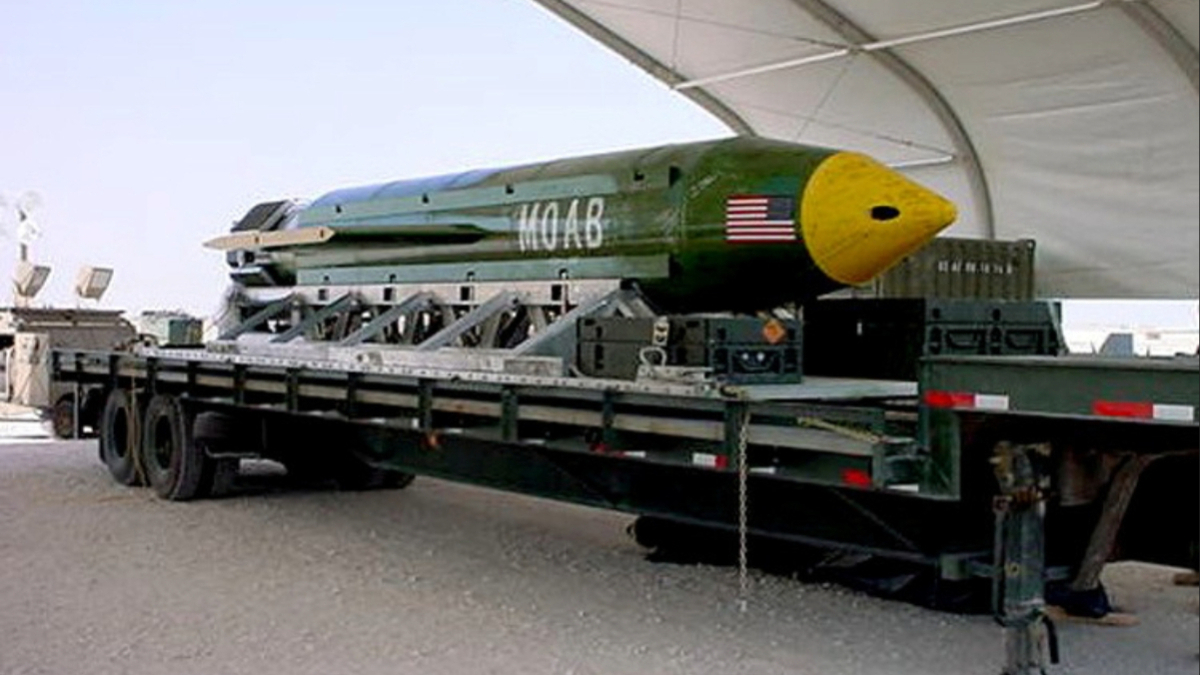
The U.S. military has developed strike plans that could include using the GBU-43/B Massive Ordnance Air Blast Bomb, also known as the “mother of all bombs”, against Iranian energy infrastructure and nuclear sites if President Donald Trump orders renewed combat operations, CNN reported on Thursday.
The potential deployment of the largest non-nuclear bomb in the U.S. arsenal would mark a significant escalation in the conflict, although officials familiar with military planning discussions told CNN questions remain over its effectiveness in achieving Washington's strategic objectives.
Reuters could not immediately verify the report.
⦿ 04:40 GMT | UPDATE
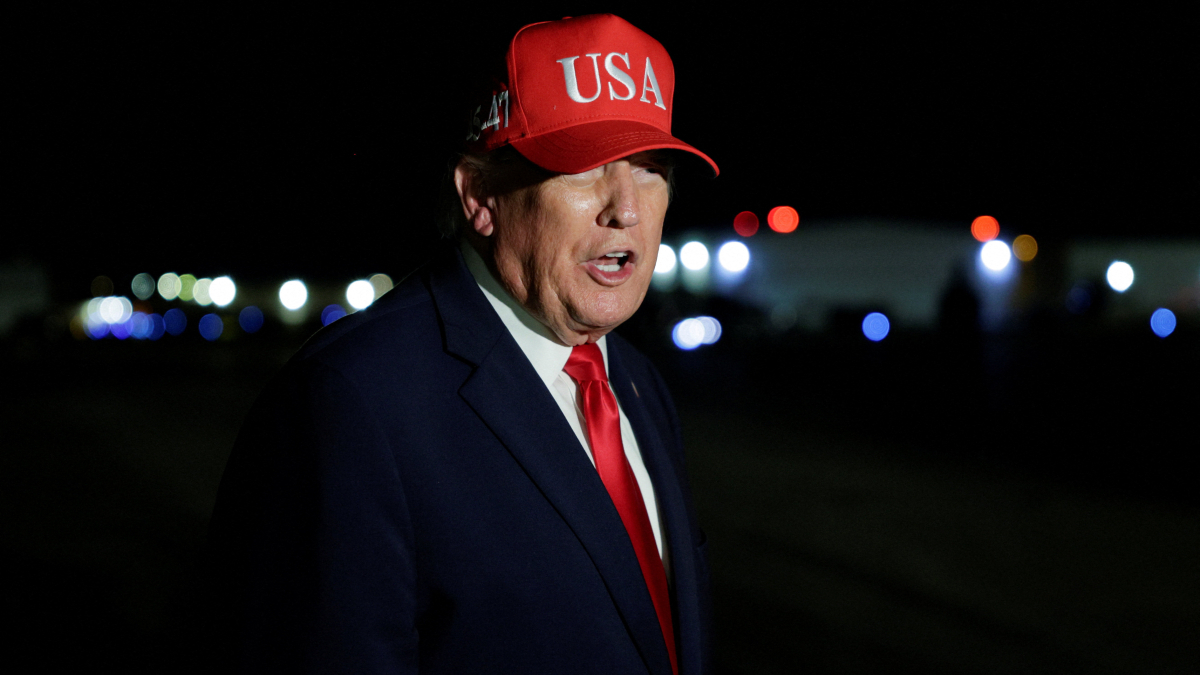
Trump says Iran war will end soon, oil prices will plunge
Anadolu
U.S. President Donald Trump said that the war with Iran would end “very soon,” predicting that oil prices would fall sharply once the conflict concludes.
“The Iran war will end very soon … Soon, as they want it to end,” Trump told reporters in Montana.
“They'll never have a nuclear weapon, and oil prices will drop like a rock.”
Earlier, addressing a rally in Montana, Trump expressed uncertainty over which Iranian officials the U.S. was negotiating with as Washington sought to end the conflict.
“They don’t have a navy. They don’t have an air force. Their army is decimated. Their leaders are gone.”
⦿ 03:58 GMT | UPDATE
UN warns failure of Hormuz fertiliser plan could trigger food crisis
Reuters
A failure by the United States and Iran to agree within weeks on a UN-backed plan for moving fertiliser through the Strait of Hormuz could cause a food security crisis in parts of Asia and Africa, an official overseeing the proposed scheme said on Wednesday.
The United Nations set up a taskforce in March to facilitate passage of fertilisers through the strait.
It is yet to implement the mechanism it drew up, but United Nations Under-Secretary-General Jorge Moreira da Silva said this could be activated within 7-10 days of an agreement between Washington and Tehran.
“It's absolutely crucial to get the deal in the next few weeks. Otherwise, we will miss the planting season,” he said in an interview in Bangkok, on the sidelines of the International Monetary Fund and World Bank annual meetings.
⦿ 03:35 GMT | UPDATE
Netanyahu says he is not seeking to attack Iran again
Reuters
Israeli Prime Minister Benjamin Netanyahu said that he was not in favour of a preemptive strike against Iran before Israel's 27 October election but also warned Tehran and its proxies against striking Israel.
“It is not convenient for us, it's no good,” Netanyahu said in an interview on Israel's Army Radio, when asked about the possibility of a preemptive strike and allegations by his political rivals that he was seeking a military confrontation ahead of the election.
“Even if Iran fires missiles at us, they will blame me,” Netanyahu said, though he also repeated his previous warnings to Iran, saying Israel would respond forcefully if attacked.
⦿ 03:21 GMT | UPDATE
Houthis intensify strikes on Saudi airports and energy sites
Anadolu
Saudi Coalition spokesman Turki al-Maliki announced the interception without providing further details, including the drone’s origin.
Hours earlier, Yemen’s Houthi group claimed to have struck King Khalid International Airport in the Saudi capital Riyadh with a ballistic missile, without providing details of casualties or damage.
The coalition said Wednesday that it intercepted and destroyed a ballistic missile launched by the Houthis toward Riyadh after warning alerts were activated in the capital and nearby Al-Kharj governorate.
Yemen's Houthis vowed on Wednesday to press on with attacks on airports and oil facilities in Saudi Arabia, a day after a strike that sources said caused extensive damage to the headquarters of oil giant Saudi Aramco.
⦿ 03:21 GMT | UPDATE
Welcome
Hello and welcome to our live coverage.
Follow us for the latest updates from the Middle East conflict.










What is your opinion on this topic?
Leave the first comment