Türkiye and Syria are aiming to increase annual bilateral trade to $10 billion as Ankara strengthens economic ties with Damascus under Syria's post-Assad government.
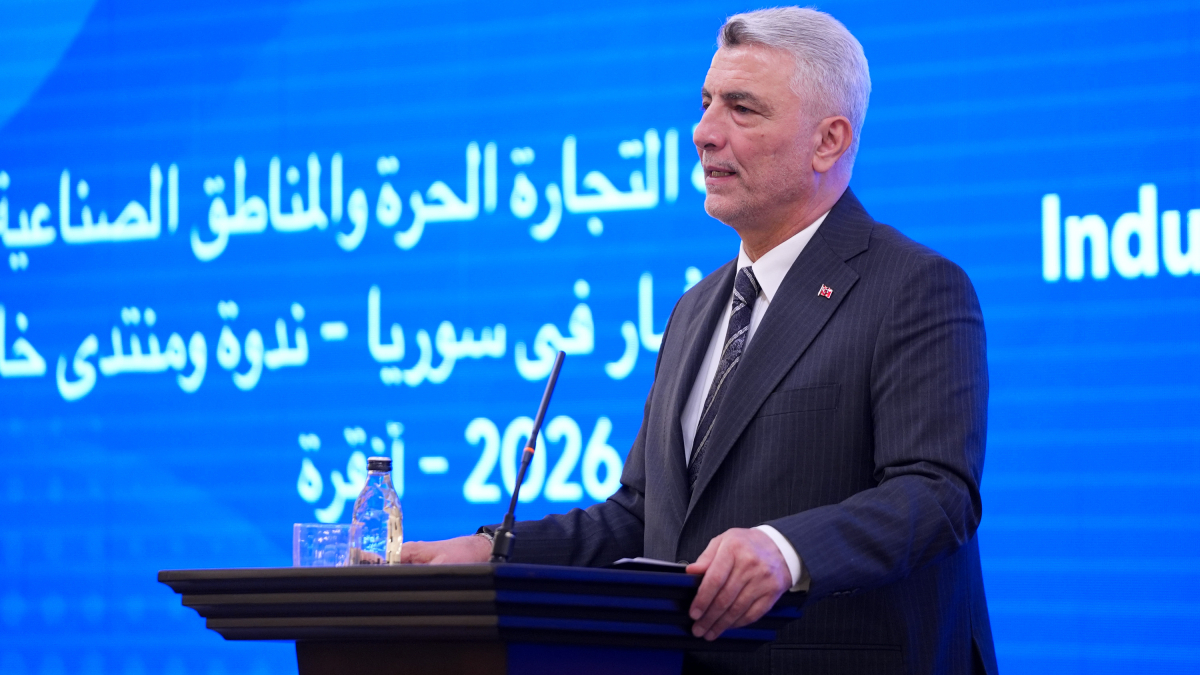
Turkish Trade Minister Ömer Bolat announced the target after meeting Qutayba Badawi, head of Syria's Customs and Border Crossings Authority, on the sidelines of a trade and investment forum in Ankara on Wednesday.
Bolat said bilateral trade reached a record $3.7 billion in 2025, adding that both countries were determined to achieve the $10 billion target set by their respective leaders, Turkish President Recep Tayyip Erdoğan and Syrian President Ahmed al-Sharaa.
According to Bolat, his meeting with Badawi focused on customs duties, the ongoing work of a joint customs committee and ways to enhance cooperation at border crossings.
Ankara is seeking to expand commercial activity along the shared border, particularly between the Turkish city of Gaziantep and the northern Syrian city of Aleppo.
Economic ties between the two countries have expanded rapidly since the fall of long-time Syrian leader Bashar Assad in late 2024, which transformed relations between Ankara and Damascus.
Türkiye was a leading supporter of Syrian opposition forces during the country's 13-year conflict, at the start of which it severed relations with Assad's government.
New era of relations
Ankara has since developed close ties with Syria's post-Assad leadership, emerging as a key political and economic partner of the new government in Damascus.
Turkish officials have repeatedly pledged support for Syria's territorial integrity and political stability, while seeking to play a leading role in the country's reconstruction.
Ankara has also called for the lifting of international sanctions on Syria, arguing they could hamper the war-ravaged country's economic recovery.
Turkish firms, meanwhile, are positioning themselves to take part in reconstruction projects, particularly in infrastructure, manufacturing, transport and energy, as Syria seeks to rebuild after more than a decade of conflict.
Türkiye also hosts a large Syrian population, although hundreds of thousands have returned to their homes in the more than year since Assad's departure.
According to Ankara, economic recovery and improved security are essential to creating the conditions for further voluntary returns.
The two countries have also stepped up cooperation in the security and energy sectors, while Turkish officials have stressed the importance of facilitating cross-border trade and restoring transport links.
Speaking to reporters, Bolat said Türkiye would continue working closely with the Syrian authorities to remove existing barriers to trade with a view to unlocking the region's vast economic potential.
For Ankara, deeper economic integration with Syria is viewed not only as a commercial opportunity but also as a means of promoting stability and improving living conditions on both sides of the border.
Read more:













What is your opinion on this topic?
Leave the first comment