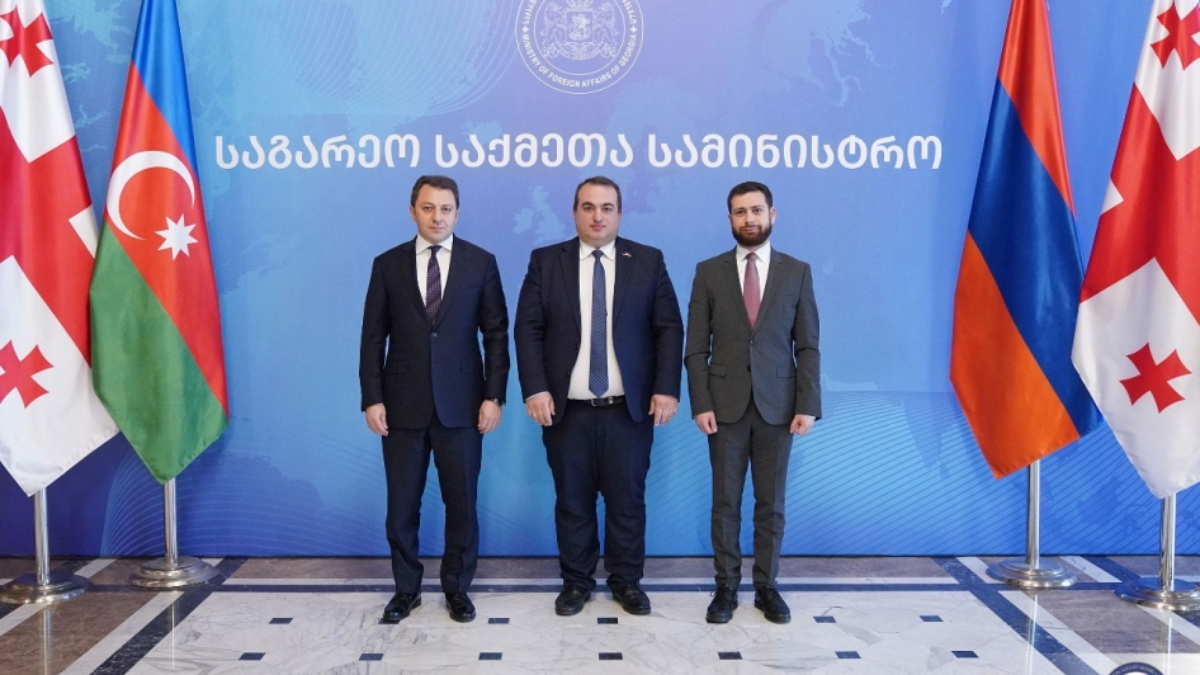
Border delimitation between Armenia and Georgia is being viewed as more than a technical process, with experts saying it carries broader geopolitical significance for the South Caucasus.
Speaking to AnewZ, Associate Professor at European University George Mchedlishvili noted that “it will close the potentially tense chapter” and remove opportunities for external actors seeking instability in the region.
He emphasised that relations between Georgia and Armenia, as well as with Azerbaijan, have generally been stable, but finalising borders would “put a full stop on that issue”.
According to him, this step comes at a time of “unprecedented pace of rapprochement” not only between Armenia and Azerbaijan, but also involving Türkiye.
Regional cooperation and peace momentum
“Countries remain stable, they have smooth relations, they can act as a region,” Mchedlishvili said, adding that such progress would pave the way for regional and international projects.
The expert also highlighted that resolving border issues peacefully could serve as “a good example of solving any potential points of tension smoothly and with a good will.”
Looking at the wider picture, he argued that a more stable South Caucasus would become “more trustworthy” and could evolve into a fully functioning regional bloc.
Armenia-Georgia border issue and misinformation
Within this context, Armenian authorities recently dismissed media claims that a village in the north of the country would be transferred to Georgia as part of the delimitation process, calling the report “fabricated.”
Prime Minister Nikol Pashinyan’s spokesperson, Nazeli Baghdasaryan, rejected the allegation, saying: “Any statement, idea, or ‘information’ about the intention, plan, or agreement to transfer any part of the sovereign territory of the Republic of Armenia to another country cannot correspond to reality by its very nature.”
She added: “We deny, are denying, and will continue to deny any such publications, both now and in the future, due to their fabricated nature.”
At the same time, according to Armenian media, Prime Minister Nikol Pashinyan confirmed that the Armenia–Georgia border delimitation process is moving forward, with agreements already reached with the Georgian side.
External actors and regional impact
On external dynamics, the expert stressed that the European Union and the U.S. favour a stable and predictable region, which is key for trade routes linking East and West.
However, he warned that ongoing tensions in Iran could temporarily slow progress, though he expressed hope that “everything will be back on track” once hostilities subside.
What to watch for lasting stability
In practical terms, he outlined key indicators for lasting stability: regional peace, political continuity in Armenia, and continued progress in Armenia-Azerbaijan and Armenia-Türkiye normalisation.
These, he said, would signal an “irreversible character of the current peace process” and help transform the South Caucasus into a “fully fledged” and cooperative region.












What is your opinion on this topic?
Leave the first comment