The AnewZ Opinion section provides a platform for independent voices to share expert perspectives on global and regional issues. The views expressed are solely those of the authors and do not represent the official position of AnewZ
The geopolitical order that shaped the South Caucasus for more than two decades has collapsed, pushing Azerbaijan into a new era defined by regional instability, strategic transformation, and intensifying competition among neighbouring powers.
Long gone are the years of the so-called “Eastern Partnership reality” that characterised the geopolitical environment of the 2000s and much of the 2010s.
Following the turbulent 1990s and the painful transition from Soviet collapse to post-Soviet statehood, Azerbaijan, together with the other former Soviet republics, gradually entered a period of relative geopolitical predictability and strategic stabilisation. Within this framework, the South Caucasus evolved under a comparatively stable regional order shaped by post-Cold War assumptions, limited military escalation, and the broader expectation that the post-Soviet space would remain governed through a combination of frozen conflicts, managed competition, and cautious geopolitical balancing.
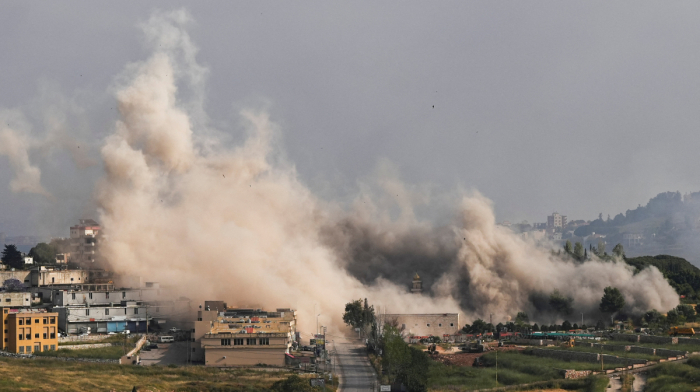
That historical period has now decisively come to an end. The 2020 Garabagh War, followed by the 2022 Russia–Ukraine war and the subsequent U.S.–Israeli confrontation with Iran, fundamentally transformed the strategic landscape of the wider region. Together, these conflicts shattered many of the geopolitical assumptions that had defined the post-Soviet order for more than two decades.
The South Caucasus has consequently entered an entirely new historical phase characterised by military-driven geopolitical change, the erosion of previous security architectures, intensifying competition between regional and global powers, and the simultaneous strategic transformation of several key neighbouring states.
A very important question emerges: what kind of geopolitical reality will Azerbaijan face in the next decade of its history?
Neighbours in transformation
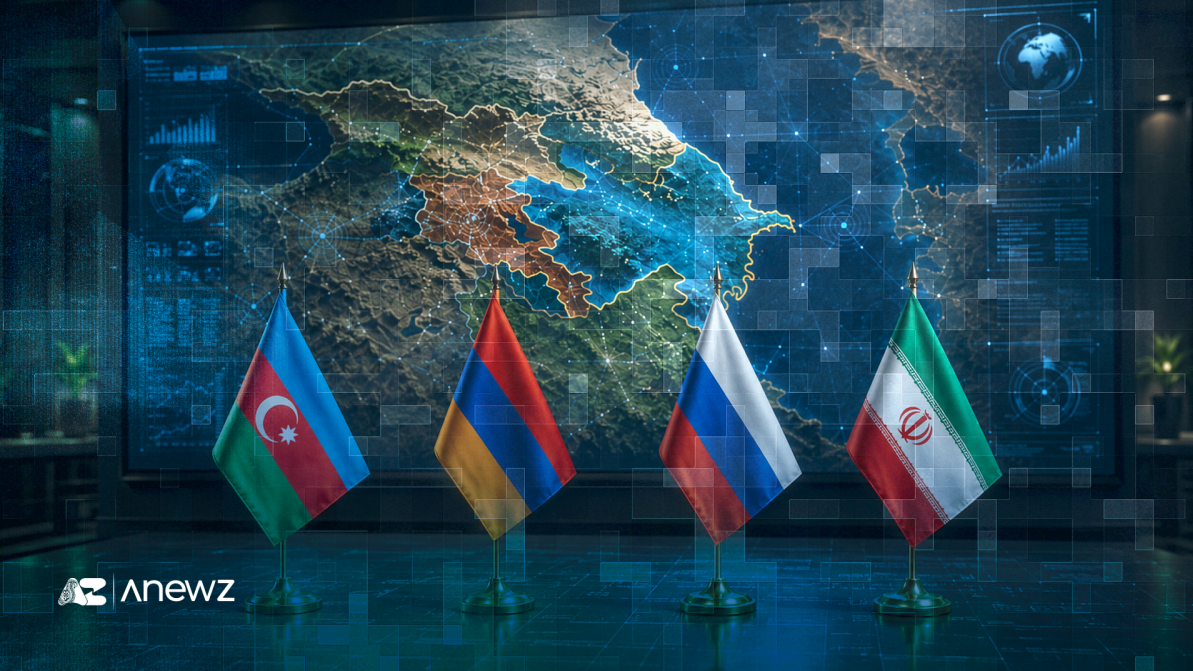
For the first time since gaining independence, Azerbaijan is entering a geopolitical environment in which three of its four land neighbours - Armenia, Russia and Iran - are simultaneously undergoing deep strategic and psychological transformations shaped, directly or indirectly, by military defeat, strategic disappointment, or the collapse of earlier security assumptions.
This process is unfolding while Azerbaijan itself is also experiencing a major post-war transformation. The coincidence of these parallel transitions may become one of the defining geopolitical realities of the South Caucasus and adjacent regions during the next decade.
The issue is not merely that wars were lost. Military defeat, especially in regions where state legitimacy and national identity are heavily connected to military narratives, often produces much broader consequences. In such moments, states are compelled to reconsider not only their foreign policy but the very foundations of their political and security models.
In this context, the cases of Russia, Iran and Armenia acquire particular importance for Azerbaijan.
Russia’s diminished aura
For decades, Russia positioned itself not only as a regional hegemon but also as a global military superpower and the decisive geopolitical centre of the post-Soviet space. The image of Russia as “the second army in the world” became deeply embedded both internationally and within the Russian political system itself.
However, the war in Ukraine exposed significant discrepancies between projected power and actual state capacity. The conflict revealed institutional weaknesses, logistical problems, corruption, demographic pressures, industrial limitations, and difficulties in adapting to modern warfare.
Even if Russia retains substantial military capabilities and remains one of the key powers in Eurasia, the aura of inevitability and overwhelming dominance surrounding Moscow has been significantly weakened. The spell is broken.
Iran under pressure
At the same time, Iran is also entering a potentially transformative phase.
For decades, Tehran cultivated the image of a revolutionary state capable of projecting influence across the Middle East through ideological mobilisation, proxy networks and asymmetric capabilities. Iran successfully established deep influence in Iraq, Syria, Lebanon and Yemen, while also presenting itself as one of the principal challengers to American regional dominance.
However, recent confrontations exposed another reality: influence and survivability are not the same thing. The demonstrated ability of external actors to penetrate Iranian airspace, conduct precision operations, and expose vulnerabilities within Iran’s security and intelligence structures challenged the perception of strategic invulnerability carefully constructed by the Iranian system over many years.
This does not necessarily imply collapse or strategic irrelevance. Iran remains a major regional actor with substantial capabilities. Yet the country increasingly faces pressure to reassess the balance between revolutionary expansionism and internal state resilience.
For Azerbaijan, developments in Iran are especially important because of geography, ethnic dynamics, transit routes, and the broader balance of power in the South Caucasus. A more inward-looking Iran focused on domestic stabilisation would behave differently from an Iran driven primarily by regional ideological projection.
This transformation may create both periods of pragmatism and episodes of heightened sensitivity in Tehran’s approach towards neighbouring regions, including the South Caucasus.
Armenia’s search for a new strategy
The third transformative case is Armenia.
The defeat in the 44-day war represented not only a military loss but also the collapse of a strategic and psychological framework that had shaped Armenian statehood and national identity since the 1990s. The first Garabagh war created a perception of military superiority and strategic advantage that became deeply institutionalised within Armenian political culture. The events of 2020 and subsequent developments shattered many of these assumptions.
As a result, Armenia entered an intense internal debate concerning its geopolitical orientation, military doctrine, alliance structure, and national priorities. Questions regarding relations with Russia, engagement with the West, the future of regional integration, and the sustainability of previous security concepts became central to Armenian political discourse.
In many ways, Armenia is currently engaged in a broader search for a new post-war national strategy.
For Azerbaijan, this process creates a complex combination of opportunities and uncertainties. On one hand, transformation in Armenia may open possibilities for pragmatic coexistence, connectivity projects and gradual normalisation. On the other hand, periods of post-defeat identity crisis often generate internal instability, radicalisation and revanchist narratives.
Historical experience demonstrates that societies struggling to reconcile mythological self-perceptions with geopolitical realities may become politically volatile for extended periods.
Azerbaijan’s strategic repositioning
The fact that these transformations are unfolding simultaneously makes the situation even more significant. Azerbaijan is effectively entering a region where multiple neighbouring powers are reassessing themselves at the same time. Such periods historically produce fluid geopolitical environments in which alliances, strategic assumptions and regional hierarchies become less predictable.
Yet the most important aspect of this process is that Azerbaijan itself is also undergoing transformation.
The Azerbaijan that emerged after the 2020 war differs substantially from the Azerbaijan of previous decades. The restoration of territorial control, growing military confidence, the expansion of regional logistical ambitions, development of the Middle Corridor, increasing energy relevance for Europe, and broader geopolitical changes across Eurasia are all reshaping Azerbaijan’s strategic identity and international role.
Baku increasingly positions itself not merely as a small post-Soviet state balancing between larger powers, but as a regional middle power seeking strategic autonomy, logistical centrality and geopolitical flexibility.
The growing importance of transport corridors, energy connectivity and Eurasian trade routes further strengthens Azerbaijan’s relevance amid wider global instability.
Risks and opportunities ahead
However, Azerbaijan’s own transformation coincides with the transformation of its surrounding environment. This creates a highly unusual strategic moment. Historically, states often face either internal transition or external regional instability. Azerbaijan may experience both simultaneously.
This means the next decade will likely require exceptionally careful strategic management. The challenge for Azerbaijan will not simply be preserving the status quo achieved after the 2020 Garabagh War. Rather, it will involve navigating a region where neighbouring powers are simultaneously attempting to redefine themselves after strategic shocks and military disappointments.
In such an environment, rigid bloc politics may become increasingly dangerous. Azerbaijan will likely continue deepening its multi-vector foreign policy approach, maintaining relations with competing powers while avoiding excessive dependence on any single geopolitical centre.
The ability to remain flexible, pragmatic and economically relevant may become more important than ideological alignment.
At the same time, Azerbaijan itself must avoid one of the classic traps of post-victory states: strategic overconfidence. History repeatedly demonstrates that military success can generate illusions of permanence and inevitability similar to those that contributed to the strategic failures of others in the region.
The collapse of neighbouring military myths does not eliminate the structural volatility of the South Caucasus. On the contrary, periods of regional transformation often produce new forms of competition, instability and geopolitical experimentation.
For this reason, the next decade may become not simply a post-war period for Azerbaijan, but an era of simultaneous regional transformation. The countries surrounding Azerbaijan are entering a phase of strategic reassessment shaped by military defeat, exposed vulnerabilities and changing geopolitical realities.
Azerbaijan itself is also redefining its place within Eurasia. How successfully Baku manages this convergence of transformations may determine not only its own trajectory, but also the broader future balance of the South Caucasus.














What is your opinion on this topic?
Leave the first comment