Israeli forces carried out more than 120 airstrikes across southern and eastern Lebanon on Tuesday (26 May), killing at least 31 people in one of the heaviest bombardments in recent weeks, according to Lebanese security and health officials.
Lebanon’s health ministry said at least 31 people were killed and 40 wounded in the strikes, according to state media reports. Among the dead were 14 people in the southern town of Burj al-Shamali, including two children and three women, officials said.
The latest escalation comes as Israeli Prime Minister Benjamin Netanyahu said the military was “deepening” its operations in Lebanon, including efforts to “fortify the security strip” to protect northern Israeli communities. He said Israeli forces were operating “with large forces in the field and capturing and controlling areas.”
Ground operations deepen inside southern Lebanon
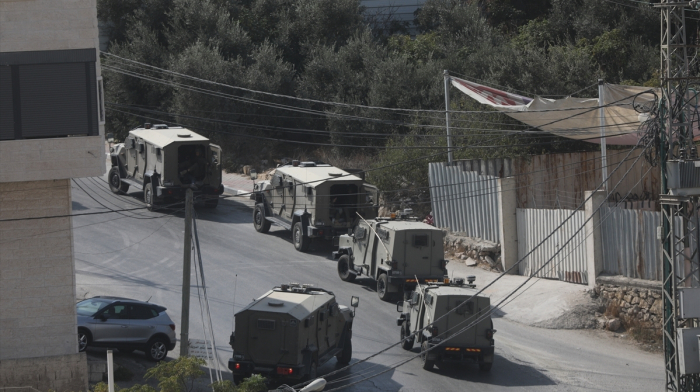
Israeli troops are believed to be positioned several kilometres inside Lebanese territory, within a self-declared security zone that has gradually expanded in recent weeks. Two sources said Israeli forces had pushed beyond this buffer area, though the full extent of the advance has not been independently confirmed.
The so-called “Yellow Line,” referenced by military sources, sits apart from the UN-demarcated Blue Line and is understood to form part of a proposed buffer zone extending five to 10 kilometres into southern Lebanon.
Residents in several border villages have been ordered not to return, with reports of homes being demolished as Israeli forces seek to consolidate control of the area.
An Israeli military official said troops were “operating in a targeted manner beyond the Forward Defense Line in order to remove direct threats to the citizens of the State of Israel,” acting under instructions from the political leadership.
Hezbollah drones reshape frontline fighting
The escalation on the ground has coincided with a shift in Hezbollah’s tactics. The group has increasingly used small first-person-view (FPV) explosive drones, similar to those deployed in Ukraine, to target Israeli troops and vehicles inside Lebanese territory.
Some of these drones are reportedly guided via thin fibre-optic cables, making them resistant to electronic jamming systems. Israeli officials have not publicly detailed a countermeasure and the tactic is understood to have posed a persistent challenge to forces on the ground.
Hezbollah has also released footage on social media showing drone and rocket attacks against Israeli positions and military vehicles. The group says it targeted Israeli forces advancing near the southern town of Zawtar al-Sharqiya using explosive drones, rockets and artillery.
The advance is widely seen as an effort to push Hezbollah positions further from the border and limit the effectiveness of its drone attacks.
Civilian toll rises amid widespread destruction
Strikes on Tuesday hit multiple areas across southern Lebanon and the eastern Bekaa region, including sites near historically significant and densely populated locations.
Some attacks struck close to Beaufort Castle, a medieval fortress in southern Lebanon recognised by UNESCO as one of the best-preserved castles in the region. Other strikes reportedly hit near the Qaraoun Dam, Lebanon’s largest water reservoir.
Lebanon’s health ministry said the cumulative toll since early March had reached 3,213 killed and 9,737 wounded.
The World Health Organization has separately said at least 608 people have been killed since a fragile ceasefire came into effect in April.
Israel says operations aim to secure northern border
Israel says its military campaign is aimed at preventing attacks on communities in the north and dismantling Hezbollah positions close to the frontier.
Netanyahu has said Israel would intensify strikes against Hezbollah while also defending the creation of what he described as a security zone inside Lebanese territory.
Critics, including Lebanese officials and international observers, have warned that the proposed security zone could amount to a prolonged occupation of Lebanese territory, raising concerns over civilian displacement, violations of international law and the risk of a wider regional escalation.
The Israeli military said 10 soldiers had been killed since the April ceasefire, six of them in attacks involving Hezbollah explosive drones.
Regional tensions threaten fragile ceasefire
The fighting comes against a backdrop of wider regional instability, including tensions involving Iran and the U.S., which analysts say could complicate efforts to contain the conflict in Lebanon.
Iran has made an end to Israeli strikes on Hezbollah a key condition in its broader negotiations with Washington, raising concerns that the current escalation could further strain diplomatic efforts.
While a ceasefire was announced in April, it has remained fragile, with near-daily strikes and cross-border attacks continuing despite international pressure to stabilise the situation.
Hezbollah has not released its own casualty figures.









What is your opinion on this topic?
Leave the first comment