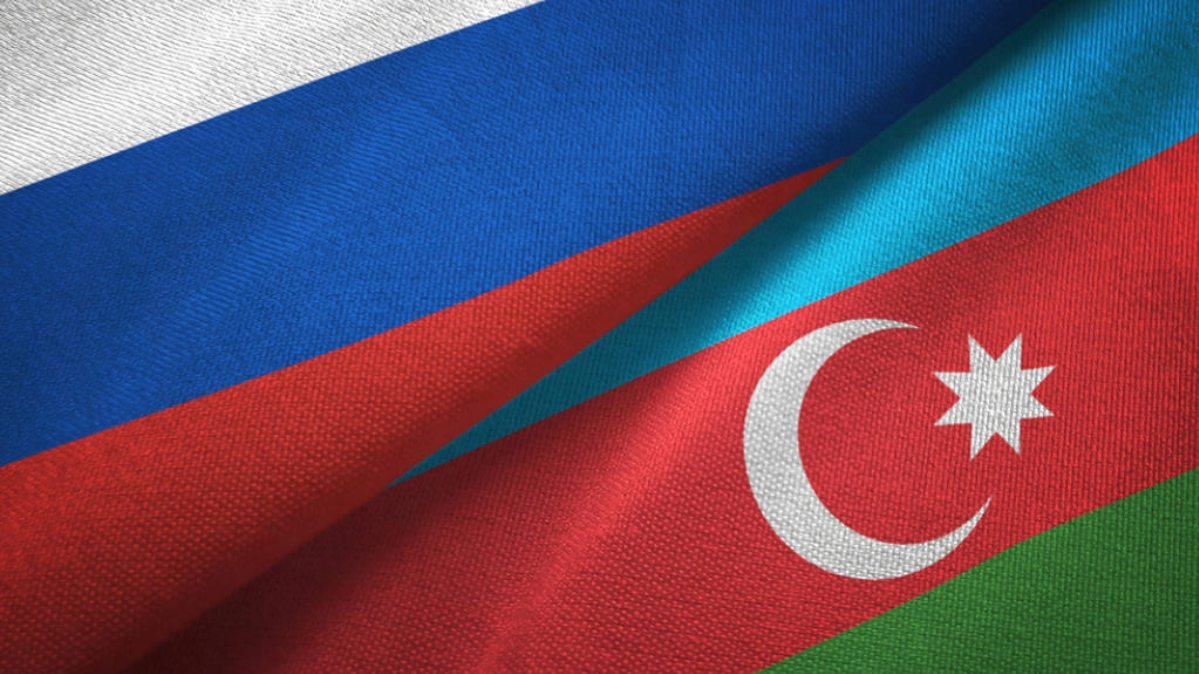
Azerbaijan’s Foreign Minister Jeyhun Bayramov has met Russian Deputy Foreign Minister Mikhail Galuzin in Baku for bilateral talks, covering political, economic, humanitarian and regional security issues, the Azerbaijani Foreign Ministry said.
The meeting comes as Baku and Moscow continue efforts to maintain structured diplomatic engagement during a period of strained relations, while preserving cooperation across key strategic areas.
Meeting agenda
According to the ministry, the officials exchanged views on regional and international security issues of mutual interest and stressed the importance of reciprocal visits and sustained political dialogue in advancing bilateral ties.
They also highlighted the role of the intergovernmental commission on economic cooperation as a key mechanism for developing trade and economic relations, discussing its ongoing work and future priorities.
Other issues of mutual concern and prospects for further cooperation were also addressed, the ministry said.
Signals of stabilisation
Speaking to AnewZ, Baku-based political analyst Fuad Karimli said the ministerial-level meeting reflects continued political will on both sides to maintain engagement despite recent tensions.
“Well, for sure, there have been some differences and straining between the two countries in the past few years,” Karimli said.
“But a meeting at this level… it shows that there's some sort of move towards an attempt towards stabilisation.”
Regional context
Karimli linked the engagement to broader geopolitical dynamics, including Russia’s efforts to maintain influence in post-Soviet regions amid the war in Ukraine and strained relations with the EU and the U.S.
He said the South Caucasus remains strategically important for Moscow, particularly due to transport and connectivity corridors such as the North–South trade route, as well as wider logistics and energy networks.
Energy and connectivity
Karimli also highlighted Azerbaijan’s growing role in European energy security, pointing to its natural gas exports to the EU as a key factor in regional dynamics.
“Azerbaijan supplies a lot of natural gas to the EU,” he said, adding that external actors, including the United States, are showing increased interest in regional connectivity projects.
He suggested Russia’s continued diplomatic engagement reflects an effort to remain relevant in a changing regional landscape.
Sensitive issues
While emphasising dialogue, Karimli noted that several bilateral issues remain unresolved and continue to affect trust.
He referred to previous attempts by Moscow to ease tensions, but said these had not been sufficient from Azerbaijan’s perspective.
He also pointed to the Azerbaijan Airlines (AZAL) aircraft incident, describing it as a “significant event” which continued to affect the normalisation process. However, both countries later declared an agreement had been reached on "appropriate settlement of consequences" in relation to the crash.
On 25 December, 2024 the AZAL Embraer 190 passenger flight (J2-8243) near Aktau, Kazakhstan, was operating on the Baku-Grozny route. The aircraft went down after diverting from Russian airspace and attempting an emergency landing in Kazakhstan, resulting in 38 fatalities and 29 survivors, according to official investigations and preliminary reports.
“Any kind of normalisation has to start with addressing the issue of the Azerbaijani aircraft incident,” Karimli said.
Despite unresolved issues, Azerbaijan and Russia continue to maintain structured diplomatic engagement through ministerial contacts and institutional mechanisms.














What is your opinion on this topic?
Leave the first comment