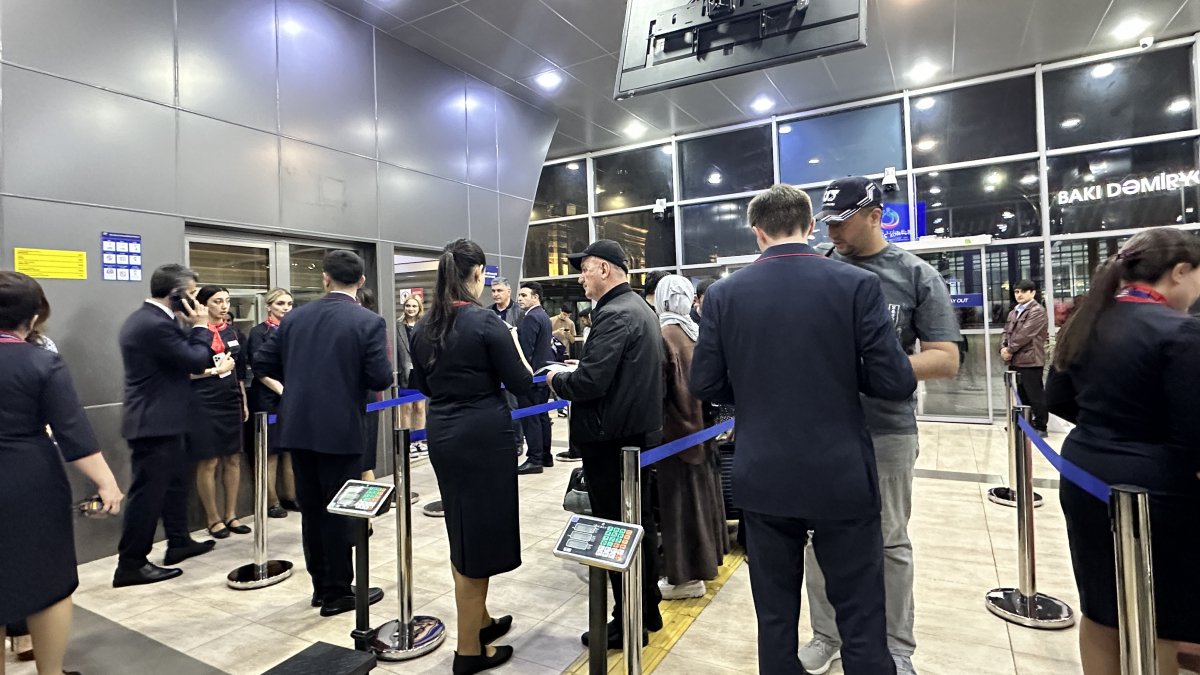
Shortly after nine o’clock on Tuesday morning (26 May), a sleek white train eased into Tbilisi’s central railway station, a couple of minutes behind schedule, carrying passengers from Baku for the first time since 2020.
For many of those on board, the journey was more than a night’s travel across the South Caucasus. It was the end of a very long wait.
A route that never quite disappeared
The Baku–Tbilisi overnight service was once a fixture of life across the South Caucasus. Before the pandemic forced Azerbaijan to close its land borders in March 2020, the nightly train was rarely empty.
Business travellers, families visiting relatives, students and tourists bound for the old streets of Tbilisi or the Caspian coast filled the carriages almost every evening.
When the borders closed, flying became the only option - faster, yes, but far less convenient and affordable for many travellers.
Six years is a long time. The route became something people spoke about in the past tense, a familiar part of everyday regional life that had quietly slipped away.
Earlier announcements about a possible restart came and went without materialising. So when Azerbaijan Railways confirmed the reopening date this time, and tickets genuinely went on sale, people paid attention.
“After a six-year pause, railway service between Georgia and Azerbaijan has resumed. This is a very important route, especially considering that starting today the service will operate daily. Demand is high - in just a few days, a very large number of tickets have already been sold. Trains on the Baku–Tbilisi and Tbilisi–Baku routes will now run every day. This is a successful project that we will continue to develop together with our Azerbaijani colleagues,” Lasha Abashidze, Director General of Georgian Railway, said.
Swiss-built sleepers finally enter service
The trains now operating the route are Stadler Rail coaches - modern Swiss-built sleeper cars purchased by Azerbaijan Railways in 2019.
They were originally acquired for an even more ambitious project: a direct passenger service from Baku to Istanbul via Kars in north-eastern Türkiye, running along the Baku–Tbilisi–Kars railway, which officially opened in 2017.
The pandemic arrived before those plans could begin, and the carriages spent years sitting idle at Baku station. Today, they finally entered passenger service.
Diplomacy behind the timetable
Inside the revived overnight service
The route now runs nightly in both directions. Departures from Baku are scheduled daily at 23:10, arriving in Tbilisi at 08:41 the following morning. Services from Tbilisi leave at 21:00 and arrive in Baku at 06:24.
The timetable includes one hour for border and customs procedures on each side.
Times can change; the latest schedule and stops are on the Baku–Tbilisi train timetable page.
Within Azerbaijan, trains stop at Biləcəri, Yevlax, Gəncə, Ağstafa and Böyük Kəsik. In Georgia, services call at Gardabani before reaching Tbilisi.
A full one-way ticket from Baku to Tbilisi starts at 81 Azerbaijani manats, around 127 Georgian lari. Shorter journeys along the route are priced lower. At present, tickets are available to Azerbaijani citizens and nationals of countries with visa-free access to Azerbaijan.
Demand exceeds expectations
Demand for the restored service has been strong from the outset. ADY said more than 1,000 tickets were sold shortly after bookings opened, including more than 400 in Baku and over 500 in Tbilisi.
An additional carriage was added to the first departure to accommodate demand, while the operator acknowledged that the surge in bookings caused temporary delays to its ticketing system.
The Middle Corridor comes into focus
The bigger picture is regional connectivity. The Baku–Tbilisi–Kars corridor is not just a passenger route; it is a key section of the Middle Corridor, the overland trade route linking China and Central Asia with Europe via the Caspian Sea, the Caucasus and Türkiye.
With passenger services now operating alongside existing freight traffic, the corridor is functioning as a more complete transport link, carrying both goods and people across the region.
For passengers, the wait is finally over
For the passengers stepping off the train in Tbilisi this morning, the politics were probably secondary. What mattered was that the journey was possible again: overnight, without a flight, across a stretch of the Caucasus that is, by most accounts, quietly spectacular at sunrise.





















What is your opinion on this topic?
Leave the first comment