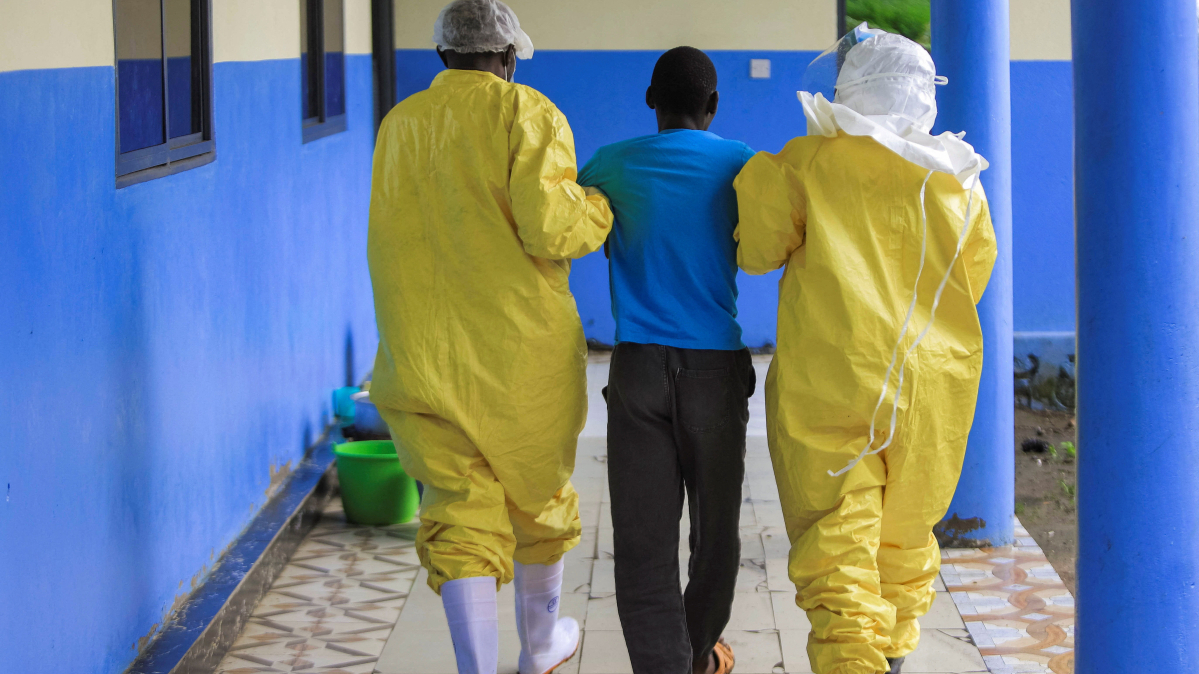
Doctors working on the front lines of the Ebola outbreak in the Democratic Republic of Congo say attacks on treatment centres and fleeing patients are hampering efforts to contain the virus.
Medical teams, already dealing with shortages of basic supplies, are now facing repeated security incidents at health facilities as the virus spreads rapidly.
At least three such attacks have been reported in Ituri province, where the first Ebola cases emerged, including two over the weekend targeting the same hospital. More than two dozen patients are reported to have fled during the incidents.
Violence linked to mistrust and denial
The attacks echo violence seen during the 2018–2020 Ebola outbreak in eastern Congo, when more than 25 health workers were killed.
Some earlier incidents were carried out by civilians angered by restrictions on burial practices or who believed the outbreak was a hoax. Local suspicions were also fuelled by a sudden influx of aid and international attention in regions long affected by conflict and neglect.
A similar situation now appears to be unfolding, according to Dr Richard Lokodu, medical director of Mongbwalu General Referral Hospital, which was attacked on both Saturday and Sunday.
“There is denial of the disease within the population, with some members wanting to claim the bodies of suspected and/or confirmed cases,” he said.
Outbreak declared a global health emergency
The World Health Organization has classified the outbreak of the rare Bundibugyo strain of Ebola as a public health emergency of international concern, the third-largest outbreak of its kind on record.
WHO chief Tedros Adhanom Ghebreyesus said there had been more than 900 suspected cases, including 101 confirmed infections.
He added on Monday that 220 suspected deaths had been recorded and warned that delays in detecting cases meant responders were now “playing catch-up.”
Patients flee after hospital attacks
At Mongbwalu General Referral Hospital, 18 Ebola patients fled on Saturday after “unidentified individuals” set fire to isolation tents set up by the medical charity Médecins Sans Frontières.
Four of those patients have since been tested, with three returning negative results and one confirmed as having Ebola.
“So we have one confirmed case of Ebola that continues to circulate in the community and evade the response,” Dr Lokodu said.
On Sunday, the hospital came under four waves of attacks by young people mobilised by relatives of a Christian religious leader who had died from Ebola.
Seven more patients escaped, while police and soldiers were deployed to restore order.
A critically ill patient suffering from haemorrhaging died while attempting to flee during the second attack, Dr Lokodu said.
Burial practices driving transmission risk
Those behind the attacks were seeking to retrieve the bodies of Ebola victims for burial, according to Dr Lokodu.
Health officials warn that the bodies of Ebola victims remain highly infectious after death. Unsafe burial practices - where family members handle bodies without protective equipment - are a key driver of transmission.
Long history of attacks on Ebola centres
Health workers faced attacks during previous outbreaks, including in West Africa between 2013 and 2016, when some accused them of spreading the virus.
However, violence escalated significantly during the 2018–2020 outbreak in eastern Congo, a region marked by insecurity and deep mistrust of authorities.
In addition to spontaneous attacks by local communities, some incidents were carried out by militia groups seeking political or financial gain.
Spread of outbreak raises regional concern
The current outbreak is believed to have begun in Ituri before spreading to North and South Kivu provinces, including areas controlled by Rwanda-backed M23 rebels, and into neighbouring Uganda.
Uganda reported two new confirmed cases on Monday, bringing its total to seven.












What is your opinion on this topic?
Leave the first comment