The AnewZ Opinion section provides a platform for independent voices to share expert perspectives on global and regional issues. The views expressed are solely those of the authors and do not represent the official position of AnewZ
We are not witnessing another cyclical downturn or a temporary geopolitical disturbance. What we are living through is far more profound: a systemic recalibration of the global order. Three long-standing assumptions have quietly collapsed.
First, the belief that globalisation was irreversible. Second, that security could be outsourced - primarily to transatlantic alliances. Third, that markets, left to their own logic, would allocate resources efficiently and apolitically.
None of these assumptions hold anymore.
Instead, a new reality is emerging - one defined not by integration, but by fragmentation; not by rules, but by power; not by efficiency, but by resilience. Geography, energy, and political will are once again the primary determinants of influence.
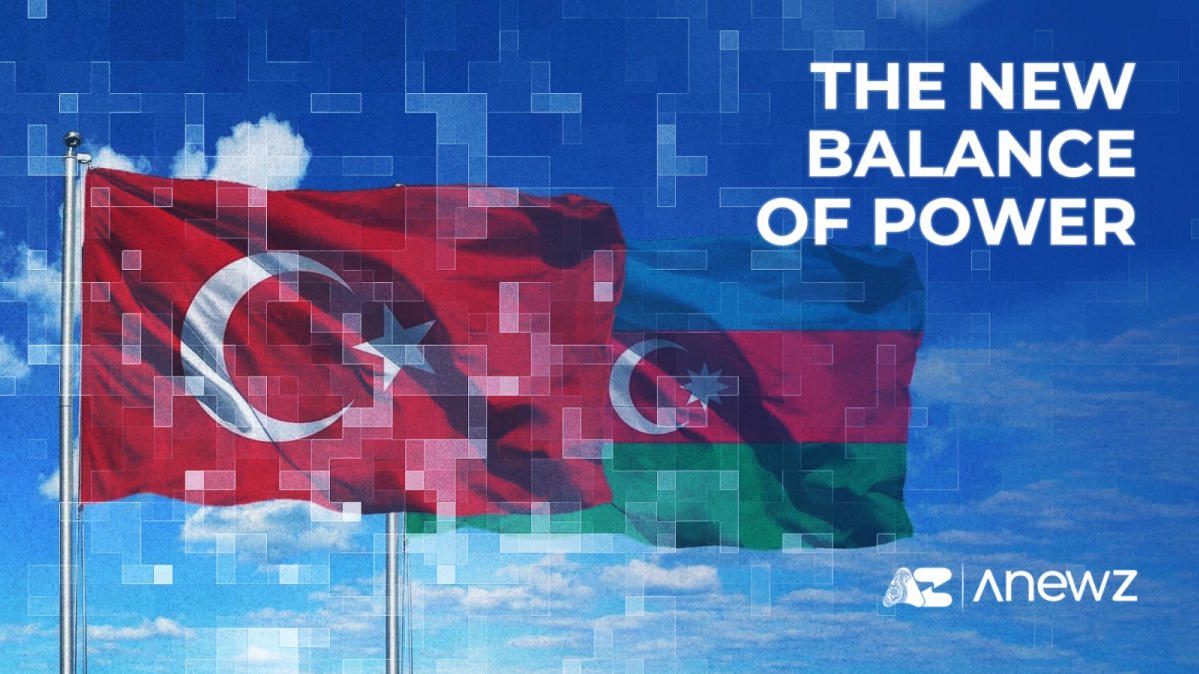
And in this reshaped landscape, Türkiye - and increasingly Azerbaijan - find themselves not at the margins, but at the very centre of the recalibration.
New global operating system
The global system is shifting from a rules-based framework to what might best be described as a risk-managed order.
Trade is no longer simply about cost optimisation. It is about control, security, and leverage. Supply chains are not being optimised - they are being re-engineered. “Friend-shoring” has replaced globalisation as the guiding principle, while sanctions have become a permanent feature of economic statecraft.
Energy, too, has returned to the core of geopolitical power. The transition to renewables is real, but far from complete. Fossil fuels are not disappearing; they are being repositioned within a more complex and contested energy mix. Liquefied natural gas, pipeline networks, and electricity grids are no longer just infrastructure - they are strategic assets. Meanwhile, critical minerals have become the new oil in the competition for technological and industrial supremacy.
Perhaps most significantly, the boundary between security and economics has dissolved. NATO, the European Union, and national governments are rediscovering a fundamental truth: there is no economic security without hard security.
Emerging Europe: From periphery to frontline
Nowhere is this recalibration more visible than in Emerging Europe.
The war in Ukraine has redrawn the region’s economic and strategic geography. Logistics routes have shifted, the Black Sea has regained central importance, and Europe has been forced into a painful but necessary rethinking of its energy dependencies.
The European Union, for its part, is stretching - but not breaking. Enlargement is back on the agenda, yet institutional fatigue and political fragmentation constrain its pace and ambition. Capital remains available, but increasingly selective, flowing not to the most promising opportunities but to the most predictable environments.
Investors today are not chasing growth; they are pricing risk - political risk, currency volatility, and regulatory unpredictability. It is within this context that the Türkiye-Azerbaijan axis gains particular significance.
Strategic Axis: Türkiye and Azerbaijan
If Türkiye is a pivot state, Azerbaijan is an energy anchor - and increasingly much more than that. Together, they form one of the most consequential strategic corridors in the emerging order.
The Türkiye-Azerbaijan partnership has evolved beyond cultural affinity into a multi-dimensional geopolitical and geo-economic alliance, spanning energy, connectivity, logistics, and security.
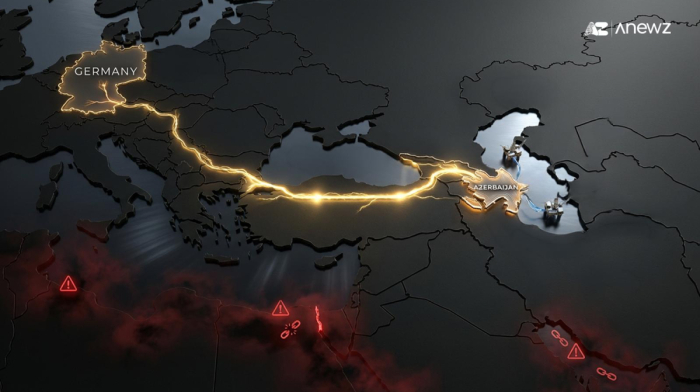
Azerbaijan has already established itself as a critical supplier in Europe’s effort to diversify away from Russian energy. Through the Southern Gas Corridor - linking the Caspian basin to European markets via Georgia and Türkiye - Baku has become a reliable and strategic energy partner. Türkiye, in turn, provides the indispensable transit, trading, and scaling platform.
But this relationship is no longer linear. It is becoming multi-directional and layered.
From energy provider to multi-directional gateway
Azerbaijan’s role is undergoing a quiet but profound transformation.
It is not only an energy supplier or transit node. It is increasingly emerging as a gateway state - connecting multiple regions simultaneously.
To the east, Azerbaijan serves as a bridge across the Caspian to Central Asia - linking Kazakhstan, Turkmenistan, and beyond into the Middle Corridor. This creates a viable alternative to traditional northern routes, particularly in a world where geopolitical risks are reshaping trade patterns.
To the west, through Georgia and Türkiye, Azerbaijan connects directly into European markets - both for energy and for broader trade flows.
To the south and southwest, via Türkiye, it is indirectly linked to the Middle East, including reconstruction corridors into Syria and potential future integration with Gulf supply chains.
This is not accidental. It is the result of a carefully calibrated and pragmatic foreign policy, led by President Ilham Aliyev, which has balanced regional relationships while steadily expanding Azerbaijan’s strategic footprint.
The outcome is a country that is no longer just part of a corridor - but one that shapes the corridors themselves.
From energy corridor to strategic connectivity system
The implications go well beyond pipelines. The emerging Middle Corridor - linking China to Europe via Central Asia, the Caspian Sea, Azerbaijan, and Türkiye - is gaining renewed traction as an alternative to disrupted northern and southern routes.
In this evolving architecture:
- Azerbaijan is the Caspian gateway and integrator
- Türkiye is the European gateway and amplifier
Together, they form a dual-hub system that enhances resilience, diversification, and strategic optionality for global trade and energy flows.
Add to this the post-conflict stabilisation and reconstruction dynamics in the South Caucasus, and the region is poised to unlock significant infrastructure, logistics, and energy investment opportunities.
Türkiye: Strategic pivot state
Türkiye is often described as volatile, unpredictable, or difficult to read. Such characterisations miss the larger point. Türkiye is not a swing state. It is a pivot state - one whose relevance is structural.
Bridging continents, seas, and energy basins, Türkiye sits at the intersection of multiple strategic corridors. In a fragmented world, this is not a vulnerability - it is leverage.
Türkiye is no longer content to serve merely as a transit route. It is actively positioning itself as a regional energy hub, with ambitions extending to pricing and trading.
Infrastructure developments - The Trans-Anatolian Natural Gas Pipeline (TANAP), TurkStream, LNG terminals, Black Sea gas - have strengthened its hand. Renewable energy and electricity interconnections further expand its reach.
Increasingly, this evolution is taking place in coordination with upstream partners such as Azerbaijan. The objective is clear: to move from transit to influence.
Strategic autonomy and defence capability
Türkiye’s investments in defence and strategic autonomy have enhanced its geopolitical standing. Indigenous systems, drone capabilities, and regional projection capacity translate into negotiating leverage.
In parallel, Azerbaijan’s post-conflict consolidation and modernisation have reinforced its position as a stable and capable partner in a volatile region.
Economic realities: Between resilience and fragility
Türkiye faces familiar challenges: inflation, currency volatility, and institutional concerns. Yet it also retains a strong industrial base, a dynamic private sector, and strategic adaptability.
Azerbaijan, while more hydrocarbon-dependent, benefits from fiscal buffers, sovereign wealth discipline, and strategic clarity.
For investors, the question is not perfection. It is relevance.
And the Türkiye-Azerbaijan axis is becoming increasingly relevant to global energy and trade flows.
Strategic Agenda: From corridor to power centre
To fully capitalise on this moment, several priorities emerge. First, restoring predictability and investor confidence remains essential. Furthermore, deepening the energy partnership toward joint trading and pricing influence will be critical. Another priority is accelerating connectivity - railways, ports, digital infrastructure - will solidify the Middle Corridor.
And engagement with Europe must be pragmatic, positioning this axis as a reliable partner in an uncertain world.
Narrow but decisive window
The global recalibration is creating opportunity - but also urgency. Middle powers are rising. Geography is back, while energy defines influence. Türkiye and Azerbaijan are uniquely positioned - not just as connectors, but as architects of a new regional system.
But positioning alone is not destiny.
Execution will determine whether this axis becomes a cornerstone of the emerging Eurasian order. For investors and policymakers alike, this is not the time to observe. It is the time to engage.
Because in the new world order, those who shape the corridors - not just use them - will define the future. And the Türkiye-Azerbaijan axis is increasingly doing exactly that.














What is your opinion on this topic?
Leave the first comment