The AnewZ Opinion section provides a platform for independent voices to share expert perspectives on global and regional issues. The views expressed are solely those of the authors and do not represent the official position of AnewZ
The current Middle East crisis has already had profound macroeconomic and energy consequences. It also reflects a broader phase of globalisation, where interdependencies can be weaponised for geopolitical purposes.
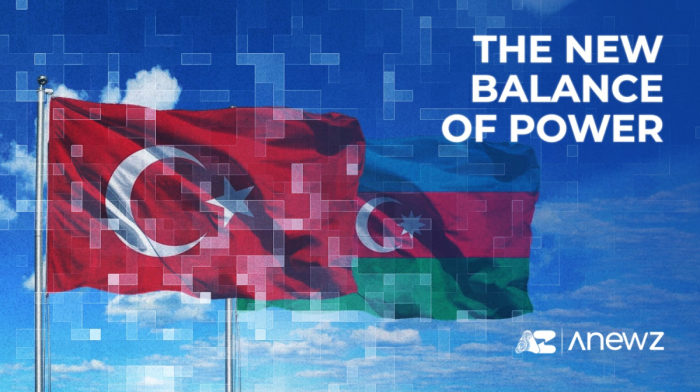
Consequently, the reliability of the international system is weakening. This crisis is forcing Europe to rediscover the ‘continental option’ - with Azerbaijan at its centre.
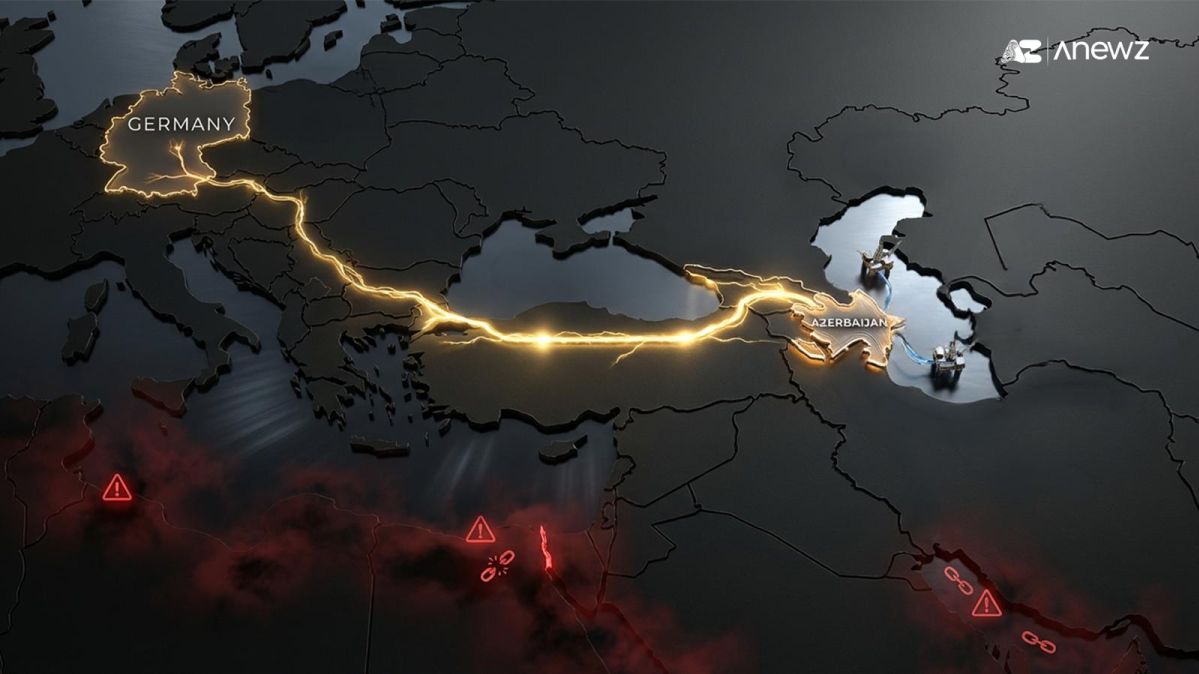
Once again, the European Union finds itself confronting a familiar yet unresolved dilemma: how to ensure energy security in a world where maritime routes are increasingly exposed to geopolitical disruption. From the Strait of Hormuz to the Red Sea, the vulnerabilities of seaborne energy supply chains have been laid bare, not for the first time in recent years.
Yet, unlike previous crises, the current moment may act as a catalyst for a more structural rethinking of Europe’s energy geography. This comes amid its ongoing search for ‘strategic autonomy’ and ‘de-risking’ from China, but also increasingly from the U.S.
What is emerging is not merely another phase of diversification, but the gradual reassertion of a continental logic in European energy strategy. In this evolving landscape, Azerbaijan - long considered a secondary supplier at the periphery of Europe’s energy system - is acquiring renewed strategic centrality.
The illusion of diversification
Since Russia’s full-scale invasion of Ukraine in 2022, the EU has pursued an ambitious strategy of energy diversification. Russian pipeline gas was rapidly replaced by a combination of liquefied natural gas (LNG) imports, increased deliveries from Norway, and expanded partnerships with suppliers across the Middle East and North Africa.
This shift was widely interpreted as a success: Europe had reduced its dependence on a single dominant supplier and enhanced its resilience.
Yet this perception has always rested on a partial reading of vulnerability. While sources diversified, dependence largely continued to rest on maritime infrastructure. LNG imports, by definition, rely on secure sea lanes, stable chokepoints, and predictable shipping routes.
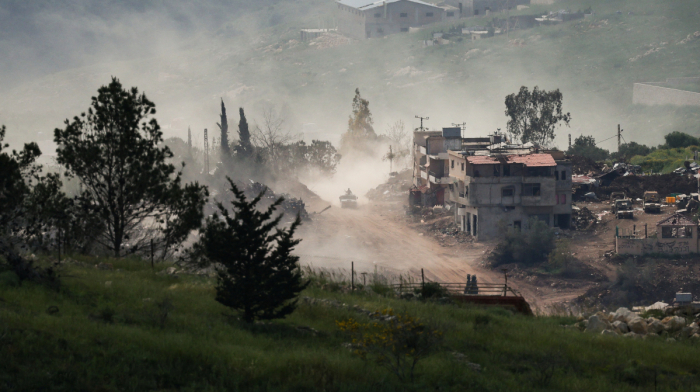
The resurgence of conflict in the Middle East has exposed the fragility of this model. Disruptions - whether real or anticipated - translate rapidly into price volatility and strategic uncertainty.
Diversification, in this sense, did not eliminate vulnerability; it arguably redistributed it. In other words, the EU moved from dependence on a single supplier to dependence on a set of increasingly contested maritime corridors.
The return of the continental option
It is against this backdrop that the notion of a ‘continental option’ is regaining traction, albeit still bypassing Russia. Historically, Europe’s energy system combined maritime imports with overland pipelines, creating a hybrid geography of supply.
The post-2022 shift, however, tilted heavily towards the maritime domain. Today’s crisis is prompting a recalibration.
The re-emergence of overland energy corridors - linking Europe to the Caspian basin and, potentially, Central Asia - could offer a longer-term solution in the search for structural resilience, rather than merely a short-term substitute for Russian supply.
Unlike maritime routes, continental corridors are less exposed to naval disruption and chokepoint dynamics, even if they carry their own geopolitical risks.
The Southern Gas Corridor and the broader Middle Corridor connect Europe to Asia, the South Caucasus, and the Caspian Sea. Rather than peripheral projects, these must increasingly be viewed as key assets in a rebalanced European energy architecture.
Azerbaijan: from supplier to system node
Azerbaijan’s role in this transformation cannot be reduced to volumes of gas exports, important as they are. Rather, its significance lies in its evolving position as a system node within a wider network of energy and transport connectivity.
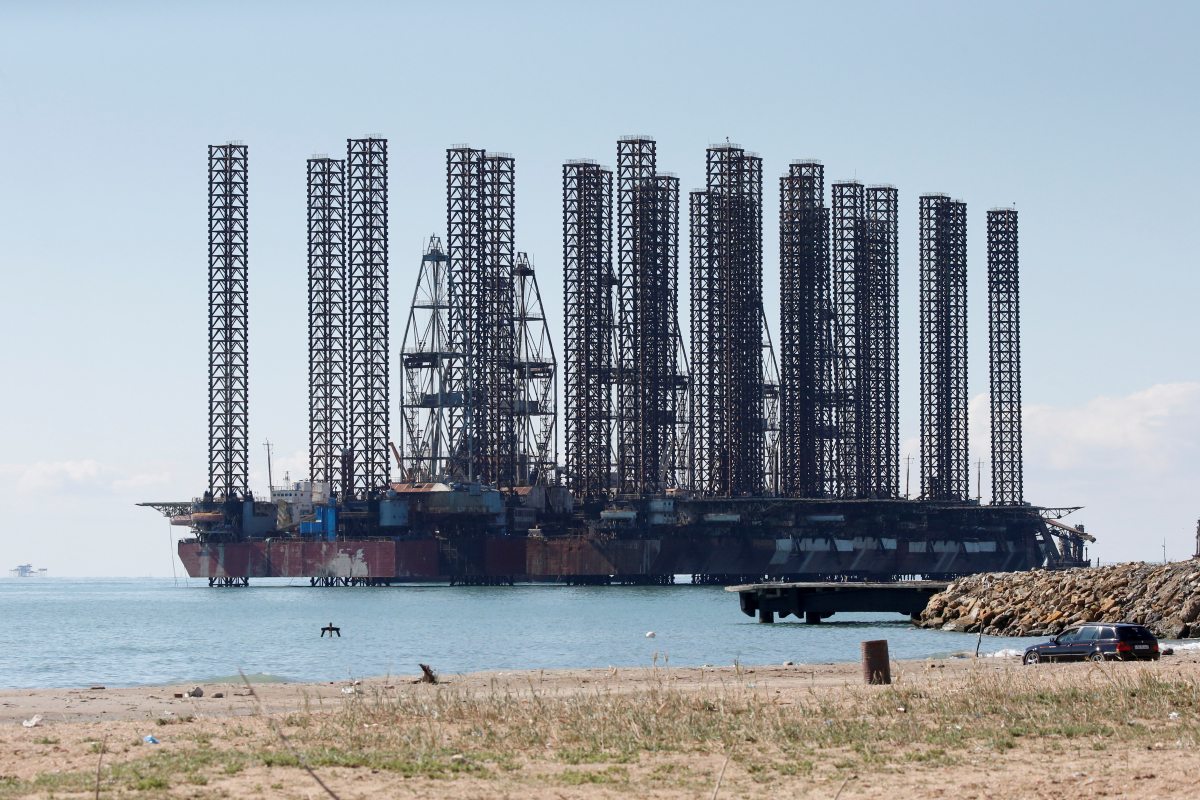
Through the Southern Gas Corridor, Azerbaijani gas already reaches multiple European markets, contributing to supply diversification. Since the onset of the Ukraine war in 2022, Azerbaijan’s energy ties with the EU have deepened significantly, both in scale and strategic scope.
Gas exports to Europe increased from roughly 8 bcm in 2021 to around 12–13 bcm in recent years, representing a rise of nearly 60% in a relatively short period. This initial surge, however, has begun to plateau, largely due to infrastructure constraints, even as political ambitions remain high.
Under the 2022 EU–Azerbaijan memorandum, both sides aim to expand deliveries to 20 bcm annually by 2027, implying a further substantial increase if realised. Currently, the EU accounts for approximately half of Azerbaijan’s total gas exports, consolidating its position as the country’s primary external market.
However, the country’s strategic importance extends beyond hydrocarbons. Emerging projects in electricity transmission - including green energy corridors linking the Caspian to Europe - suggest a future in which Azerbaijan functions as a multi-vector energy hub.
Simultaneously, its position within the Middle Corridor places it at the intersection of trade, infrastructure, and geopolitics. As Eurasian connectivity gains importance in a more fragmented global economy, Azerbaijan is becoming a hinge between regions, linking European demand with Asian supply routes.
This shift reflects a broader pattern: in an increasingly multipolar and infrastructure-driven international system, control over corridors may matter as much as control over resources.
Germany as a bellwether
The deepening of energy ties between Azerbaijan and core European economies - most notably Germany - signals that this shift is not merely rhetorical. Germany’s engagement is particularly significant, given its role as the industrial engine of Europe and its centrality in shaping EU energy policy.
Building upon the 2022 memorandum, agreements involving Azerbaijani gas supplies to Germany and other Central European states point to a gradual integration of Caspian energy into the continent’s core economic structures.
This is not a marginal adjustment, but a potential reconfiguration of supply patterns at the heart of Europe’s industrial system.
If previous phases of diversification were driven by necessity, this new phase appears increasingly shaped by strategic choice. In the longer term, Germany’s involvement suggests that the Caspian vector is being internalised as part of Europe’s energy planning, rather than treated as a temporary substitute.
Constraints and contradictions
Any assessment of the EU’s emerging Caspian pivot must be tempered by a clear recognition of its limits. Azerbaijan cannot replace the scale of supply once provided by Russia, nor fully compensate for potential disruptions in Persian Gulf energy flows.
Infrastructure constraints - particularly pipeline capacity - remain a significant bottleneck. Geopolitical risks may also re-emerge in the Caucasus.
Moreover, the expansion of continental energy corridors faces financial and regulatory challenges. The EU’s climate agenda and Green New Deal vision, while central to its long-term strategy, may delay investment in new gas infrastructure.
This creates a tension between short-term energy security imperatives and long-term decarbonisation objectives.
Conclusion: A structural shift underway?
Despite these constraints, the broader trajectory is clear. Europe has an opportunity to move towards a more diversified energy geography, in which continental and maritime routes coexist in a more balanced configuration.
The Middle East crisis has accelerated this shift by highlighting the systemic vulnerabilities of an overly maritime-dependent model. This does not imply a wholesale abandonment of LNG or seaborne trade. Rather, it suggests the emergence of a more layered and resilient system, in which overland corridors provide strategic depth and redundancy.
Within this evolving architecture, Azerbaijan’s role is likely to expand further. Its transformation from peripheral supplier to central node reflects deeper changes in the global energy system - driven not only by geopolitics, but also by infrastructure, connectivity and the spatial reorganisation of supply chains.
Europe’s response to the current Middle East crisis may ultimately prove more consequential than its immediate impact on energy markets. In this emerging landscape, the Caspian region—and Azerbaijan in particular—occupies a position of growing strategic relevance.
The challenge for Europe will be to integrate this continental dimension into a coherent energy strategy that reconciles security, sustainability, and geopolitical realism.
If the past decade was defined by the search for diversification, the coming years may be shaped by a more fundamental transformation: the recognition that Europe’s energy future will depend not only on where it sources its energy, but on how - and through which geographies - it is transported.
















What is your opinion on this topic?
Leave the first comment