China has ordered Meta to unwind its more than $2 billion acquisition of artificial intelligence start-up Manus, marking a major escalation in Beijing’s scrutiny of foreign investment in sensitive technology sectors. The order was issued on Monday by the National Development and Reform Commission.
The document stated that the transaction would be prohibited under national laws and regulations and that the parties involved must withdraw from the deal.
The move highlights Beijing’s determination to prevent U.S. companies from gaining control of Chinese AI talent, intellectual property and strategic capabilities, particularly as Washington continues restricting Chinese access to advanced semiconductors.
Meta said in response that the acquisition had complied with applicable laws and that it expected an appropriate resolution.
Rare occasion
China rarely orders already completed corporate acquisitions to be reversed. Meta finalised the deal in December, while Chinese authorities opened an investigation in January.
According to sources familiar with the matter, Manus co-founders Xiao Hong and Ji Yichao were summoned by regulators in March and later barred from leaving China.
Manus had reportedly moved operations to Singapore after shutting its China offices last year, allowing parent company Butterfly Effect to re-incorporate offshore and seek foreign capital.
However, analysts say Beijing is increasingly looking beyond a company’s legal registration and focusing instead on where technology was developed, where research teams are based and where sensitive data flows.
“In sensitive technology sectors, a deal may be reviewed not only as an M&A transaction, but also as a potential transfer of strategic technology,” said Carl Li, a partner at Chinese law firm Zhong Lun.
Warning shot
The case is likely to send a strong signal to Chinese start-ups using Singapore structures to attract overseas investors, a practice sometimes described by analysts as “Singapore washing”.
Experts say future deals may face stricter compliance tests covering management location, IP ownership, R&D activity and regulatory approvals.
Meta had acquired Manus to strengthen its push into AI agents - software designed to perform complex tasks with limited human input.
Manus gained attention last year after Chinese state media praised it as a potential rival to DeepSeek following the launch of what it described as the world’s first general AI agent framework.
AI rivalry
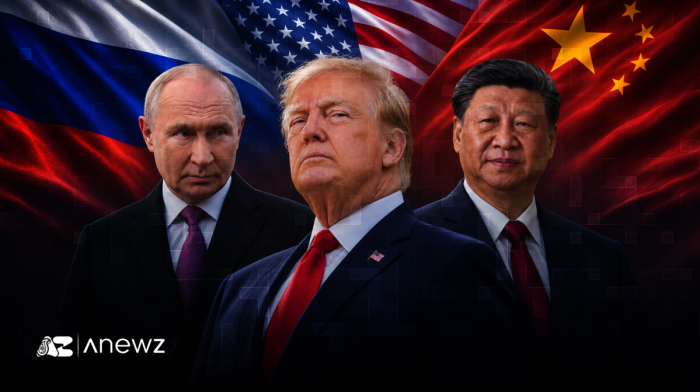
The decision comes weeks before an expected summit between Donald Trump and Xi Jinping in Beijing, adding another layer of tension to the technology competition between the world’s two largest economies.
“China is saying we will prevent foreign acquisition of assets we consider important for national security and AI is now clearly one of them,” said analyst Alfredo Montufar-Helu.
















What is your opinion on this topic?
Leave the first comment