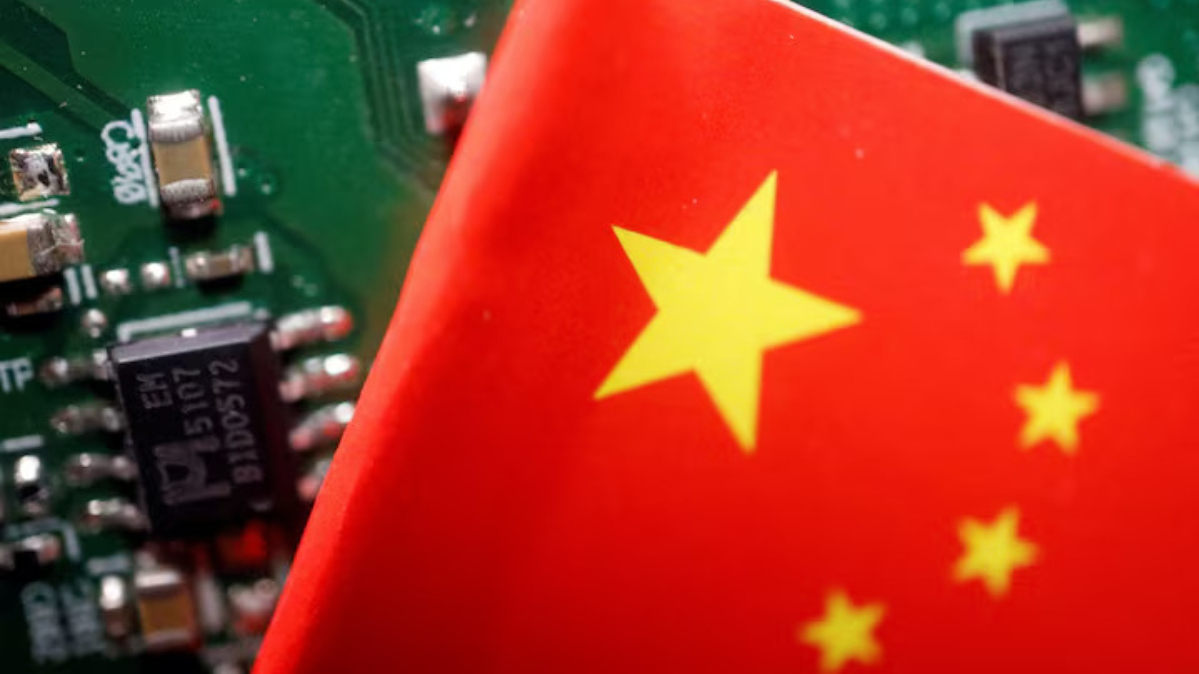
Despite facing challenges in chip manufacturing, Chinese artificial intelligence (AI) researchers are optimistic about narrowing the technological gap with the United States, driven by an increasing culture of risk-taking and innovation.
At an AI conference in Beijing on Saturday, key industry leaders discussed the growing confidence within China’s AI sector, with particular focus on the country’s startups making strides in both AI and chip technology.
China’s rapidly advancing AI sector has been gaining attention in the international tech community, particularly with the strong debut of AI startups MiniMax and Zhipu AI on the Hong Kong Stock Exchange earlier this week. These developments signal not only rising investor confidence but also a concerted push by Beijing to bolster domestic alternatives to US-based technology. China's AI-driven ambitions align with the government’s strategy to accelerate the development of key technologies, such as AI and semiconductors, to reduce reliance on the West.
Bottlenecks in advanced chip manufacturing
Yao Shunyu, a former senior researcher at OpenAI and now the chief AI scientist at Tencent, emphasised that while China’s AI sector is poised for rapid growth, it still faces major technical hurdles. The most significant of these is the country’s limited access to advanced chipmaking equipment, particularly lithography machines required to produce cutting-edge semiconductor chips. Yao acknowledged that the country has a significant advantage in electricity and infrastructure, but the shortage of high-quality production capacity remains a key obstacle.
"We have a high likelihood of a Chinese firm becoming the world's leading AI company in the next three to five years, but the bottleneck is in chip production," said Yao during his presentation at the AI conference. "Currently, the main limitations lie in our inability to produce advanced chips at scale due to the lack of critical lithography machines."
China has made progress in addressing this challenge, having completed a working prototype of an extreme-ultraviolet (EUV) lithography machine, which holds the potential to produce chips comparable to those made in the West. However, industry insiders have reported that the machine is not yet capable of producing functional chips, with some suggesting it may take until 2030 before it becomes operational.
The investment gap and innovation under constraints
While China’s technological advancements are impressive, US companies maintain a significant edge in computing power, thanks to substantial investments in infrastructure. According to Lin Junyang, the technical lead for Alibaba’s flagship Qwen large language model, the US currently enjoys a considerable advantage in computational resources, with infrastructure investments up to two orders of magnitude larger than China’s.
"The U.S. has a significant lead when it comes to computing infrastructure. But I see that OpenAI and other companies are investing heavily in next-generation research," Lin stated at the conference. "On the other hand, our limited resources have forced us to innovate more creatively, particularly through co-designing algorithms and hardware. This allows us to run large AI models on smaller, less expensive hardware."
This environment of constrained resources has pushed Chinese AI researchers to develop novel approaches, including algorithm-hardware co-design, which is helping the country’s AI firms run large models more efficiently on limited infrastructure.
The rise of risk-taking Chinese entrepreneurs
One of the most notable developments in China’s AI sector is the rise of younger, risk-taking entrepreneurs, a trait traditionally associated with Silicon Valley. Tang Jie, the founder of Zhipu AI, which recently raised HK$4.35 billion in its IPO, pointed out that younger Chinese innovators are increasingly willing to embrace high-risk ventures, a shift that bodes well for the country’s future in AI.
"I think if we can improve the environment and provide more time for these risk-taking, intelligent individuals to innovate, it will significantly help the AI industry," Tang said during a panel discussion. He added that both the government and the country’s ecosystem need to nurture this spirit of risk-taking to accelerate growth in the sector.
The trend of taking greater risks in AI startups is being embraced by China’s emerging entrepreneurs, and it mirrors the ethos of Silicon Valley's early days. As more young innovators break into the AI field, the potential for further breakthroughs and advancements in the industry grows.


















What is your opinion on this topic?
Leave the first comment