The AnewZ Opinion section provides a platform for independent voices to share expert perspectives on global and regional issues. The views expressed are solely those of the authors and do not represent the official position of AnewZ
Since late March, the renminbi (RMB) has been on an upswing, repeatedly hitting three-year highs. On 14 April, onshore RMB broke past 6.82 per dollar at the open - its strongest level since 24 March, 2023.
Amid the increasing tensions in the Middle East, the RMB was at one point the only major currency to appreciate against the dollar in the month ending 3 April.
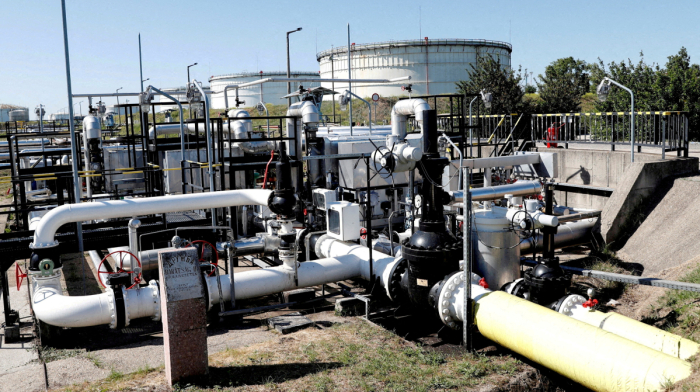
Nowhere is this more visible than in energy markets. In March, RMB settlement in China’s crude-oil trade with the Middle East surpassed 41% for the first time, overtaking the euro to become the second-most-used currency after the dollar (52%).
China’s Cross-Border Interbank Payment System (CIPS) also underscores this accelerating trend, processing a record 1.2 trillion yuan ($165 billion) in a single day on 2 April.
In March, average daily turnover reached 920.5bn yuan, the highest in a year. The system now connects over 1,500 financial institutions across 124 countries and regions, with transaction volumes growing by around 43% year-on-year.
'Stability Premium'
It is China’s “stability premium”, argues Tianchen Xu, Senior Economist at the Economist Intelligence Unit, that makes its assets increasingly attractive to global investors.
“First, China is far from the epicentre of geopolitical tensions and is not directly involved. As a result, Chinese assets are unlikely to face physical disruption from conflict," he said.
"Second, China maintains ample oil reserves, providing a buffer against potential supply shocks," he added.
"Third, China possesses a fully integrated and robust industrial supply chain. This ensures uninterrupted domestic production while also enabling the country to expand exports into disrupted global markets. Taken together, these factors allow Chinese businesses to continue generating profits even during periods of heightened volatility,” he said.
The performance of Chinese government bonds is telling: in March, yields on 10-year notes edged down by just one basis point, while equivalent yields in the United States and Britain rose sharply - by 38 and 68 basis points respectively - signalling heavy selling.
Firms are increasingly turning to RMB financing, lured in part by cost savings of up to 2% on working capital, according to London Stock Exchange data. According to data jointly released by SWIFT and the People's Bank of China, the share of RMB in trade financing grew approximately 41% over the past two years. Issuance of “panda bonds” reached 104.7bn yuan between January and early April, double the level a year earlier and following a record issuance of 1.83trn yuan in 2025.
Offshore “dim sum” bond issuance in March reached a monthly record of 150bn yuan, up 180% year-on-year.
The diversification away from the USD provides an immediate catalyst as the traditional hegemonic currency is trapped in trade deficits, asset bubbles, exorbitant debt levels, and wealth disparity.
A Deutsche Bank report noted a lot had already begun to change before the U.S.-Israel-Iran war broke out. The United States was no longer the biggest buyer of Middle East oil with the shale revolution making the U.S. energy independent and Saudi Arabia selling more than four times as much oil to China as to the U.S.
Sanctions on Russia and Iran meant significant oil trade was already taking place outside of dollar rails.
A larger, long-term risk lies in the global energy transition. As the Bank notes, “the world may diversify away from traded fossil fuels toward domestically produced energy,” potentially undermining the very foundation of the petrodollar system from the demand side.
The latest data released by the IMF on 30 March show that as of the fourth quarter of 2025, the USD’s share of global foreign exchange reserves stood at 56.77% - its lowest level since the IMF began compiling such statistics in 1995.
Former International Monetary Fund (IMF) Chief Economist and Harvard professor Kenneth Rogoff has made a bold prediction in an interview with the South China Morning Post: within the next five years, the RMB could emerge as a global reserve currency.
Building the Momentum
The RMB’s rise has been building for some time. A February study published in the China Journal of Commerce finds that the RMB is beginning to form a regional “anchor effect” that is exerting a tangible influence on exchange-rate policy frameworks in East Asia and Latin America - regions with strong trade ties to China.
Structural factors such as bilateral trade intensity, industrial integration, and financial cooperation are driving this trend. The RMB has already become a statistically significant anchor currency in the exchange-rate systems of some emerging markets - notably Brazil, Chile, Malaysia, and Indonesia - while the dollar’s anchoring role shows signs of weakening. This suggests a gradual, structural evolution in the global monetary system.
The sheer size of China’s economy and trade presence justify its rise. According to China’s General Administration of Customs, the country traded with 249 countries and regions in 2025, with RMB as the top settlement currency for cross-border payments.
Growing willingness among offshore entities to hold and use RMB has also boosted demand for RMB liquidity in offshore markets. A Standard Chartered report published last month, based on a survey of nearly 300 large companies across 19 industries, shows that 24% of enterprises that deal in RMB plan to increase onshore and offshore RMB financing in the next three years.
Infrastructure is also shifting gears. The People’s Bank of China has announced the next-generation framework for the digital renminbi (e-CNY) in 2026, expanding its function from digital cash to a deposit. In the first quarter of 2026, cumulative transactions in e-CNY exceeded 19.5 trillion yuan, spanning 26 pilot regions and more than 230 million individual wallets. In the cross-border sector, the transaction volume of mBridge, a multiple central bank digital currency platform, exceeded 477.8 billion yuan, with digital RMB accounting for 96%. Compared with the traditional model, the transaction fee has been reduced to one-tenth, and settlements are completed within seconds.
“In the long term, the fundamental driver will be the shift in the global balance of power. China’s relative strength compared with the United States and other Western economies continues to grow, as shown in the stronger presence of its enterprises, more important role in global security, supply chains, trade, and investment,” Xu said.
For the global economy, a more diversified currency system could bring meaningful benefits.
Cambodia offers a revealing case. A Deputy Governor of its national bank said in a recent policy briefing that excessive dollarization weakens the transmission of monetary policy and limits the country’s ability to manage its economy. It can also expose workers’ real wages to exchange-rate volatility and hinder financial inclusion. Strengthening the use of its local riel - particularly in key export sectors such as garments, footwear, travel goods, and luggage - is seen as essential for maintaining the country’s macroeconomic stability and industrial competitiveness.
As Xu puts it, “The global economy is, in a sense, being ‘kidnapped’ by a single currency. Diversification lowers conversion and settlement costs, especially for companies operating internationally. It also reduces exposure to dollar dominance in payment systems. Finally, it’s about pricing power.”





















What is your opinion on this topic?
Leave the first comment