The AnewZ Opinion section provides a platform for independent voices to share expert perspectives on global and regional issues. The views expressed are solely those of the authors and do not represent the official position of AnewZ
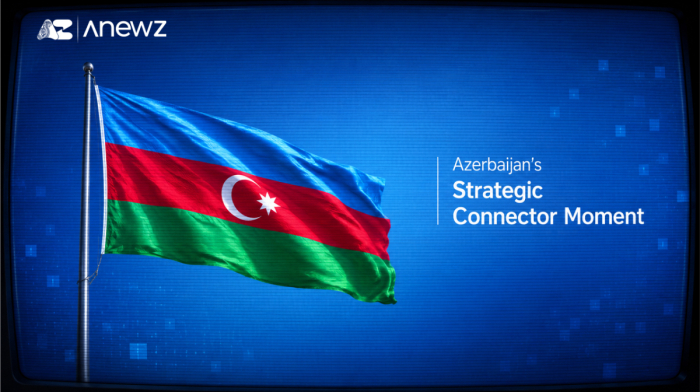
Azerbaijan’s Ministry of Economy signed a Memorandum of Understanding on 10 March with Haimaker.AI Inc., a U.S. artificial intelligence (AI) technology company, to develop a next-generation digital platform and ecosystem.
The agreement forms part of Azerbaijan’s Digital Economy Development Strategy for 2026–2029, which aims to generate approximately $41 million in economic value through generative AI technologies.
The deal marks the latest step in a sequence of institutional reforms, infrastructure investments, and international partnerships pursued since 2025. A systemic analysis of these developments suggests an attempt to reposition the country within the emerging global AI economy. Understanding the significance of the Haimaker.AI agreement therefore requires examining the broader policy framework behind it.
Foundation of a national AI strategy
The foundation of this shift was established in March 2025, when President Ilham Aliyev approved Azerbaijan’s National Artificial Intelligence Strategy for 2025–2028.
The strategy reflects a clear economic objective centred on diversification. The government has identified artificial intelligence, digital infrastructure, and data-driven industries as key priorities.
In February, President Aliyev chaired a high-level meeting dedicated to Azerbaijan’s New Digital Architecture. The accompanying action plan built on earlier policies by introducing specific and measurable targets.
These targets outline the scope of the initiative: 50 enterprises are expected to participate in digital transformation programmes, while 30 new start-ups and 20 small businesses are set to gain access to digital markets. The government also estimates that generative AI could deliver significant economic benefits in the near term.
Intitutional reform and digital governance
In February, the Digital Development Council of the Republic of Azerbaijan began operations. The council is responsible for defining priorities across digitalisation, electronic government, artificial intelligence, and innovation policy, while strengthening national technological capacity and digital sovereignty.
The government also approved the Action Plan for Accelerating Digital Development for 2026–2028, outlining measures across governance, infrastructure, cybersecurity, and the wider digital economy.
Within this framework, transport, energy, healthcare, and cybersecurity have been identified as priority sectors for early AI deployment.
Governance reforms include consolidating public services through a unified “mygov” digital portal. The platform is designed to integrate AI into administrative processes and eventually replace separate portals and mobile applications currently used by individual government institutions.
The action plan also introduces a shift towards a proactive public service model, under which certain services will be delivered automatically based on integrated data systems, without requiring additional applications from citizens.
Data infrastructure and technological capacity
A key technical component of the transformation is data management. Fifteen projects are currently focused on cleaning and standardising government databases.
The creation of a centralised state data lake, alongside the integration of multiple information systems, aims to ensure accuracy, completeness, and reliability. Each state institution will also appoint a senior official responsible for digitalisation, innovation, AI, and cybersecurity, introducing accountability at deputy head level.
Alongside policy reforms, Azerbaijan has invested in physical infrastructure to support advanced digital technologies. Data centres are being constructed along the East–West economic corridors that cross the country.
Once central to trade and energy transport, these corridors are now becoming key routes for digital connectivity. By expanding fibre-optic infrastructure, Azerbaijan aims to position itself as an information hub linking Europe, Asia, and the wider Eurasian region.
At the same time, the country is strengthening domestic computing capacity to reduce dependence on external technology providers.
Developing human capital and innovation
Human capital development is another core element of the strategy. The AI Academy, launched in 2025, is training a domestic technical workforce while developing a national large language model based on Azerbaijani-language data, with a corpus of 10 billion tokens.
Additional initiatives introduced in 2025 and 2026 aim to integrate digital literacy into secondary school curricula and expand training opportunities for students studying abroad through state education programmes.
Early indicators suggest these policies are beginning to reshape Azerbaijan’s technology ecosystem. In 2025, the start-up sector expanded by 44.8%, while the country ranked 69th globally in the Government AI Readiness Index, with notable improvements in infrastructure and governance.
More than 100 technology investment deals have already been completed, with further growth expected before the end of 2026.
Expanding international partnerships
Azerbaijan’s AI strategy also has a significant international dimension, with expanded cooperation involving the U.S., Israel, the European Union and China.
Relations with the U.S. advanced on 10 February, when President Aliyev and U.S. Vice President JD Vance signed a Strategic Partnership Charter. The agreement includes provisions for cooperation in artificial intelligence and the space sector.
It identifies the development of AI data centres in Azerbaijan, with private sector participation, as a key objective, and establishes working groups covering the economy and trade, energy, connectivity, digital development, security, and defence.
Within this framework, Azerbaijan’s sovereign wealth fund SOFAZ is exploring investments of up to $1.5 billion in AI and data centre infrastructure through partnerships with BlackRock and Global Infrastructure Partners. The Haimaker.AI agreement can therefore be seen as a practical extension of this broader strategy.
Cooperation with Israel, the EU and China
Cooperation with Israel has followed a similar trajectory. On 3 February, the two countries signed a Memorandum of Understanding in Jerusalem covering AI collaboration.
The agreement includes cooperation in supercomputing infrastructure, AI applications across transport, energy, healthcare, and cybersecurity, as well as joint research and workforce development programmes. For Azerbaijan, this partnership helps address challenges such as limited computing capacity and shortages of specialised engineers.
Engagement with the European Union has developed mainly through institutional cooperation. Azerbaijan hosts a World Economic Forum Centre for the Fourth Industrial Revolution, known locally as 4SIM.
The centre focuses on artificial intelligence, the Internet of Things, urban transformation, and digital trade along the Middle Corridor linking Central Asia with Europe.
Training programmes through the 4SIM Academy have provided digital skills to around 4,000 citizens, while international working groups bring together public and private sector actors to address transparency, security standards, and pilot projects.
Cooperation with China has also expanded, particularly in research and innovation. During the Second Belt and Road Conference on Science and Technology Exchange in Chengdu, Azerbaijan’s Minister of Science and Education signed letters of intent with his Chinese counterpart covering joint AI research and broader technological collaboration.
Discussions with Chinese technology firms have also explored AI integration in e-government platforms, smart city technologies, and human capital development.
A coordinated push into the global AI economy
Taken together, these reforms and partnerships indicate a coherent policy direction rather than isolated initiatives.
Azerbaijan is seeking to reposition itself within the global artificial intelligence economy by combining geographic advantages, sovereign investment capacity, and a diversified diplomatic approach.
Domestic reforms provide the institutional foundation, while international partnerships offer technological expertise, capital, and market access. In a relatively short period, the country has moved from announcing an AI strategy to building the institutional, technical, and diplomatic architecture needed to implement it.






















What is your opinion on this topic?
Leave the first comment