The United Nations has warned that Afghanistan's relative stability may not be sustainable unless the country's current authorities change policies affecting women, the economy and regional security.
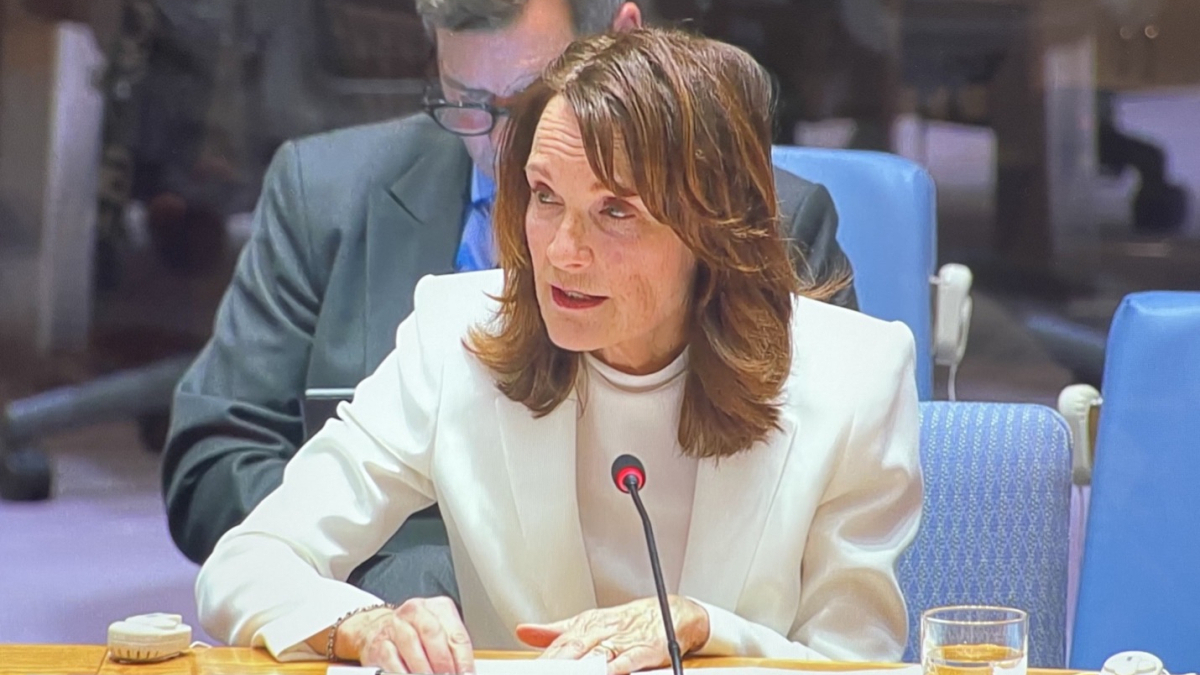
Briefing the United Nations Security Council on Monday, Georgette Gagnon, Deputy Special Representative for Afghanistan and Officer-in-Charge of the United Nations Assistance Mission in Afghanistan (UNAMA), said engagement with the Afghan authorities remained necessary but did not imply recognition.
She said Afghanistan was not facing any major armed or political challenge to the current authorities. However, she warned that the country's future remained uncertain.
"The longer-term scenarios for Afghanistan, however, depend largely on internal dynamics within the de facto authorities' governing structure," Gagnon said.
"For now, what exists is increasing control by the de facto authorities without a clear end-state," she added.
Returnees add pressure
Gagnon said the return of migrants was placing pressure on Afghanistan's already fragile economy.
"Afghans are returning to communities and an economy that cannot fully reintegrate them," she said.
According to the UN, nearly 5.9 million people have returned to Afghanistan since 2023. Gagnon said an estimated 3.8 million girls aged between seven and 18 were not attending school.
She said restrictions on women's education and employment were causing long-term damage to Afghanistan's economy and society.
The Security Council meeting came as members prepared to discuss the renewal of UNAMA's mandate, which was last extended for three months.
International reactions at the UNSC
The U.S. questioned the mission's cost and effectiveness. Jeffrey Bartos, the U.S. representative for UN Management and Reform, said: "All missions, including UNAMA, must provide value for money and must adapt to conditions on the ground."
He also called on Council members to condemn the Taliban for sheltering terrorist groups and failing to meet counterterrorism commitments.
India's Permanent Representative to the UN, Parvathaneni Harish, said the political reality in Afghanistan had changed and that the current UN sanctions regime should take this into account. India also condemned Pakistan's air strikes inside Afghanistan.
China and Russia supported continued engagement with Afghanistan, while China also called for secondary schools for girls to reopen.
AnewZ reached out to the Afghan authorities for comment on the UNSC meeting but did not receive a response by the time of publication.


















What is your opinion on this topic?
Leave the first comment