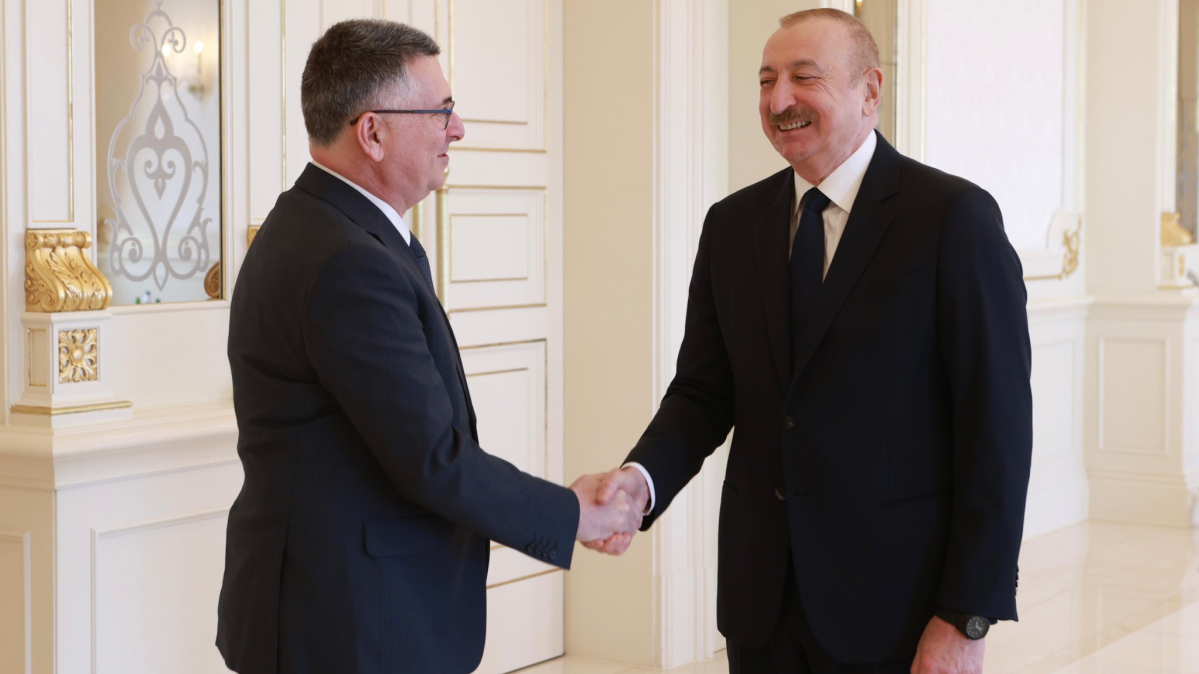
The strategic axis between Israel and Azerbaijan has been significantly reinforced this week as President Ilham Aliyev received Israeli Foreign Minister Gideon Sa'ar in Baku.
Israel’s Foreign Minister Gideon Sa'ar was received by President Ilham Aliyev on Monday, capping a week of intensive diplomacy that has seen the Jewish state and the secular Muslim-majority nation move to integrate their economies and align their strategic interests more closely than ever before.
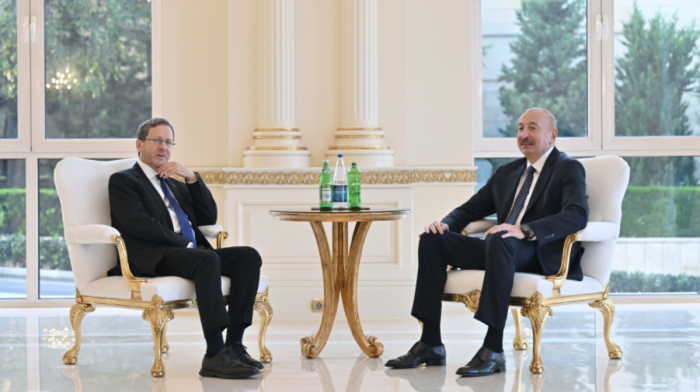
The meeting at the Presidential Palace on January 26 served as a direct continuation of the dialogue established just days prior in Switzerland.
Both leaders fondly recalled the recent meeting between President Aliyev and the Israeli leadership held on the sidelines of the World Economic Forum in Davos earlier this week.
Officials noted that the Davos talks had set the "bilateral agenda," creating a roadmap for the discussions in Baku which focused heavily on diversifying the partnership.
According to the official readout, President Aliyev and Minister Sa'ar emphasised the "successful development of relations" across a widening spectrum of sectors.
While the partnership has historically been defined by the trade of Caspian hydrocarbons for advanced Israeli defence technology, the current talks prioritised civilian infrastructure and future-facing technologies. Cooperation in agriculture, water resources management, high technologies, and artificial intelligence (AI) were highlighted as key growth areas.
For Azerbaijan, a nation currently undertaking a massive reconstruction effort in its recovered territories while facing the challenges of climate change, Israeli expertise in desalination, water conservation, and "agri-tech" is viewed as indispensable.
The diplomatic engagement also underscored the vital role of the intergovernmental commission, with both sides praising the outcomes of its most recent session.
To operationalise these political agreements, Sa'ar arrived in Baku accompanied by a substantial delegation representing the Israeli business community.
The Foreign Minister noted that the Azerbaijan–Israel Business Forum, scheduled to take place during his visit, would be the catalyst for a new era of private-sector engagement.
This shift towards a broader economic base suggests that both Tel Aviv and Baku are keen to entrench their alliance in daily commerce and technological exchange, making the relationship more resilient to external geopolitical shocks.
The reciprocal visits and frequent contacts at various levels were cited by both leaders as the driving force behind this deepening cooperation.
Sanctuary in a turbulent world: The Jewish community
Beyond the boardroom and the presidential palace, a central pillar of Foreign Minister Sa'ar’s visit was the celebration of Azerbaijan’s unique cultural fabric.
Before his reception with the President, Sa'ar met with leaders of the local Jewish community, using the occasion to frame Azerbaijan as a global outlier in its treatment of religious minorities.
During his conversation with President Aliyev, Sa'ar expressed profound gratitude for the "state-level care" shown toward the Jewish community in Azerbaijan.
This sentiment was echoed in his earlier public statements, where he noted that approximately 30,000 Jews live side-by-side with the country's Muslim population in an atmosphere of "mutual respect, religious tolerance, and freedom of worship."
In a world where Jewish communities in Europe and North America are increasingly investing in security infrastructure due to rising antisemitism, the open and protected nature of Jewish life in Azerbaijan—a majority Shi'ite Muslim nation—provides a powerful diplomatic narrative for both countries.
Baku is home to a diverse Jewish population, comprising the ancient community of Mountain Jews, who have lived in the region for millennia, alongside Ashkenazi and Georgian Jews.
The heart of this heritage is Qırmızı Qəsəbə (Red Town) in the Quba district, often cited as the only all-Jewish town outside of Israel and the United States.
For the Azerbaijani government, the prosperity of this community is a matter of national pride and a key instrument of soft power, demonstrating the country’s secular, multicultural identity.
Minister Sa'ar emphasised that this "human bridge" is foundational to the state-to-state relationship. The large diaspora of Jews of Azerbaijani descent who have repatriated to Israel maintains deep ties with their homeland, facilitating trade and cultural exchange.
By highlighting this coexistence, Israel validates Azerbaijan’s standing in the West as a moderate partner, while Azerbaijan provides Israel with a crucial example of friendship in the Islamic world.
This mutual validation is particularly potent given the neighbourhood; Azerbaijan’s model of state-protected multiculturalism stands in stark contrast to the sectarian policies of some of its regional neighbours.
The enduring safety of synagogues and Jewish schools in Baku serves as proof, in the eyes of Israeli diplomats, that the partnership is based on shared values, not just shared interests.
Azerbaijan–Israel ties go beyond transactions, expert view
Israel has long attached strategic importance to its relationship with Azerbaijan, and the recent visit by Israel’s foreign minister to Baku reflects the depth and durability of those ties, AnewZ political analyst Orkhan Amashov said.
Speaking to AnewZ, Amashov said Israeli diplomacy has consistently prioritised strong, functional relations with Azerbaijan, describing the partnership as one of the most stable and enduring in Israel’s regional diplomacy.
“There is a particular emotional and psychological dimension to these ties,” he said, adding that Azerbaijan and Israel have always enjoyed a degree of affinity that is rare in Israel’s relations with many other countries.
Amashov noted that there has never been a recorded and verified case of antisemitism in Azerbaijan, calling this an important foundation for mutual trust and long-term cooperation.
He said Israel moved quickly to establish diplomatic relations after Azerbaijan regained independence in the early 1990s, opening its embassy in Baku in the mid-1990s. Azerbaijan, in turn, opened its embassy in Israel in 2023, a step Amashov said had been delayed for years due to regional sensitivities.
“There is a strong security and defence dimension to these relations,” Amashov said, adding that while cooperation was once often described in simplified terms such as energy supplies in exchange for military technology, the partnership has evolved well beyond a purely transactional model.
“The relations go beyond the transactional aspect,” he stressed.
Amashov also pointed to wider geopolitical shifts shaping future cooperation, saying traditional international structures are under strain and new diplomatic frameworks are emerging.
He said the Abraham Accords are likely to play an important role in the further evolution of Azerbaijan–Israel relations.
“Everybody is talking about the erosion of the current world order, with the UN system collapsing before our very eyes, and something new is emerging,” Amashov said.
He added that new initiatives discussed at the World Economic Forum in Davos, including the so-called ‘Board of Peace’ initiative, could become part of this emerging global architecture and influence future regional and global cooperation.
The Israeli foreign minister’s visit to Baku, Amashov said, underlines a partnership rooted in long-term political trust, strategic cooperation and shared interests.












What is your opinion on this topic?
Leave the first comment