The AnewZ Opinion section provides a platform for independent voices to share expert perspectives on global and regional issues. The views expressed are solely those of the authors and do not represent the official position of AnewZ
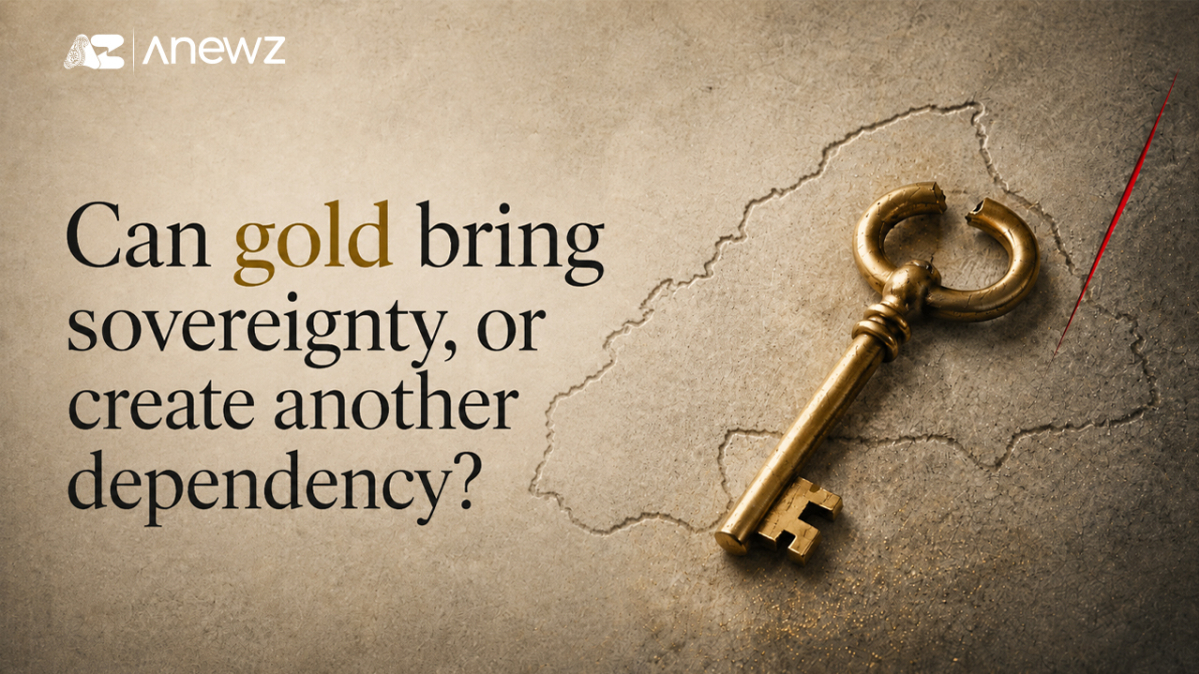
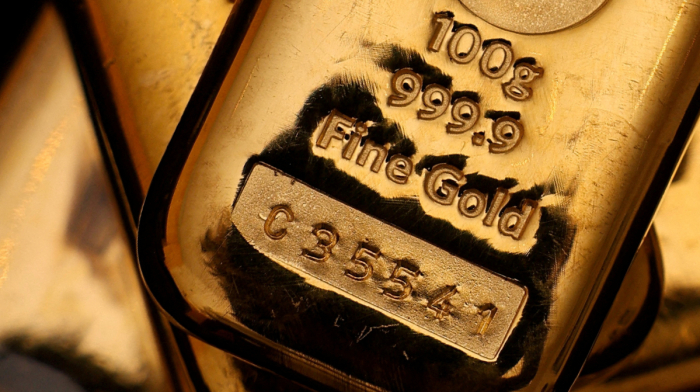
Burkina Faso’s gold has become more than an export commodity. It has become a political test of sovereignty, state capacity and economic survival.
Since Ibrahim Traore took power in September 2022, the country’s mining sector has moved through a rapid transformation. Burkina Faso remains one of Africa’s leading gold producers, and mining sits at the centre of its economy. In 2024, the sector accounted for a significant share of government revenue and dominated exports. That weight has made gold not only an economic asset, but also a strategic one.
The government presents its mining reforms as part of a wider project of economic sovereignty. It argues that a resource-rich country should have greater control over the wealth beneath its soil, and that the benefits of extraction should be felt more directly by the state and local communities.
This approach fits a broader regional trend. Military-led governments in Burkina Faso, Mali and Niger have all promoted stronger national control over strategic resources. They have also used anti-colonial and anti-Western language to frame their break with older external partnerships and foreign-dominated economic structures.
But resource nationalism is never simple. It may increase state revenue and strengthen public authority. It may also discourage investment, expose the economy to commodity shocks and create new forms of dependency. Burkina Faso’s gold strategy therefore raises a central question: can nationalisation become a path to development, or will it become another fragile promise built on a volatile market?
How the mining shift began
Burkina Faso’s political rupture in 2022 came in two stages. Roch Marc Christian Kabore was removed in January 2022 by Paul-Henri Sandaogo Damiba. Later that year, Traore led another coup and replaced Damiba, becoming the country’s transitional leader.
The new authorities quickly moved to redefine Burkina Faso’s external relationships. French troops were asked to leave, military cooperation with Paris weakened, and nationalist messaging became a central part of the government’s political identity.
Mining soon became one of the clearest arenas for this shift. Before the current wave of reforms, Burkina Faso’s industrial gold sector was largely dominated by foreign operators from countries including Canada, Australia, France and the United Kingdom. These companies brought capital, technology and operational capacity. Yet many Burkinabe critics argued that the sector did not deliver enough value to the state or to communities living near mining sites.
In 2024, Burkina Faso adopted a new mining code that increased the state’s free-carried interest in mining projects from 10 percent to 15 percent. The government also created the state mining company, Societe de Participation Miniere du Burkina, known as SOPAMIB, as part of a wider effort to raise public participation in the sector.
In 2025, the state completed the transfer of five gold mining assets to SOPAMIB. The move deepened state ownership and signalled that mining reform was not only rhetorical. It had become policy.
The government has also announced the creation of the Burkina Faso Sovereign Mining Investment Fund, intended to channel surplus mining revenues into long-term development, infrastructure and industrial projects. In principle, such a fund could help turn temporary commodity earnings into more durable national capital. In practice, its success will depend on governance, transparency and the discipline with which revenues are managed.
The economic argument
The case for nationalisation rests first on economics. Burkina Faso is rich in gold but remains a low-income country facing poverty, insecurity and weak public services. For a government under pressure to fund security operations, infrastructure and social needs, greater control over mining revenue is politically attractive.
The government’s argument is straightforward: if gold is Burkina Faso’s main strategic resource, the state should capture a larger share of its value. More revenue could support public investment, reduce dependence on external finance and give the government greater room to pursue its own development agenda.
Recent figures appear to strengthen this argument. Burkina Faso reportedly reached record gold output of more than 94 tonnes in 2025, although that figure includes artisanal and semi-mechanised production, not only industrial mining. Direct mining revenues also reportedly rose sharply, helped by higher gold prices, tighter oversight and stronger state participation.
This does not prove that nationalisation alone produced the result. Gold prices, production cycles, improved formalisation of artisanal mining and changes in enforcement all matter. But the figures help explain why the government sees the sector as a central pillar of economic sovereignty.
The political argument
The political logic is equally important. Traore’s government has built much of its legitimacy around the language of self-reliance, pan-Africanism and resistance to external control. Mining policy therefore serves both an economic and symbolic function.
In this narrative, gold is not simply a mineral. It is proof that African states can reclaim control over their resources, challenge unequal patterns of extraction and reduce dependence on foreign companies. Traore’s statement that Burkinabe people know how to mine their own gold captures the political appeal of this message.
Yet this language must be treated analytically rather than romantically. Nationalisation can shift ownership on paper. It does not automatically solve governance failures, insecurity, smuggling, child labour, environmental damage or weak local benefit-sharing.
The real test is not whether the state owns more of the sector. The test is whether the state can manage it better.
The risks beneath the gold
Burkina Faso’s mining turn also carries serious risks.
The first is investor confidence. Mining requires large capital investment, technical expertise and long planning horizons. If foreign companies conclude that rules can change too quickly, or that political pressure may override contracts, future investment could slow. This would matter not only for foreign firms, but also for the state itself, because reduced investment can weaken production, jobs and future revenue.
The second risk is operational capacity. State ownership is not the same as state competence. Managing mines requires technology, safety systems, finance, logistics and experienced management. A greater preference for local control may be politically popular, but it must be matched by skills, transparency and commercial discipline.
The third risk is gold-price dependency. A country that relies heavily on gold gains when prices rise, but becomes vulnerable when they fall. If public spending expands on the assumption that high prices will continue, the budget may become exposed to sudden shocks.
The fourth risk is geopolitical. Burkina Faso has moved away from France and other Western partners while developing closer ties with Russia. This may widen room for manoeuvre in the short term. But it could also replace one form of external dependence with another, especially if security, mining and diplomatic partnerships become concentrated around a new set of actors.
A Sahel-wide shift
Burkina Faso is not acting alone. Mali and Niger have also taken steps to increase national control over resources and reduce reliance on Western-backed regional structures. The three countries withdrew from the Economic Community of West African States and formed the Alliance of Sahel States.
This regional shift reflects a wider search for autonomy. But autonomy is not created by declarations. It requires functioning institutions, disciplined public finance, credible security structures and the ability to turn resource wealth into broad-based development.
For Burkina Faso, the challenge is especially severe. The country continues to face an Islamist insurgency, domestic instability, illegal mining and social pressures linked to poverty and displacement. These problems cannot be solved by mining policy alone.
A double-edged strategy
Resource nationalisation can be a powerful tool. It can increase state revenue, strengthen bargaining power and give citizens a greater sense that national wealth belongs to the country. But it can also become a trap if it is used mainly for political symbolism or short-term fiscal relief.
Burkina Faso’s gold strategy will succeed only if it does more than transfer ownership. It must improve governance, strengthen regulation, protect workers, formalise artisanal mining, attract responsible investment and invest revenue in projects that outlast the gold cycle.
That is why the country’s mining nationalisation should be seen as neither automatic success nor reckless failure. It is a gamble. Its outcome depends on whether the government can turn control into competence.
Burkina Faso may now own more of its gold. The harder question is whether it can turn that gold into lasting national development.





















What is your opinion on this topic?
Leave the first comment