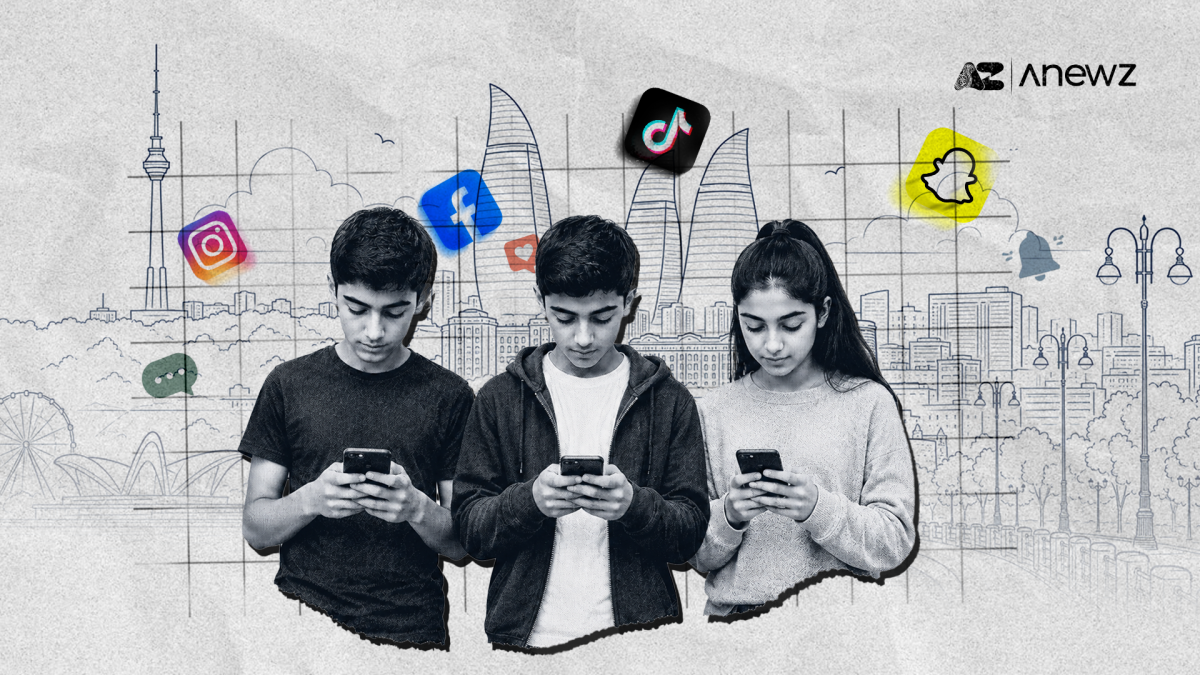
Azerbaijan is considering new restrictions on children's use of social media, including a minimum registration age of 16 and fines for platforms that fail to protect young users. The proposals form part of a broader global trend towards tighter regulation of online platforms.
Azerbaijan’s debate comes amid a growing international wave of legislation aimed at limiting children’s exposure to social media, driven by concerns over mental health, addiction risks and platform design.
Governments around the world are increasingly regulating social media use among children, citing anxiety, sleep disruption, cyberbullying and concerns over algorithm-driven engagement features.
Australia became the first country to introduce a nationwide ban on social media use for children under 16.
In Europe, Greece is introducing enforcement measures under the EU Digital Services Act (DSA), which allows penalties of up to 6% of a company’s global turnover for non-compliance.
Portugal has introduced parental consent requirements for users aged 13 to 16, while France, Denmark and the United Kingdom are also debating stricter age-based rules. Türkiye has also moved ahead with legislation banning social media use for children under 15.
Azerbaijan joins global policy trend
Azerbaijan is considering new legislation that would introduce fines for violations of age-restricted social media rules. The draft law is currently under discussion in the Milli Majlis and is being reviewed by relevant parliamentary committees.
The bill sets out financial penalties for social media providers that fail to submit required information to state authorities, delay responses or provide inaccurate data.
Officials could face fines ranging from 6,000 to 7,000 manats, while legal entities may be fined between 15,000 and 20,000 manats. Higher penalties would apply for repeated violations or failure to meet deadlines.
Stronger responsibility for platforms
The draft law introduces liability for platforms that fail to ensure a safe online environment for minors, including a lack of age-verification systems, insufficient safeguards for users aged 16 to 18, or failure to remove harmful content.
Additional penalties are proposed for the misuse of children’s personal data for advertising purposes or for failing to delete content posted before adulthood upon request. Repeated violations within a year would result in higher fines.
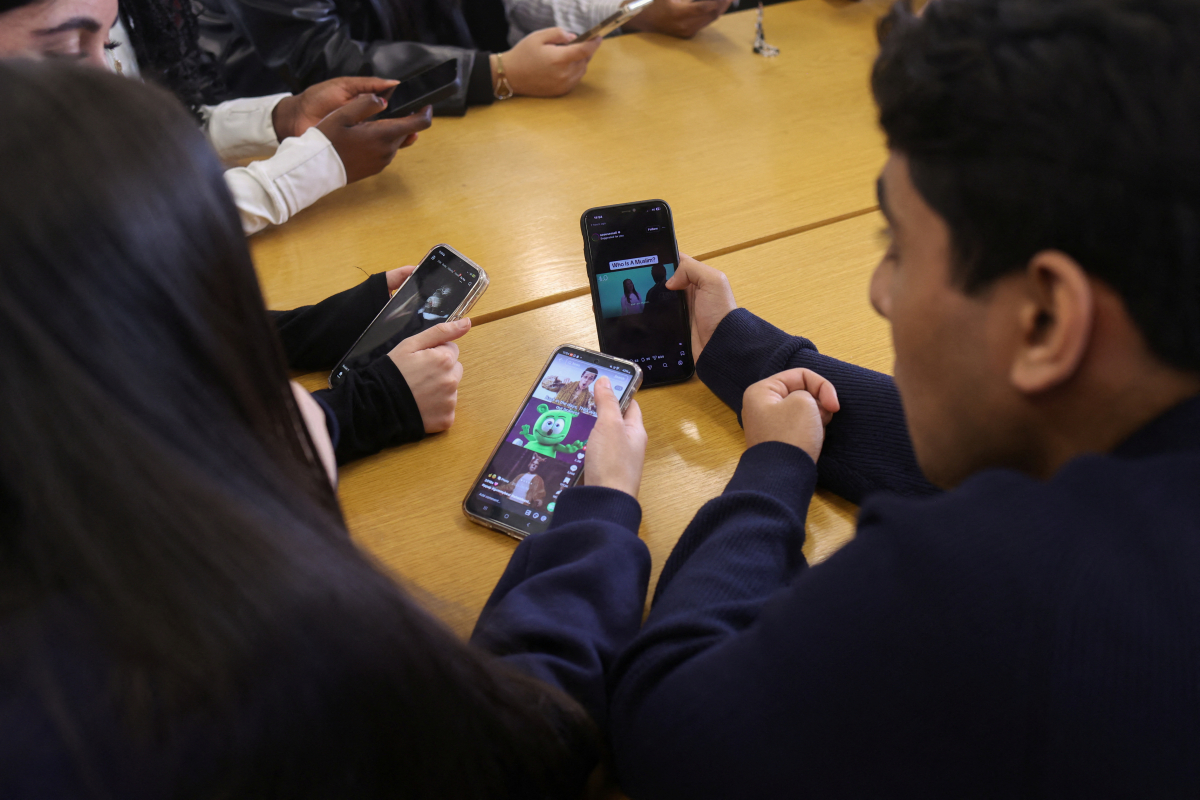
Students from Ricards Lodge and Rutlish High Schools in Wimbledon look at their mobile phones during an interview and discussion with Reuters about their thoughts on a social media ban for under 16s, in London, Britain, 23 February, 2026.
AnewZ
Minimum age of 16 under discussion
Separately, Azerbaijan is considering introducing a minimum age of 16 for social media registration. The initiative was presented by Zahid Oruj, chairman of the Parliamentary Human Rights Committee.
“The main goal is to protect children under 16 from the harmful effects of social media, including encouragement of suicide, sexual exploitation, and bullying. Registration on social networks will be allowed only from age 16,” Oruj said.
He added that users aged 16 to 18 would be allowed access only with parental consent. The draft also proposes banning manipulative platform features such as infinite scrolling and autoplay videos.
Vafa Yagublu, deputy director of the State Agency for Preschool and General Education, said the draft law covers around 1.5 million children in preschool and general education institutions.
She noted that nearly 300,000 children under the age of three are also included in the system. According to Yagublu, the proposal is generally viewed positively and is not intended to restrict social media use as its primary objective.
“From this year, bringing and using mobile phones in schools has been prohibited,” she added.
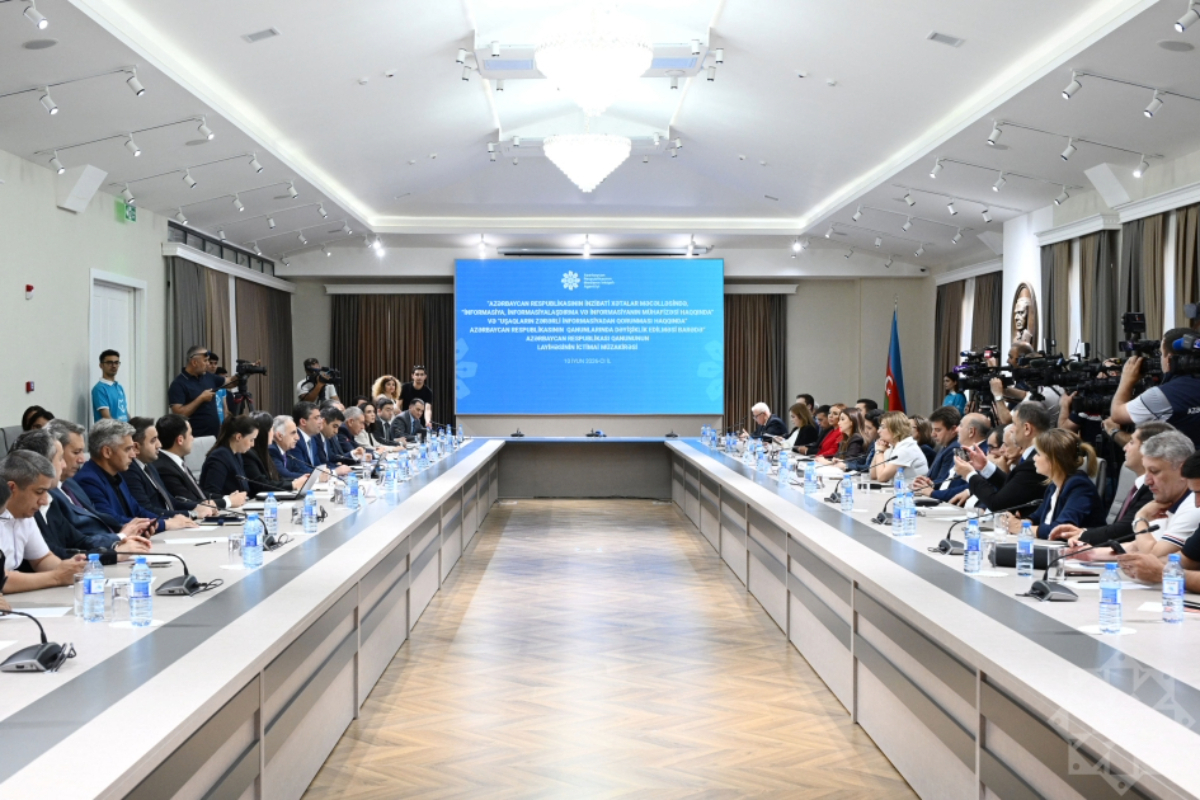
Azerbaijan’s Media Development Agency has submitted a draft law proposing amendments to several media and child protection laws for public hearing in Baku, Azerbaijan, on 10 May 2026.
AnewZ
Government says focus is on oversight
Officials emphasise that the aim is not to block social media but to strengthen oversight and child protection mechanisms.
Deputy Minister of Digital Development and Transport Rashad Hasanov said 43% of parents are unable to fully control their children’s online activity, adding that supervised-use tools are being developed for teenagers aged 16 to 18. He also noted that 93% of parents support the proposed changes.
Minister of Science and Education Emin Amrullayev said social media has become a major source of information for children.
“Today, 50 percent of children obtain information through social media, and this is considered more risky,” he said.
Digital risks require action
Ahmad Ismayilov, executive director of the Media Development Agency, said unregulated social media use at an early age can lead to long-term risks.
He noted that the draft law aims to strengthen protection mechanisms and ensure safer participation by children in digital environments.
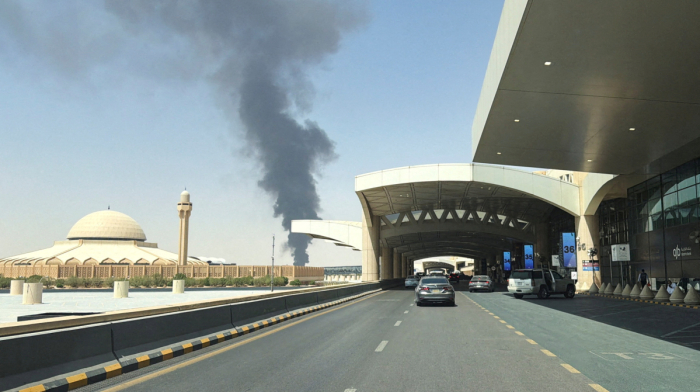
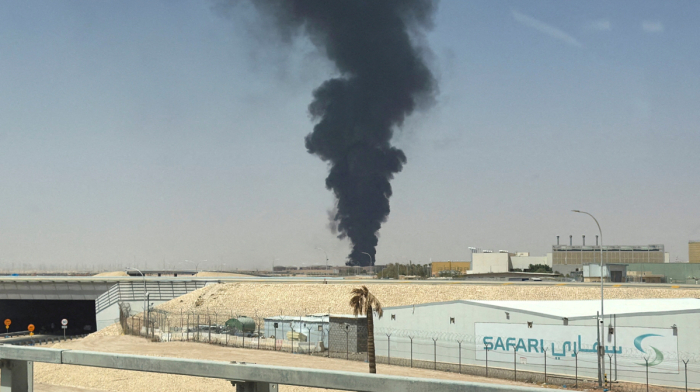
The explosion at King Khalid International Airport in Riyadh on Saturday afternoon killed at least 12 people and injured a further 309, according to Saudi Arabia’s Civil Aviation Authority. The airport remains closed until further notice.
One person was killed and nearly a dozen hurt in a new attack Riyadh's international airport on Sunday, Saudi authorities reported, a day after a strike claimed by Yemen's Houthis that killed 13 people and wounded more than 300.
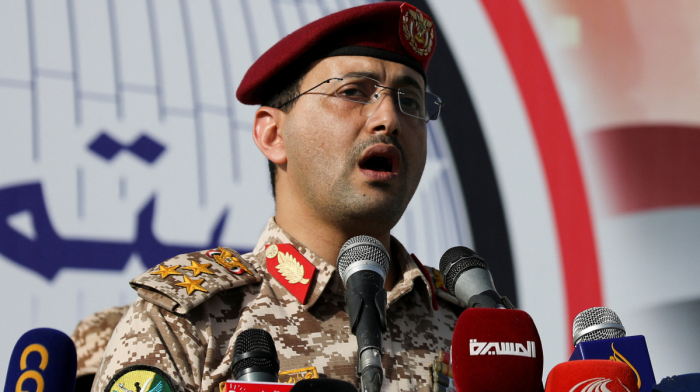
Yemen's Houthis renewed warning to airlines, airport workers, and travellers against using Saudi airports, saying the warning should be taken seriously and that the kingdom “bore responsibility for failed interceptions”, a day after an attack on Riyadh's international airport that killed 12 people.
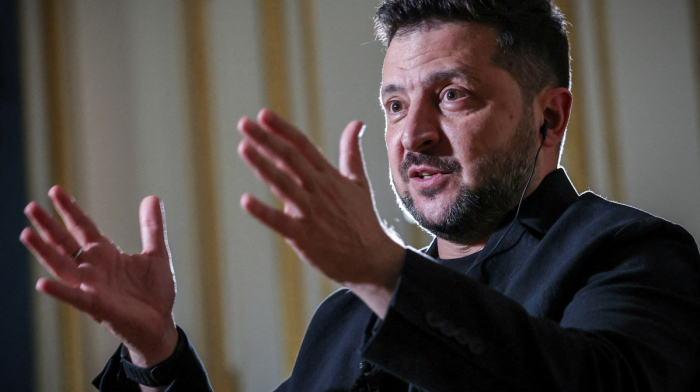
Ukraine is ready to stop attacks on Russian oil refineries if Moscow also halts strikes on Ukrainian energy infrastructure, President Volodymyr Zelenskyy said on Sunday.
One person was killed and nearly a dozen hurt in a new attack Riyadh's international airport on Sunday, Saudi authorities reported, a day after a strike claimed by Yemen's Houthis that killed 13 people and wounded more than 300.
Russia's TASS news agency is reporting that Russia's defence and digital development ministries are in talks about how to protect data centres, after several Yandex centres were targeted in Ukrainian drone attacks.
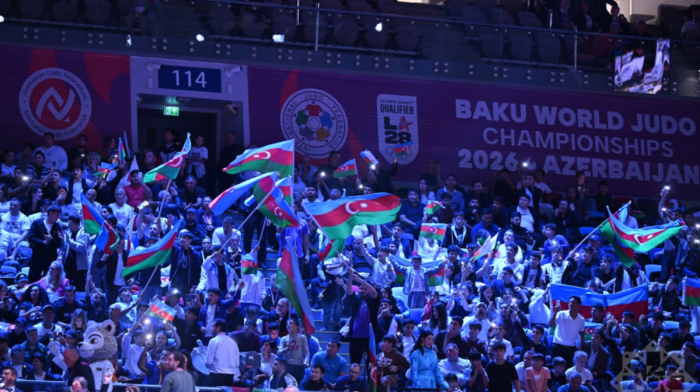
The 2026 Judo World Championships in Azerbaijan's capital came to a close with Japan claiming gold for the mixed team event of the competition, defeating Russia 4-1 in the final.
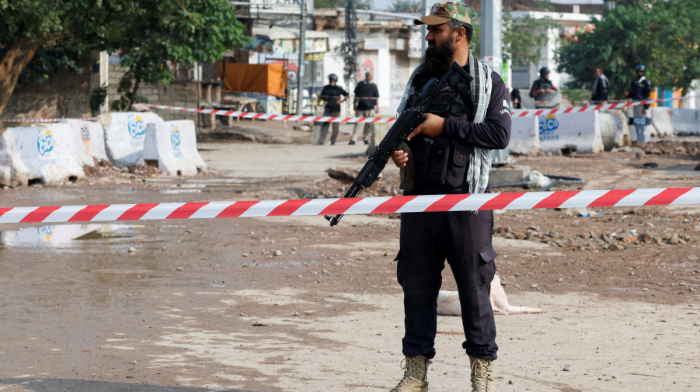
Pakistan has declared a state of emergency in Khyber Pakhtunkhwa, suspending the provincial government led by jailed former Prime Minister Imran Khan’s party. The move comes as tensions rise ahead of a planned protest calling for his release.
Yemen's Houthis renewed warning to airlines, airport workers, and travellers against using Saudi airports, saying the warning should be taken seriously and that the kingdom “bore responsibility for failed interceptions”, a day after an attack on Riyadh's international airport that killed 12 people.
Download the AnewZ app
You can download the AnewZ application from Play Store and the App Store.














What is your opinion on this topic?
Leave the first comment