Türkiye and Syria plan to increase annual bilateral trade to $5 billion within the next two years, officials from both countries said on Tuesday, as they seek to deepen economic ties and support Syria's recovery.
Trade targets and border expansion
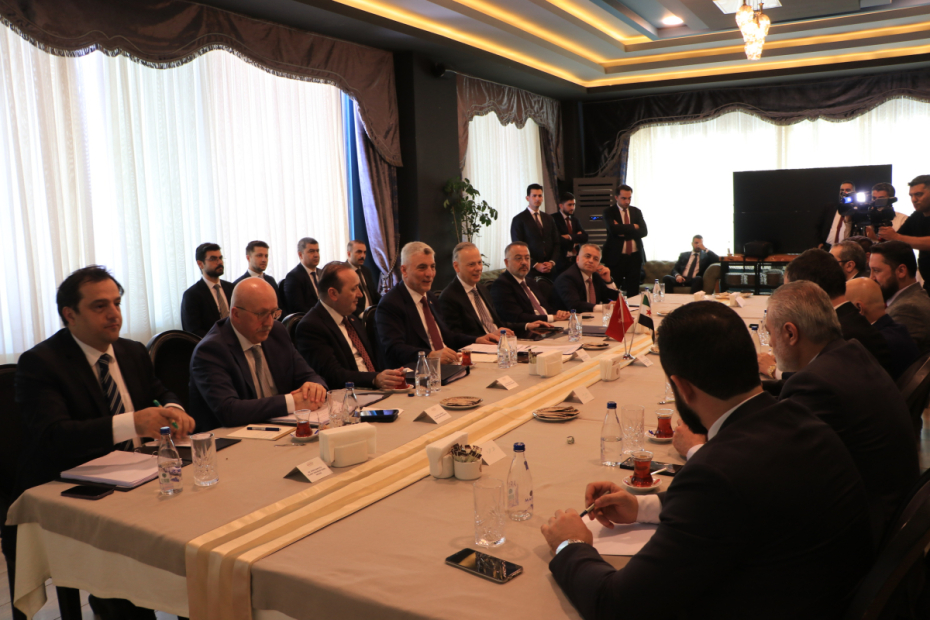
Speaking at the Anadolu City Economies Summit in the southeastern Turkish city of Gaziantep, Turkish Trade Minister Ömer Bolat said Ankara and Damascus were working to enhance cross-border commerce and deepen economic integration.
"We aim to increase our bilateral trade volume to $5 billion within two years - and to $10 billion by 2030," Bolat said.
He added that preparations were under way to open new customs gates along the Türkiye-Syria border, including the long-awaited İslahiye crossing.
Bolat also said Turkish authorities were ready to reopen the route linking Türkiye's southern city of Nusaybin with the Syrian city of Qamishli.
According to Bolat, modernised border infrastructure and faster transit procedures will be critical to facilitating trade and supporting Syria's economic recovery after years of conflict.
‘Natural partners’
Speaking to reporters in Gaziantep, Syrian Economy Minister Mohammad Nidal al-Shaar described Türkiye as Syria's "natural partner" and called for closer economic cooperation between the neighbouring countries.
He also invited Turkish companies to participate in Syrian infrastructure projects, noting that Damascus was streamlining trade and industrial regulations to attract greater foreign investment.
"We’re striving to establish strong and sustainable economic relations in Syria," he asserted.
Al-Shaar added that Syria's industrial sector was experiencing a revival, with thousands of factories recently resuming operations and new production lines being established across the country.
Economic cooperation
Tuesday's summit in Gaziantep comes amid ongoing efforts by Ankara and Damascus to expand economic cooperation following years of conflict and disruption in Syria.
Türkiye has long been one of Syria's most important trading partners and serves as a key transit route linking the country to regional and international markets.
Officials say modernised border crossings, faster customs procedures and increased private-sector investment will be crucial to boosting trade, improving regional connectivity and supporting Syria's long-term economic recovery.










What is your opinion on this topic?
Leave the first comment