The United States is placing renewed emphasis on regional partnerships that offer predictability, security cooperation and economic continuity as instability deepens across the Middle East and parts of Eurasia
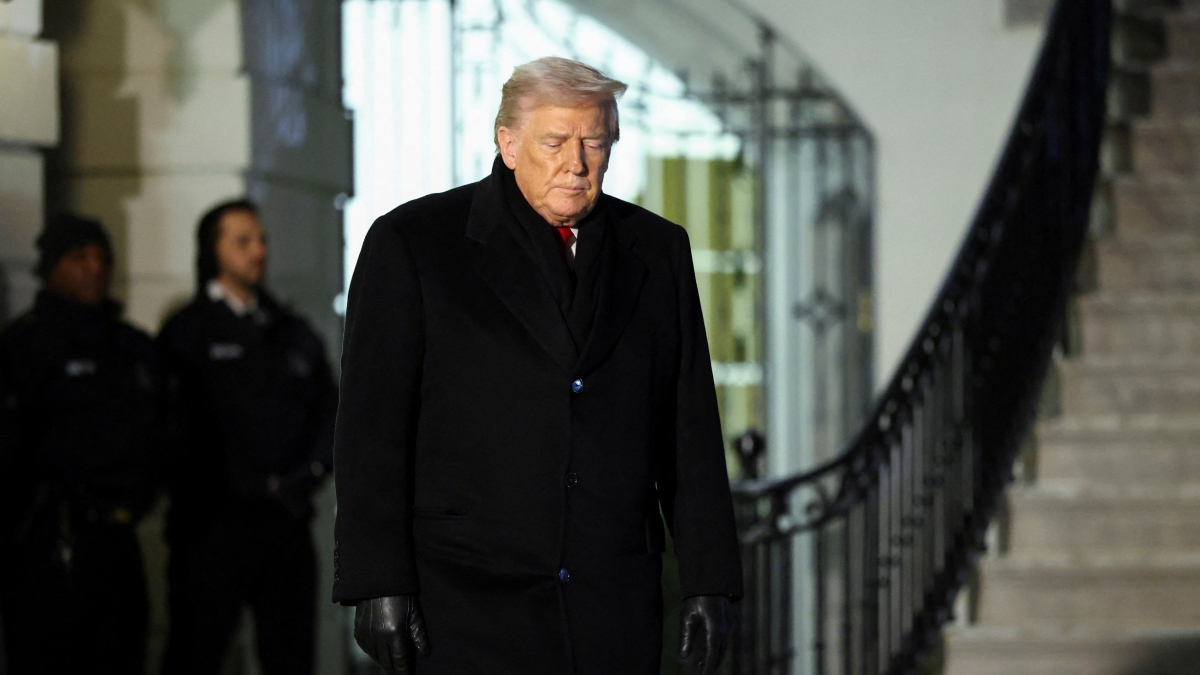
Azerbaijan’s strategic partnership with Israel is emerging as a significant factor in Washington’s broader diplomatic calculations under Donald Trump.
The Trump administration has prioritised bilateral engagement and pragmatic alliances over broader multilateral mechanisms. Azerbaijan and Israel, despite their geographical distance, fit this approach through long-standing cooperation rooted in security coordination, energy ties and regional stability.
Security cooperation shaped by regional realities
Defence and security collaboration has been a central element of Azerbaijan–Israel relations for decades. Both countries face persistent security challenges linked to regional instability, militant networks and tensions involving Iran. For Azerbaijan, Iran’s posture and rhetoric have remained a strategic concern, particularly in the post–Karabakh conflict environment.
Israel, meanwhile, views Azerbaijan as a reliable partner positioned along a critical geopolitical corridor connecting the South Caucasus, Central Asia and the Middle East. Analysts note that defence cooperation between the two states has been driven primarily by threat assessments and technological needs rather than ideological alignment.
Attempts to link Azerbaijan’s 2020 conflict with Armenia to Israel’s military operations in Gaza have been criticised by analysts as misleading. Azerbaijan’s campaign focused on reasserting control over internationally recognised territory, while Gaza-related hostilities involve a separate security context centred on non-state actors.
Energy ties with broader implications
Energy cooperation gives the Azerbaijan–Israel relationship wider international significance. Azerbaijan has emerged as a key oil supplier to Israel, providing a substantial share of its crude imports through routes that bypass traditional Middle Eastern chokepoints. These supply lines have helped reduce exposure to regional disruptions.
Azerbaijan’s state energy company SOCAR has also expanded its activity beyond the Caspian Basin, including interests linked to the Eastern Mediterranean energy landscape. For the United States and European partners, such diversification aligns with broader goals of energy security and market stability.
Azerbaijan’s role in regional diplomacy
Beyond its bilateral ties with Israel, Azerbaijan occupies a strategic position at the crossroads of Eurasia. It has sought to balance relations with Russia, Türkiye, Iran and Western partners while maintaining a secular political model. US policymakers increasingly view this balancing role as an asset in a region marked by sharp polarisation.
Trump-era diplomatic engagement involving Azerbaijani President Ilham Aliyev and Armenian Prime Minister Nikol Pashinyan has underscored Washington’s interest in sustaining post-conflict stability in the South Caucasus rather than reopening frozen disputes.
Within this context, Azerbaijan’s partnership with Israel functions as part of a broader network supporting US diplomatic objectives without requiring a large American footprint on the ground.
Political constraints and ongoing debate
Despite its strategic utility, cooperation with Azerbaijan continues to face political resistance in Washington. Section 907 of the FREEDOM Support Act, though waived repeatedly for more than two decades, remains emblematic of lingering congressional scepticism and limits the scope of formal engagement.
Analysts warn that framing regional partnerships through partisan or ideological lenses risks weakening arrangements that contribute to security coordination, energy reliability and diplomatic leverage.
Beyond transactional ties
What sets Azerbaijan–Israel relations apart is their durability beyond immediate transactional interests. Azerbaijan is one of the few Muslim-majority countries where Jewish communities have lived openly for centuries, a social foundation that adds resilience to state-level cooperation.
As the Trump administration advances its Middle East diplomacy, partnerships that combine security coordination, economic connectivity and regional balance are likely to remain central. In this respect, Azerbaijan–Israel ties illustrate how pragmatic alliances can reinforce U.S. interests in an increasingly fragmented geopolitical environment.
















What is your opinion on this topic?
Leave the first comment