Central Asian leaders have warned that worsening water shortages now pose a direct threat to regional stability, urging coordinated action and stronger international engagement.
Kazakhstan’s President Kassym-Jomart Tokayev warned that water scarcity poses a direct threat to the region’s future, declaring that "No water in the region means no states in Central Asia." He framed the issue as more than an environmental or economic concern, but an existential risk to regional stability.
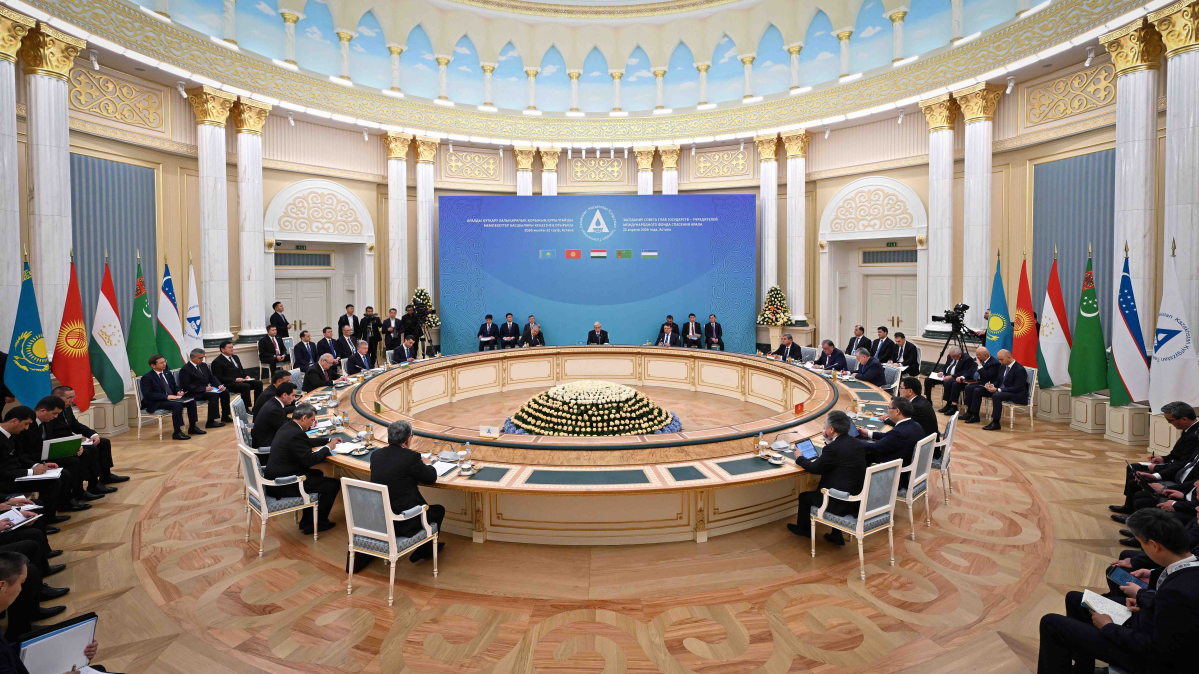
He was speaking at a meeting of the Council of Heads of State, founders of the International Fund for Saving the Aral Sea, where leaders gathered to address mounting pressure on shared water resources. Tokayev said the time for routine declarations had passed and warned that without coordinated action the consequences could extend well beyond shortages, affecting stability across Central Asia.
Push for stronger international engagement
Kazakhstan used the meeting to propose a unified regional initiative to be presented at the United Nations. The aim is to move the issue beyond a purely regional framework and place it firmly on the global agenda. As part of that effort, Astana suggested hosting elements of UN-Water in Central Asian capitals, in an attempt to strengthen cooperation and anchor it within international structures.
Another proposal is to establish, under UN auspices, an international day dedicated to the Aral Sea and the Amu Darya and Syr Darya rivers. The intention is to draw sustained global attention to a crisis long treated as regional. The decline of the Aral Sea remains one of the clearest examples of environmental mismanagement and its enduring consequences.
Regional divisions persist
The meeting in Astana also produced a number of formal outcomes. Participants reviewed Kazakhstan’s chairmanship of the fund and set out future priorities, with a focus on water security, environmental protection and sustainable development. These positions were reflected in the Astana Statement, which outlines a shared approach among Central Asian states.
At the same time, differences within the region persist. Tokayev commented on Kyrgyzstan’s decision to suspend its participation in the fund, describing it as a sovereign choice. He added that cooperation at working level continues and expressed confidence that Kyrgyzstan would eventually return, noting the importance of its experience for the region.
The Kazakh president also called for water issues to be addressed in other regional formats, including consultative meetings between Central Asian leaders. The message was clear: water can no longer be treated as a narrow technical matter but must be integrated into broader political and economic discussions.
Broader environmental and health concerns
Concerns over water management extend beyond Central Asia. Azerbaijan’s Minister of Health, Teymur Musayev, said regional and cross-border cooperation must be strengthened on issues related to the water quality of the Caspian Sea.
Musayev noted that the Caspian Sea is a shared resource requiring coordinated management: “One of the main strategies applied for protecting biodiversity in the coastal areas of the Caspian Sea is the creation and effective management of specially protected natural areas.” He added that four national parks currently operate along Azerbaijan’s coast.
He also warned that climate change is altering water conditions, with consequences for both ecosystems and public health: “These impacts create not only ecological but also serious public health risks.”














What is your opinion on this topic?
Leave the first comment