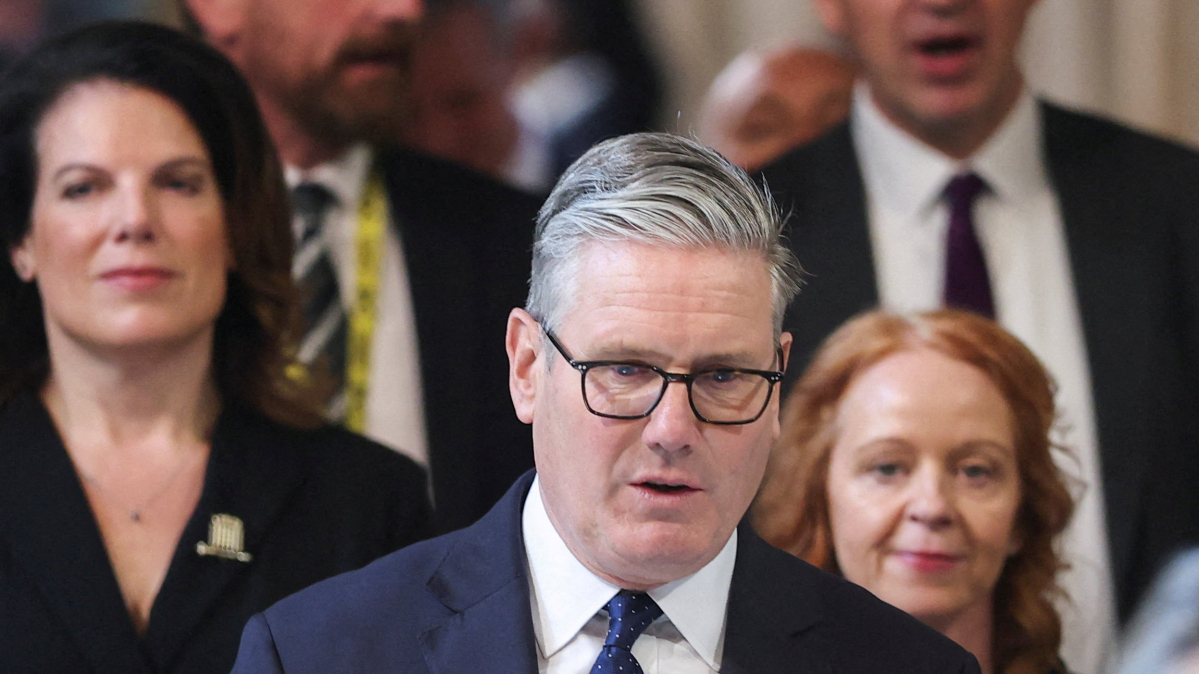
Britain will introduce new legislation aimed at strengthening ties with the European Union as Prime Minister Keir Starmer seeks to rebuild economic relations with the bloc while facing growing political pressure at home.
The plan was outlined in the King’s Speech, delivered by King Charles during a ceremony steeped in parliamentary tradition, which set out the government’s legislative agenda.
The proposed European Partnership Bill will provide a legal framework to implement existing and future agreements between the UK and the EU, the government said.
The move comes at a difficult moment for Starmer, who has faced calls from some lawmakers to step down after Labour suffered significant losses in recent elections in Scotland, Wales and local authorities across England.
Despite the setbacks, Starmer has insisted that improving ties with Europe is central to his strategy for economic recovery and political stability.
Rebuilding ties without reopening Brexit divisions
Starmer has made clear that his approach is intended to deepen cooperation with Brussels while avoiding a return to the divisive debates surrounding Brexit, which saw Britain leave the EU in 2020.
While his government has signalled a willingness to align more closely with EU regulations in certain sectors to boost trade and growth, it has also maintained firm “red lines”. These include ruling out rejoining the EU’s single market or customs union, and rejecting any return to freedom of movement.
A year ago, the UK and EU agreed a broad framework covering closer cooperation in areas such as food and drink standards, emissions trading and electricity markets. However, negotiations over the detailed terms of those agreements are still ongoing.
Parliamentary oversight and future agreements
According to the government, the European Partnership Bill will ensure that any agreements reached with the EU can be fully implemented both now and in the future.
Officials stressed that Parliament would retain oversight, with lawmakers given a role before EU rules are applied domestically. Any new treaties falling under the legislation would also require parliamentary approval, the government said.
In a written introduction to the King’s Speech, Starmer said removing barriers to economic growth required “setting a new direction for Britain” and strengthening engagement with European partners.
He added that he aimed to place the UK “at the heart of Europe” ahead of the next EU summit, signalling a shift towards closer cooperation without reversing Brexit.
















What is your opinion on this topic?
Leave the first comment