Bangladesh says $300 billion climate finance goal falls short, calls for more support
Bangladesh has called for increased climate financing and faster delivery of support to vulnerable nations, arguing that current global funding commit...
Türkiye has completed formal preparations to begin direct commercial activity with Armenia, a Turkish Foreign Ministry spokesman said on Wednesday, marking another step in the slow but steady normalisation of ties between the two neighbours.
Preparations to begin direct bilateral trade were finalised on Monday, 11 May, according to Oncu Keçeli, spokesman for the Turkish Foreign Ministry.
He added, however, that technical and bureaucratic procedures aimed at reopening the two countries’ shared border, which has been closed since the 1990s, were still under way.
According to a ministry statement, the new arrangement means that goods exported from Türkiye to Armenia via third countries, or vice versa, can list their final destination or country of origin as either “Turkey” or “Armenia”.
In a further sign of warming bilateral ties, Ankara also lifted several customs restrictions previously imposed on Armenia on Wednesday.
Ani Badalyan, spokeswoman for the Armenian Foreign Ministry, welcomed the developments.
“This decision is significant for expanding trade and business ties between the two countries, promoting economic connectivity in the region, and ensuring peace and prosperity,” she said in remarks to Armenia’s state press.
The measures mark the latest steps in the Türkiye-Armenia normalisation process, which has been gaining momentum, slowly but steadily, since 2022.
Although Türkiye recognised Armenia following its independence from the Soviet Union in 1991, the two countries have never established formal diplomatic relations.
In 1993, Türkiye unilaterally closed its border with Armenia during the First Karabakh War between Armenia and Azerbaijan, in which Türkiye supported Azerbaijan.
Following the Second Karabakh War in 2020, Ankara and Yerevan began taking steps to normalise relations after decades of mutual animosity.
Since then, direct flights between the two countries have resumed, while their shared border has been opened to third-country nationals and holders of diplomatic passports.
Progress, however, remains cautious, partly because Türkiye-Armenia normalisation is closely linked to the parallel peace process between longstanding rivals Armenia and Azerbaijan.
Read more:

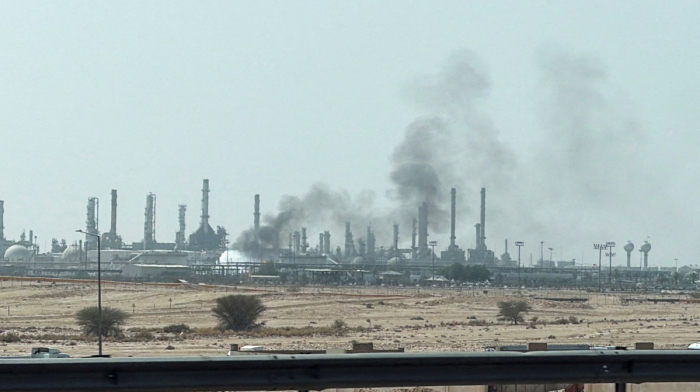
At least thirteen people have died and sixty-six have been injured following an explosion at Qatar's main liquefied natural gas (LNG) processing hub at Ras Laffan, authorities said on Sunday.
Cape Verde’s remarkable FIFA World Cup debut continued on Sunday (21 June) as the tournament newcomers held Uruguay to a 2-2 draw. Goalkeeper Vozinha was once again at the centre of the story, this time with his mother watching from the stands.
Tehran has agreed to let the International Atomic Energy Agency (IAEA) recommence inspections of its nuclear programme, U.S. Vice President JD Vance has said. The U.S. and Iran have settled on a 60-day roadmap aimed at reaching a final deal, according to mediators Qatar and Pakistan.
Armenia and Azerbaijan have agreed on a landmark internet deal that will allow traffic to pass through Azerbaijani networks.It's the latest deal to highlight the ongoing peace process between the two countries.
A Ukrainian strike has damaged a school building in a Russian-controlled area of Ukraine’s Zaporizhzhia region, according to local authorities cited by the TASS news agency. No injuries were reported in the incident.
U.S. President Donald Trump said that Iran had agreed to nuclear inspections into "infinity, despite Tehran's denials, and that unfrozen Iranian assets would be used to buy humanitarian supplies from the United States.
The European Bank for Reconstruction and Development (EBRD) has announced a loan of up to $25 million to support energy-efficiency upgrades at Tashkent Pipe Plant (TPP), one of Uzbekistan’s leading private steel producers.
For Pakistan, helping create space for dialogue between the U.S. and Iran was never solely about diplomacy. It was about avoiding the economic and security consequences of a wider regional conflict.
The visit also took on symbolic importance as the two leaders travelled to the liberated cities of Shusha and Fuzuli, areas Azerbaijan regained after decades of occupation.
A United Nations official has warned that efforts to stabilise southern Syria remain stalled nearly a year after deadly sectarian violence in Sweida province, with tensions between Druze factions, Bedouin communities and state authorities still unresolved.
You can download the AnewZ application from Play Store and the App Store.
What is your opinion on this topic?
Leave the first comment