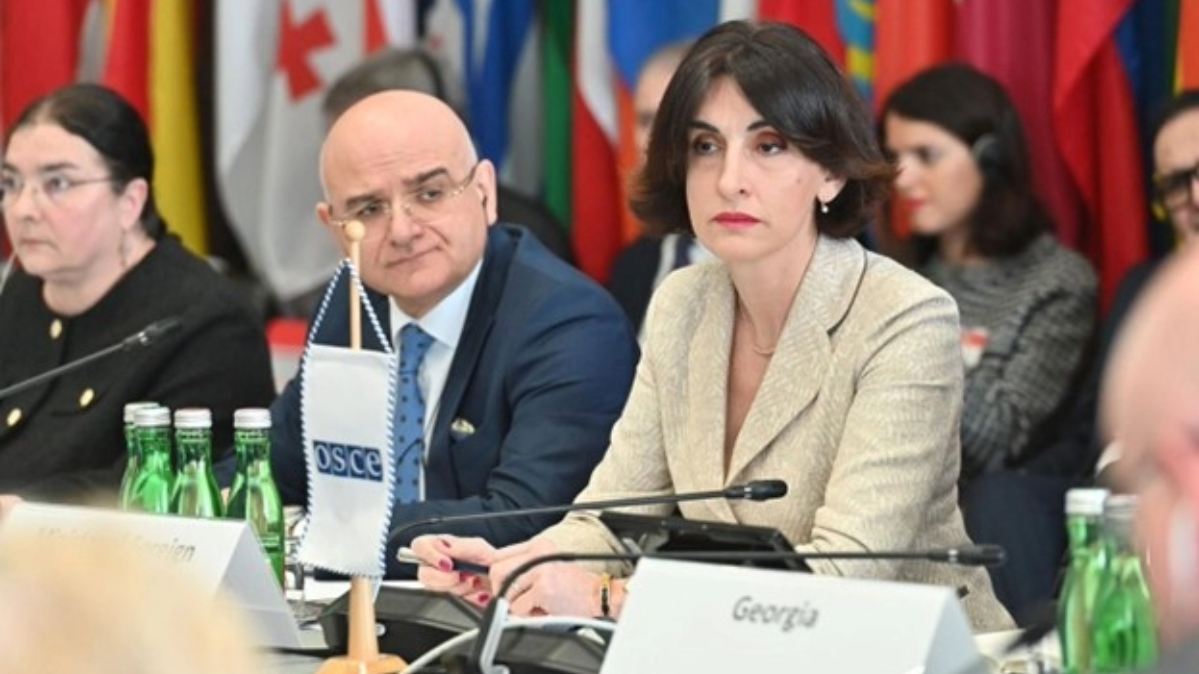
Georgia has assumed the rotating chairmanship of the OSCE Forum for Security Co-operation (FSC), formally taking over on 22 April in Vienna and placing it at the centre of key security discussions at a time of rising geopolitical tension and declining trust between states.
The FSC is a key body within the Organization for Security and Co-operation in Europe, focused on military stability, transparency, arms control and confidence-building measures among participating states. Its chairmanship rotates three times a year, with each country leading the forum for several months. Georgia will hold the position until early September 2026, after which the United Kingdom will take over.
Responsibilities and influence
Holding the chair involves setting the agenda, leading weekly meetings, facilitating dialogue between member states and advancing initiatives on security co-operation. It also gives Georgia a platform to highlight its own priorities and concerns within a broader international framework.
Focus on deteriorating security environment
In her opening speech, Georgia’s Foreign Minister, Maka Bochorishvili, pointed to a deteriorating security environment across the OSCE region. She stressed that traditional security mechanisms are under strain, while new and evolving threats require more flexible and co-operative approaches.
The minister underlined the importance of rebuilding trust between states and ensuring that existing commitments - including transparency in military activities - are respected. Drawing on Georgia’s own experience, she referenced ongoing challenges related to territorial integrity and unresolved conflicts.
Priorities for the chairmanship
Bochorishvili outlined three main priorities for Georgia’s chairmanship: strengthening the Code of Conduct on military-political aspects of security, addressing the impact of armed conflicts on women and girls, and focusing on human rights violations in conflict situations.
Georgia has also signalled its broader ambitions within the organisation by submitting a bid to chair the OSCE as a whole in 2027.
A critical moment for European security
The chairmanship comes at a sensitive time for European security, with ongoing conflicts, strained diplomatic relations and increasing pressure on existing security frameworks - making the FSC’s role, and Georgia’s leadership within it, particularly significant.













What is your opinion on this topic?
Leave the first comment