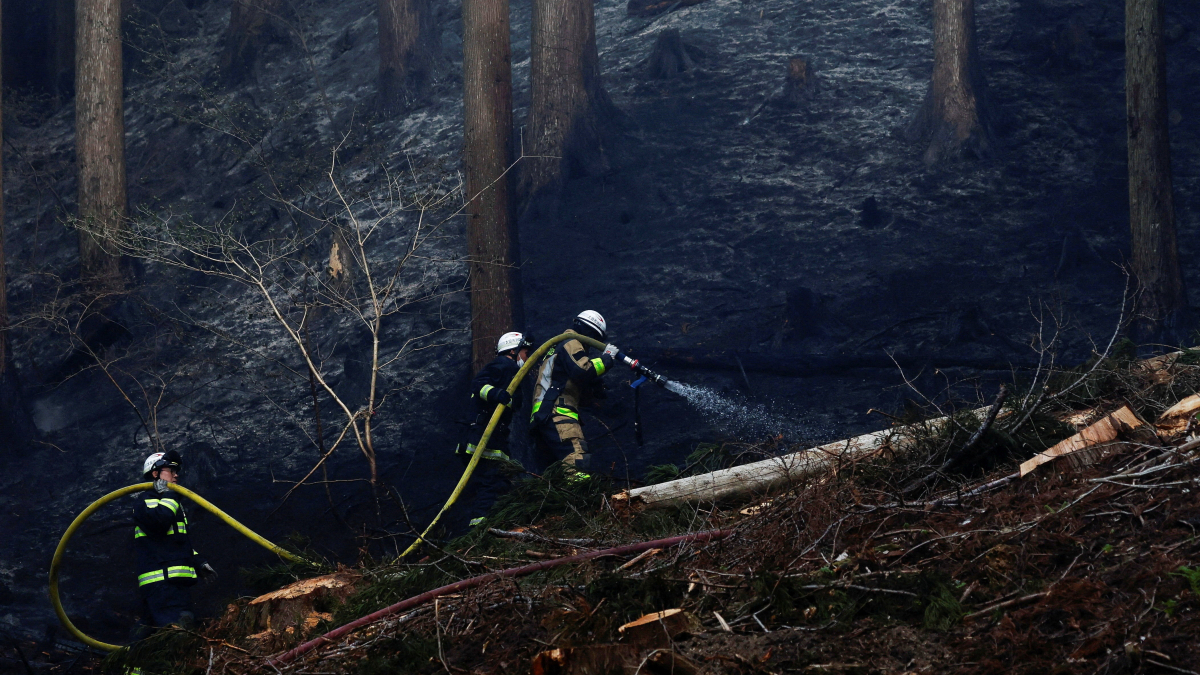
More than 1,000 firefighters are battling to contain two major wildfires in northern Japan for a fourth consecutive day, as flames advance towards residential areas and force thousands to flee.
The fires, burning in and around the town of Otsuchi in Iwate Prefecture, have already scorched around 730 hectares, making them among the largest recorded in the country in recent years.
The first blaze broke out on Wednesday in a mountainous area, followed by a second nearby fire that began threatening homes. Authorities have issued evacuation orders for 1,541 households, affecting more than 3,200 residents, roughly a third of the town’s population.
Difficult terrain, dry conditions and strong winds are hampering containment efforts, officials said, with helicopters from multiple prefectures and the Japan Self-Defense Forces deployed to support firefighting operations.
Residents in panic
The unfolding crisis has revived painful memories in Otsuchi, which lost nearly a tenth of its population during the 2011 Tōhoku earthquake and tsunami.
“Even during the 2011 disaster, this area didn’t burn,” said evacuee Taeko Kajiki, 76.
“There was a tsunami but we had no fire here.”
Volunteer firefighter Masashi Kikuchi, who lost his home in the 2011 disaster, described the relentless challenge of tackling the blazes.
“With the land so dry, fires keep igniting. We put one out, then race to extinguish another,” he said.
So far, eight buildings, including one home,have been damaged or destroyed, though no injuries or fatalities have been reported.
Mayor Kozo Hirano said authorities were working to support evacuees and prevent further losses.
“I can’t let people lose their homes again after losing them once to the tsunami,” he said.
Increased climate risk
While wildfires have historically been less common in Japan compared with other regions, officials warn that climate change is increasing their frequency and intensity.
The Japan Meteorological Agency said no rain is forecast in the coming week, raising concerns that the fires could continue to spread.
According to official data, the current fires rank among the largest on record, surpassed only by a major blaze in Ofunato in 2025 and the Kushiro wildfire in 1992.
Authorities remain on high alert as crews continue efforts to contain the fires and protect nearby communities.
















What is your opinion on this topic?
Leave the first comment