Moscow-born suspected terrorist kills six people in Kyiv supermarket shooting before police shoot him dead
Six people have been killed after a man opened fire in a supermarket in the Ukrai...
European countries should expand the role of natural gas in their energy systems to reduce the risk of supply shocks caused by international crises, an energy industry chief has said.
Choeib Boutamine, chief executive of Ranadrill Energy, told AnewZ’s Prime Time that greater diversification would strengthen Europe’s energy security and support its economy.
“Even if the war stops today, the impact will be long-lasting. Europeans should focus on diversification, for example, by increasing the share of natural gas in their energy systems.
“Natural gas can also be used as fuel for cars and trucks, which could serve as an alternative,” Boutamine said.
“I think a new strategy is needed, one that focuses on resilience given ongoing global events. We already have the war in Ukraine and tensions in the Strait of Hormuz. Multiple crises are happening at once.
“So energy diversification should be a priority, especially through increasing the role of natural gas, which can act as a buffer for the European economy.”
The head of the International Energy Agency warned on Thursday that Europe may have only six weeks of jet fuel left if it cannot replace imports from the Middle East.
Europe has previously imported three-quarters of its jet fuel from the Middle East.
Since Iran effectively closed the Strait of Hormuz to ships at the end of February, European countries have sought to replace Gulf imports with supplies from other countries.
Boutamine said he didn’t think Europe would end up suffering a jet fuel shortage, but said he expected prices to continue to rise in the next few weeks.
“They have some alternatives. One of the strongest alternatives they have is crude oil from the U.S. They also still have the Russian option,” Boutamine said.

The past 24 hours of the Russia-Ukraine war have seen a drastic escalation in both aerial bombardment and frontline losses.
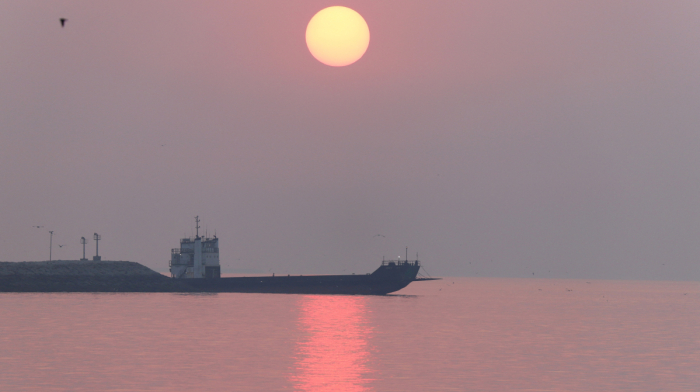
Iran reopened the Strait of Hormuz to commercial shipping on Friday (17 April) for the first time since the U.S. and Israel killed Iran's ex-Supreme Leader in air strikes, triggering the Middle East conflict, at the end of February. A U.S. blockade on Iranian ports, however, remains in force.
Two Indian-flagged ships were shot at in the Strait of Hormuz on Saturday, India's Foreign Ministry said, as Iran closed the Strait of Hormuz again, less than 24 hours after reopening the 167km long sea passage, which is essential for global trade.
Netflix shares fell sharply on Friday after the streaming group issued a weaker-than-expected outlook and said chairman and co-founder Reed Hastings will step down from the board.
Eight people have died after a helicopter crash in West Kalimantan province, Indonesia. Authorities said contact was lost five minutes after taking off from a plantation area in Melawi.
Six people have been killed after a man opened fire in a supermarket in the Ukrainian capital, Kyiv, on Saturday (18 April). Ukraine's Security Service said it was investigating the incident as a "terrorist act."
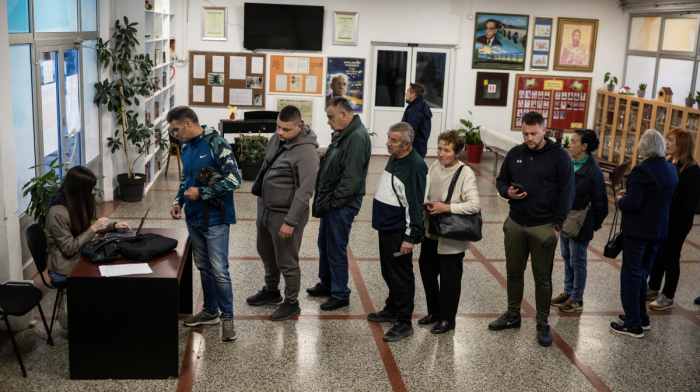
Bulgaria heads to the polls on Sunday (19 April) for its eighth election in five years, amid mounting public frustration over corruption scandals and repeated government collapses.
The Trump administration extended a sanctions exemption on some Russian oil as prices continue to skyrocket in the wake of the U.S.- Israeli war against Iran on Friday (17 April).
Australia and Japan signed contracts on Saturday (18 April) launching their landmark A$10 billion ($7 billion) deal to supply Australia with warships, Tokyo's most consequential military sale since ending a military export ban in 2014.
Leaders from across Europe and beyond gathered in Paris on Friday for a summit aimed at managing the global impact of the Middle East conflict.
You can download the AnewZ application from Play Store and the App Store.
What is your opinion on this topic?
Leave the first comment