Türkiye and the World Bank have signed a new partnership to strengthen Türkiye’s connectivity with Europe, Asia and the Middle East, supporting hundreds of thousands of jobs, including the creation of 100,000 more worldwide.
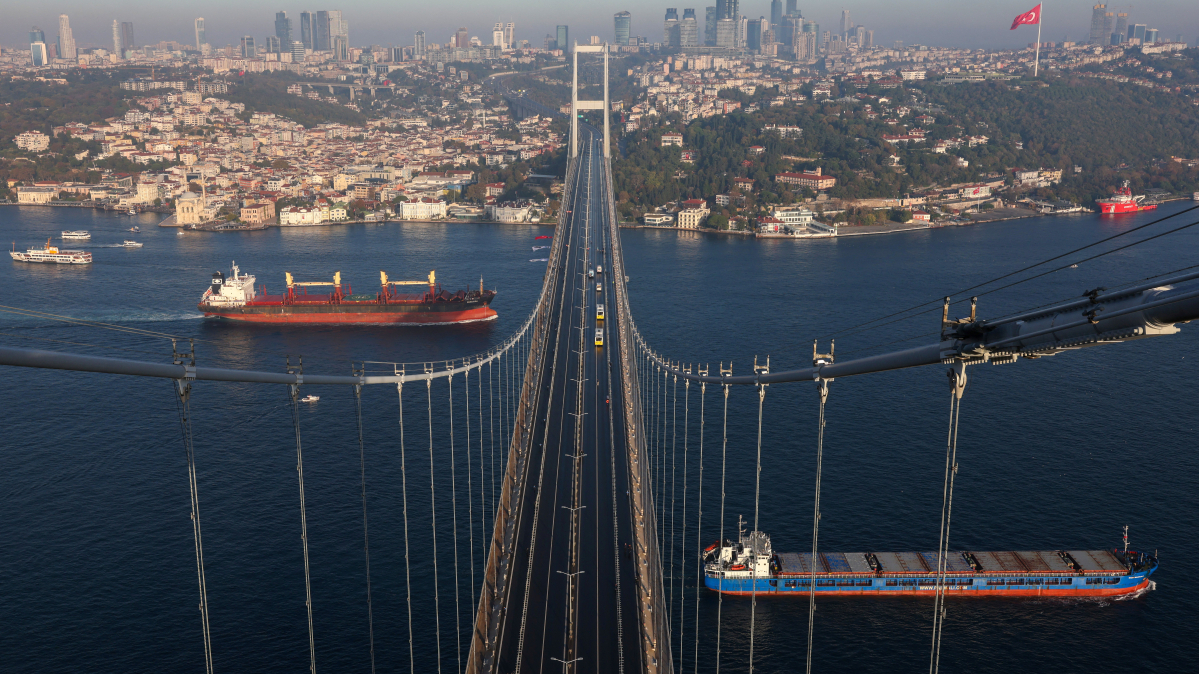
The project includes a 127-km electrified rail line crossing the Bosphorus via the Yavuz Sultan Selim Bridge. Officials estimate it will cut logistics costs and increase annual rail freight capacity across the strait from 3 million tonnes to 50 million tonnes.
The agreement was signed by Anna Bjerde, the World Bank’s Managing Director for Operations, and Turkish Finance Minister Mehmet Şimşek. Şimşek said the project is aimed at eliminating a key "bottleneck" in the so-called Middle Corridor, linking Europe with Asia by land, including through the Caucasus region. It will route trade through tunnels, reducing exposure to extreme heat, flooding, strong winds and wildfires, the World Bank said.
$8.1 billion investment backed by global institutions
The total cost of the project is valued at $8.1 billion, Şimşek said, with 83% financed by international financial institutions. INRAIL is the third-largest project in the history of the World Bank.
Türkiye said the project will increase capacity on the Middle Corridor railways from 3 million to 50 million tonnes per year.
The investment will create approximately 414,000 higher-paying jobs and 99,000 new jobs, according to projections.
Strategic importance of the Middle Corridor
The Middle Corridor is a transport and trade route passing through a number of countries in the region and connecting Asia with Europe. It serves as an alternative to the traditional Northern and Southern Corridors and bypasses longer sea routes, which can slow trade.
Şimşek added that the signing of the agreement reflects mutual trust in Türkiye’s development and partnership, and he expressed gratitude to the technical teams of all parties for their work.
"This project is a strategic and transformational investment for Türkiye," said Humberto Lopez, World Bank Country Director for Türkiye. "By removing a critical rail bottleneck at the Istanbul Strait and enhancing the resilience and efficiency of rail infrastructure, Türkiye is boosting its competitiveness and reinforcing its role as a logistic hub."
Read more:












What is your opinion on this topic?
Leave the first comment