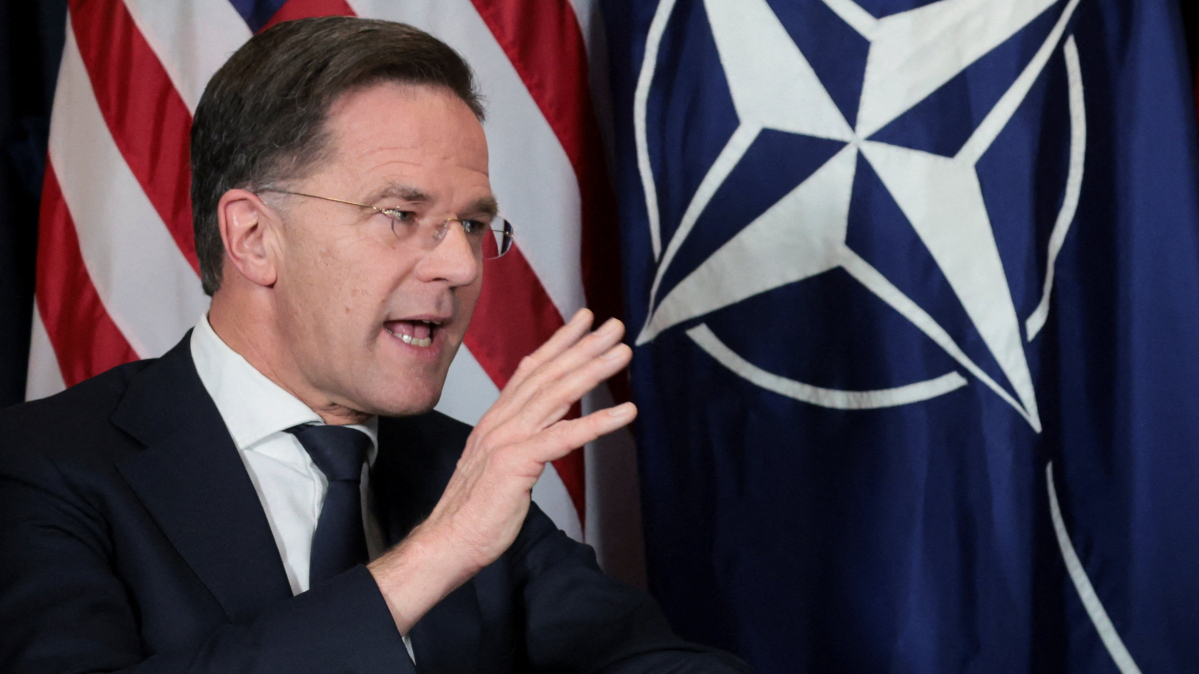
NATO Secretary General Mark Rutte says the status of Greenland did not arise in his talks with U.S. President Donald Trump, as Trump stepped back from tariff threats and ruled out using force to take control of the territory.
Mark Rutte said on Wednesday that the question of whether Greenland would remain with Denmark "did not come up" in his meeting with President Donald Trump.
He made the remarks in an interview on Fox News' Special Report with Bret Baier, hours after Trump abruptly shifted tone on the dispute.
Earlier in the day, Trump moved away from threats to impose tariffs as leverage to seize the island, ruled out the use of military force and said a deal was close to ending the standoff over the Danish territory.
After meeting Rutte, he said Western Arctic allies could reach a framework that would satisfy U.S. aims for a "Golden Dome" missile-defence system and secure access to critical minerals, while stopping Russia and China from expanding their Arctic ambitions.
Trump has previously argued that Washington must own Greenland to prevent either power from gaining influence over the strategically located and minerals-rich island, which houses a U.S. airbase and is an autonomous part of the Kingdom of Denmark.
Rutte was asked in the Fox News interview whether Greenland would still be "under the Kingdom of Denmark in this framework deal".
"That issue did not come up anymore in my conversations tonight with the president," Rutte explained.
He said Trump was focused on how to protect "that huge Arctic region" amid what he described as growing Russian and Chinese activity.
Greenland and Denmark have repeatedly said the island is not for sale. Both countries are NATO members.
Trump’s broader foreign policy has been cast by some experts as imperialist in nature, reflecting concerns that his approach to Greenland is part of a wider strategic push.
Europe urges diplomacy and stronger defence
European diplomats said Trump’s shift in tone eased some immediate tension but did not resolve the dispute, warning that allies still faced difficult negotiations over Greenland.
Denmark said the matter should be handled through private diplomacy, with Foreign Minister Lars Lokke Rasmussen stressing the need for “respect for the integrity and sovereignty of the kingdom and the right of the Greenlandic people to self-determination”.
Spain’s Foreign Minister Jose Manuel Albares urged the European Union to move towards a joint army as a deterrence measure, saying “a joint effort would be more efficient than 27 separate national armies” and that Europe “will not let itself be coerced militarily or economically”.













What is your opinion on this topic?
Leave the first comment