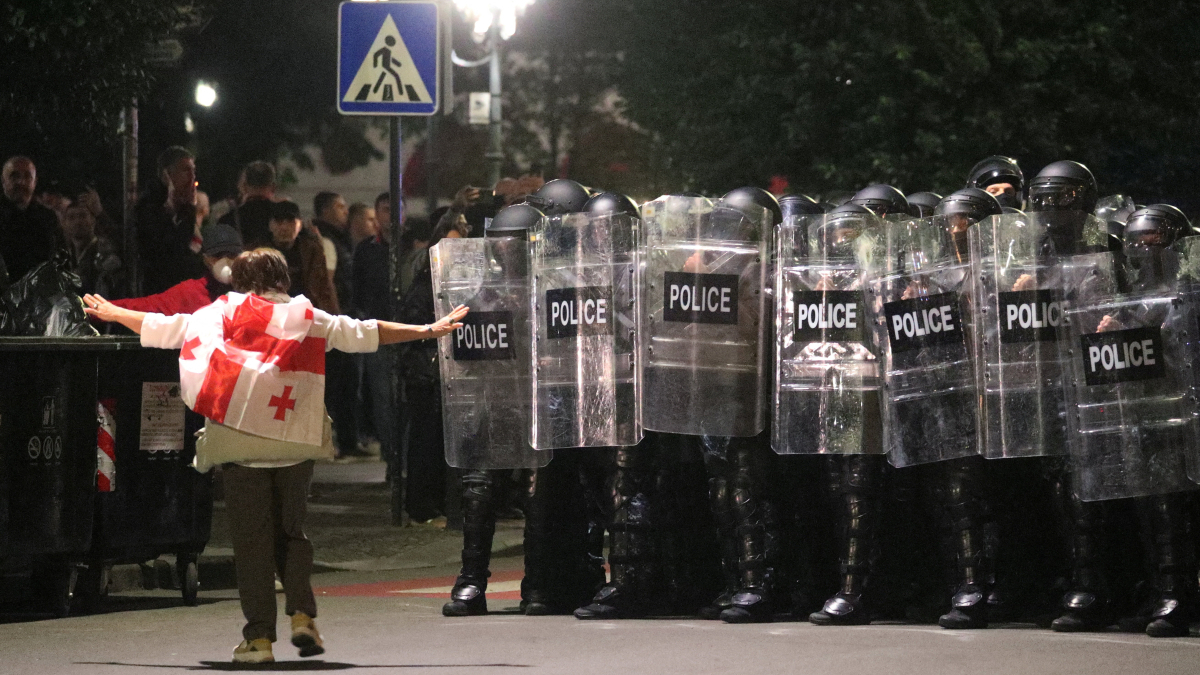
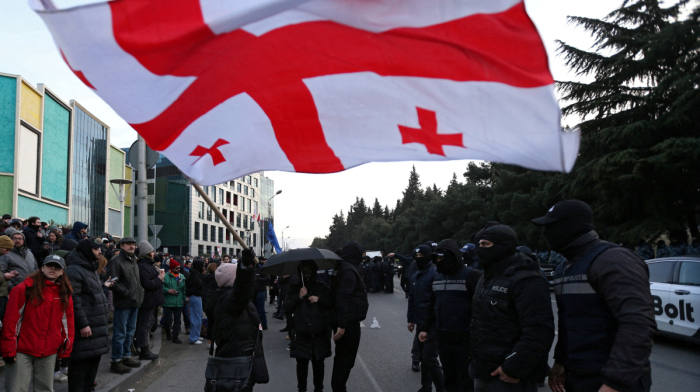
The Georgian Parliament is moving to fast-track amendments that would change how assemblies and demonstrations are organised. Lawmakers say the goal is to improve public order, while civil society groups warn the measures could limit key democratic freedoms.
The ruling Georgian Dream party has submitted expedited amendments to the Law on Assemblies and Manifestations and the Code of Administrative Offenses, introducing new rules for demonstrations held in areas with pedestrian or vehicle traffic.
The draft would require organisers of non-spontaneous gatherings to notify the Ministry of Internal Affairs five days in advance.
It also gives the ministry broader authority to issue warnings, suggest alternative locations or times, and intervene when protests obstruct movement.
The amendments would prohibit intentionally blocking roads with people, vehicles, or structures unless crowd size makes it unavoidable.
If a protest partially or fully blocks a public road, police could order that route reopened and redirect participants if the demonstration can continue elsewhere.
A new 15-minute warning system would allow authorities to declare a gathering illegal and disperse it if a blockage is not cleared within that timeframe.
Supporters say the changes clarify responsibilities and aim to balance freedom of expression with public safety.
Critics, including opposition parties, rights groups, and constitutional lawyers, argue the measures could raise barriers to peaceful assembly by expanding state discretion, limiting spontaneous protests, and increasing administrative liability.
Human-rights organisations have called for broader consultation and a slower legislative process, warning that the accelerated procedure reduces opportunities for public scrutiny.
Parliament is expected to consider and adopt the amendments in the coming days.
A year long protest is ongoing in Georgia following the Government's announcement of the suspension of EU accession negotiations until the end of 2028.
Ties between Tbilisi and Brussels have cooled even further with the EU criticising Georgia's 'backsliding democracy' and declining media freedom.













What is your opinion on this topic?
Leave the first comment