




11:16 CET
Nuclear security
Georgia arrests man over attempted $700,000 uranium sale
Georgia has detained a man ...



A delegation from Georgia's ruling party visits Washington for a Congress and sovereignty summit this week, however analysts say Georgia remains largely absent from current U.S. regional priorities.
A party from the Georgian Dream travelled to Washington seeking to revive ties with the United States, holding meetings with several members of Congress and attending an international conference on sovereignty and security.
However, while Georgian officials described the visit as a sign of improving dialogue, the broader geopolitical picture suggests that Georgia is not currently at the centre of Washington’s South Caucasus agenda.
The delegation was led by Nikoloz Samkharadze, chairman of the parliamentary Foreign Relations Committee. According to Samkharadze, the group met several U.S. lawmakers during their visit to Capitol Hill.
“Today we finished our meetings in Congress - we had the opportunity to talk to five congressmen, mainly members of the Foreign Relations Committee,” he said.
Among those the delegation met were Keith Self, Chairman of the Europe Subcommittee, as well as Randy Fine, Mike Turner, Ryan Zinke, and Ana Paulina Luna.
The group also participated in the first summit organised by the Alliance of Sovereign Nations, an international gathering focused on sovereignty, national identity and cooperation between countries.
Georgian officials said discussions covered regional security, Russia’s occupation of Georgian territories, developments in Iran and the role of Georgia in the so-called Middle Corridor - a trade and transport route linking Europe and Asia through the South Caucasus.
Samkharadze said the Georgian side hopes to move relations with Washington “to a new stage”.
Georgia’s relationship with the United States has faced tensions in recent years. During the administration of Joe Biden, U.S. officials repeatedly raised concerns about democratic backsliding in Georgia.
These concerns affected political dialogue and limited some aspects of the traditionally close strategic partnership between the two countries.
Members of the Georgian Dream delegation said the tone in Washington now appears more pragmatic.
Mariam Lashkhi, Chair of the Parliamentary Committee on Education, Science and Youth Affairs, said the rhetoric she encountered during meetings was different from what Georgian officials had previously heard.
“Our meetings are very pragmatic and concern not only restoring strategic cooperation between Georgia and the United States, but also improving it,” she said.
Despite these diplomatic efforts, recent U.S. engagement in the South Caucasus has focused more heavily on other regional actors.
The administration of President Donald Trump has shown active involvement in diplomatic efforts between Armenia and Azerbaijan, particularly around the peace process following years of conflict over Nagorno-Karabakh.
Washington has also supported regional connectivity initiatives tied to that process. One of the most widely discussed proposals is the Zangezur corridor, sometimes referred to in broader regional planning as part of the TRIPP road initiative, the Trump Route for International Peace and Prosperity.
The project will link Azerbaijan to its exclave of Nakhchivan through Armenia and connect broader trade routes between the Caspian region and Türkiye.
While Georgia supports regional connectivity projects and promotes the development of the Middle Corridor, these initiatives do not currently place the country at the centre of Washington’s diplomatic engagement in the region.
During meetings in Washington, Georgian officials highlighted their country’s role as a transit hub between Europe and Asia.
The Middle Corridor - which runs from Central Asia through the Caspian Sea, Azerbaijan and Georgia before reaching Europe - has gained attention in recent years as an alternative trade route that bypasses Russia.
Members of the Georgian delegation said U.S. lawmakers showed interest in the project and Georgia’s position within it.
Still, discussions about the corridor remain largely strategic and long-term, and concrete policy shifts or new U.S. initiatives involving Georgia have not yet emerged from the meetings.
The visit by the ruling party also comes as Georgia’s newly formed opposition coalition - often referred to as the Opposition Alliance, which brings together several opposition parties - plans its own outreach to Washington.
Opposition leaders say they want to strengthen relations with Western partners and present themselves as an alternative political force in Georgia’s foreign policy direction.
The parallel diplomatic efforts highlight how relations with the United States remain a central issue in Georgia’s political debate.
For now, however, the latest meetings in Washington appear to be an attempt to reopen dialogue rather than a clear sign of renewed strategic engagement.

Georgia has detained a man ...
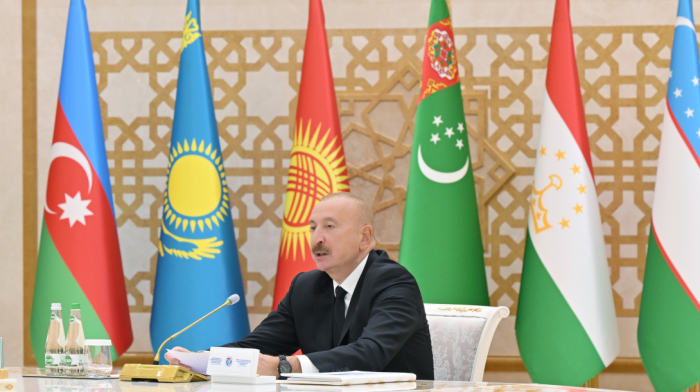
Azerbaijan and the five Central Asian states have signed two key documents at the 8th Consultative Meeting of Heads of State in Turkmenbashi, forma...
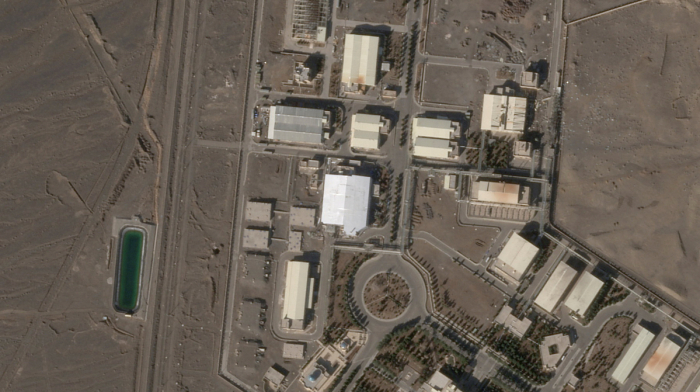
U.S. Vice President JD Vance told Reuters on Monday (5 October) that ...

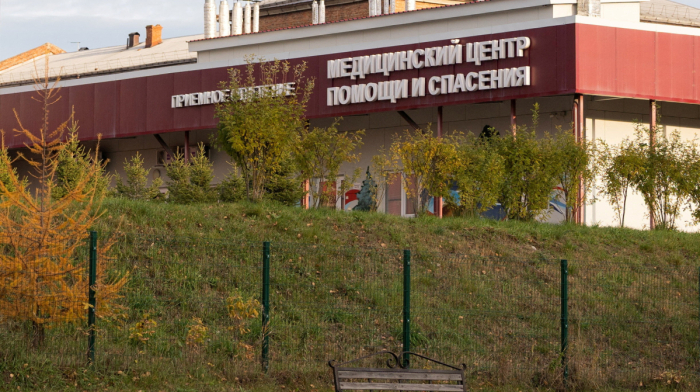
Russia's health watchdog said on Tuesday that no cases of plague had been detected among anyone who had come into contact with a Siberian plague institute laboratory worker who died last week, and locals said their lives had barely been disrupted.

Russia struck Ukraine overnight in one of the biggest attacks of the conflict, killing at least 19 people, Kyiv's Foreign Ministry said on Wednesday. Around 70 missiles were fired at Ukraine during the attack, as well as drones, the Ministry said.

A large Ukrainian drone attack on Moscow and the surrounding region has killed two people, damaged homes and sparked a major fire at a key fuel facility, according to Russian officials and military bloggers.
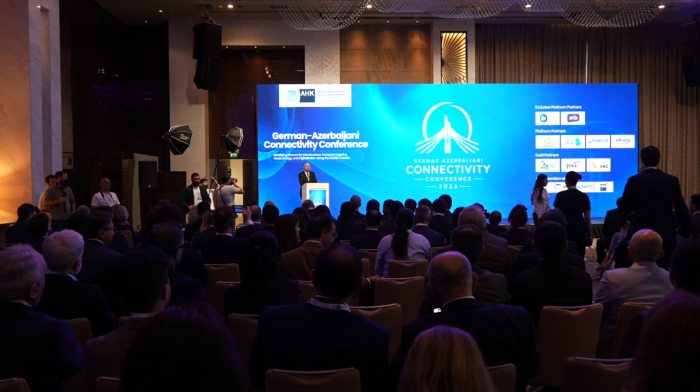
The German-Azerbaijani Connectivity Conference 2026 commenced on 6 October in Baku under the title “Mobilising Finance for Infrastructure, Transport, Logistics, Green Energy, and Digitalisation along the Middle Corridor.”
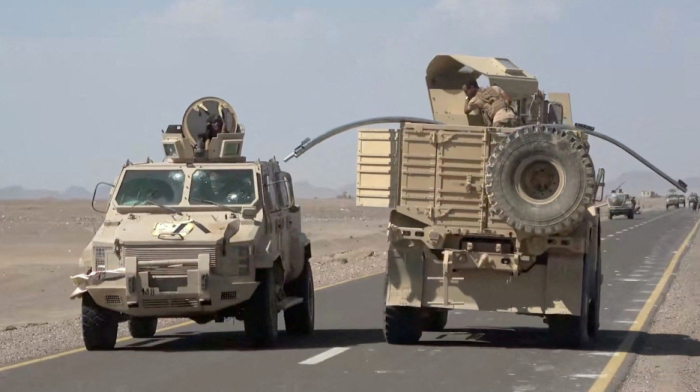
The Saudi-led coalition says it has carried out a series of military operations against Houthi targets in Yemen after attacks on two Saudi airports left three people dead and dozens injured.
Georgia has detained a man who planned to sell uranium-238 to a foreign national for $700,000, the national security service said on Wednesday.
Azerbaijan and the five Central Asian states have signed two key documents at the 8th Consultative Meeting of Heads of State in Turkmenbashi, formalising a broader framework for regional cooperation in transport, trade, energy, digitalisation and security.
U.S. Vice President JD Vance told Reuters on Monday (5 October) that Iran must make a “meaningful” reduction in its uranium enrichment capacity to satisfy U.S. demands and end the countries' seven-month war.
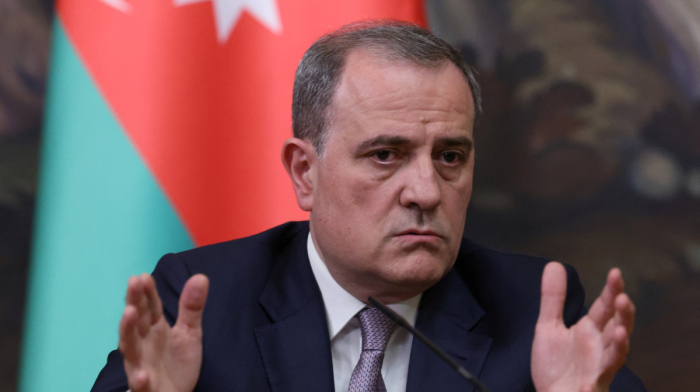
Azerbaijan’s Foreign Minister Jeyhun Bayramov has called for further integration of infrastructure between regional countries to bolster the Middle Corridor trade and logistics network.
The Saudi-led coalition says it has carried out a series of military operations against Houthi targets in Yemen after attacks on two Saudi airports left three people dead and dozens injured.
You can download the AnewZ application from Play Store and the App Store.




What is your opinion on this topic?
Leave the first comment