While a fragile ceasefire in the Iran war may deliver badly needed relief to economies battered by the world’s worst-ever energy crisis, hopes it will quickly restore normal oil and gas flows from the Middle East are almost certainly misplaced.
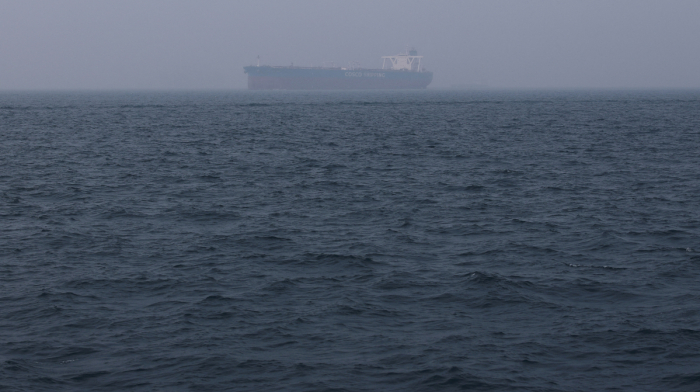
The attacks disrupted commercial shipping in the Gulf, a key source of fuel and petroleum products for Europe. The interruption immediately drove up prices for these energy supplies on financial markets.
The consequences were compounded by Europe’s earlier shift away from Russian energy following its invasion of Ukraine, leaving the continent more reliant on imports from the Gulf region.
Around 20% of global oil - including supplies from Saudi Arabia, the United Arab Emirates, Iraq, Kuwait and Iran - passes through the Strait of Hormuz, along with large volumes of liquefied natural gas (LNG) from Qatar.
Crude oil prices surged above $110 per barrel at the height of the conflict, before settling at $96.31 a barrel one day after the cautious ceasefire.
European gas prices climbed to roughly €50-€60 per megawatt-hour during the peak of the conflict, up from a pre-war price of €30/MWh.
In its December projections, the European Central Bank (ECB) assumed a natural gas price of €29.6/MWh and a crude oil price of $62.5 for this year.
The ECB’s March projections suggested that quarterly average oil and gas prices will peak at around $90 per barrel and €50 per MWh respectively in the second quarter of 2026, before declining over subsequent quarters.
Long-term effects
On 8 April, the European Trade Union Confederation (ETUC) reported that a 50% average increase in energy costs this year would raise the average EU household energy bill from €3,792 to €5,688 ($4,171 to $6,257), equivalent to just over 12% of total household expenditure.
ETUC General Secretary Esther Lynch added that high energy prices were already “destroying Europe’s manufacturing base” and “driving millions of working people into poverty” prior to the current conflict.
On 8 April, European Commission spokesperson Anna-Kaisa Itkonen told reporters that the crisis will not be short-lived.
According to Itkonen, around 8.5% of the bloc’s LNG, 7% of its oil, and 40% of its jet fuel and diesel pass through the Strait of Hormuz, access to which Iran has largely restricted during the war.
"What we can already foresee is that this crisis will not be short-lived," she said. "It's a very, very important choke point, obviously."
The Danish experience
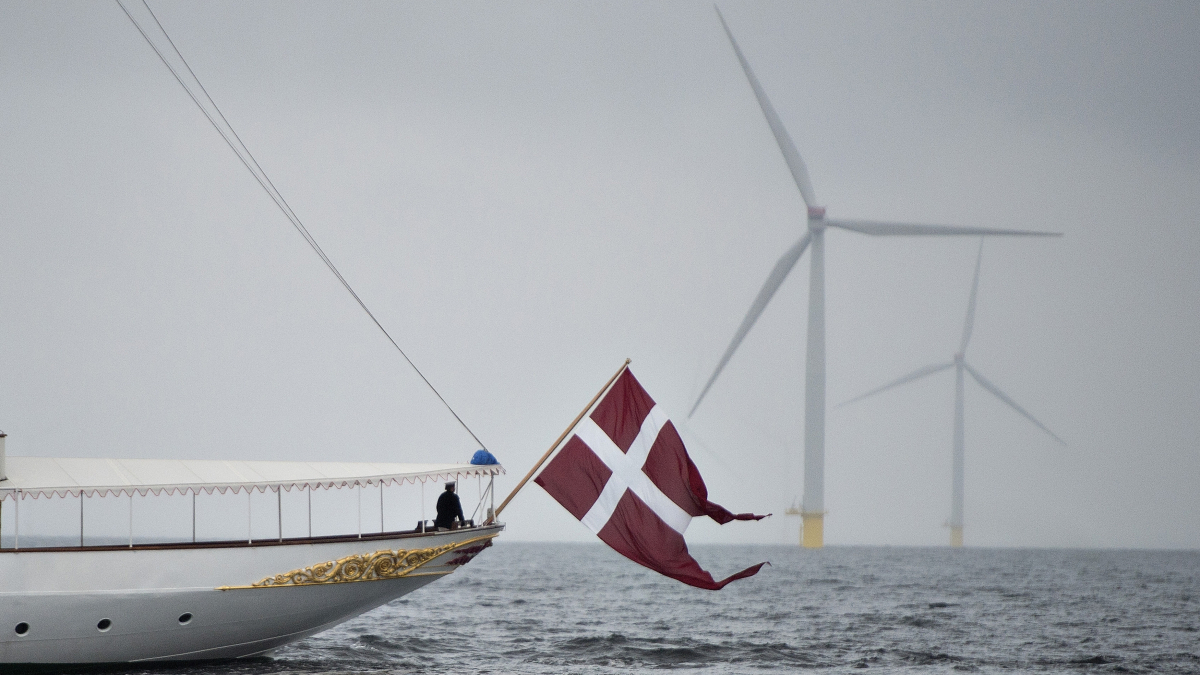
One European country less exposed to the energy shock, due to its high share of wind power and rapid deployment of biomethane and electrified heating systems, is Denmark.
Denmark generates around 55% of its electricity from wind and more than 80% from renewable sources overall, making it one of the least fossil fuel-dependent power systems in Europe.
According to the International Energy Agency (IEA), Denmark has the highest share of wind-generated electricity among member countries. Together with bioenergy and solar photovoltaic, this accounts for more than 80% of its electricity mix.
Fossil fuels account for no more than around 15-20% of electricity generation.
Denmark’s heating sector has effectively phased out coal, contributing to a lower reliance on fossil fuels in its overall energy supply.
The IEA says Copenhagen is committed to ending fossil fuel production by 2050, while achieving 100% biomethane in heating before 2030 has become a key priority.
While still exposed to market-driven price spikes affecting the rest of Europe, Denmark is considered structurally more resilient to the crisis.
Its renewable-heavy grid has softened the impact of Europe’s energy crisis, although it has not entirely shielded the country from price shocks.
In March, Denmark’s annual inflation rate rose to 1.2%, up from 0.7% in February, driven mainly by higher transport costs - particularly fuel prices - according to official data from Statistics Denmark.
Core inflation, which excludes energy and unprocessed food, edged down slightly to 1.7% year-on-year in March from 1.8% in February.











What is your opinion on this topic?
Leave the first comment