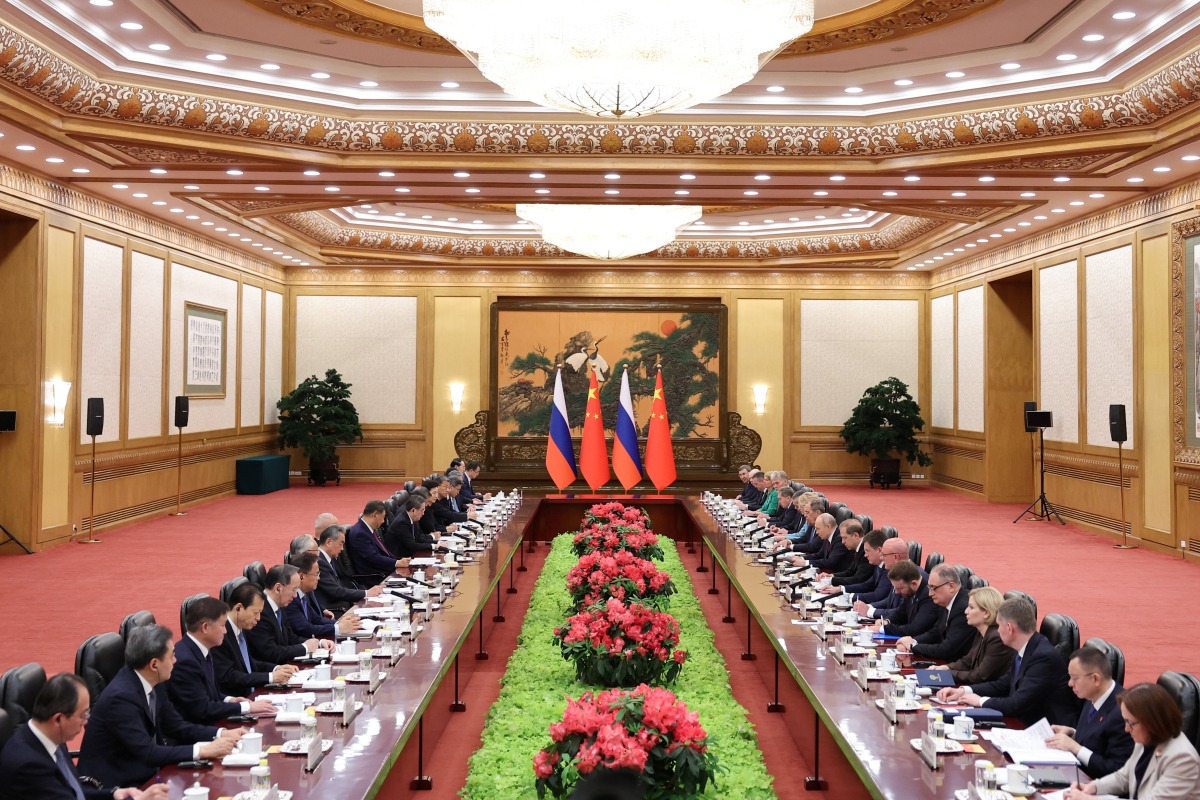
Chinese President Xi Jinping and Russian President Vladimir Putin praised bilateral ties during talks in Beijing on Wednesday, before Putin departed China later in the day.
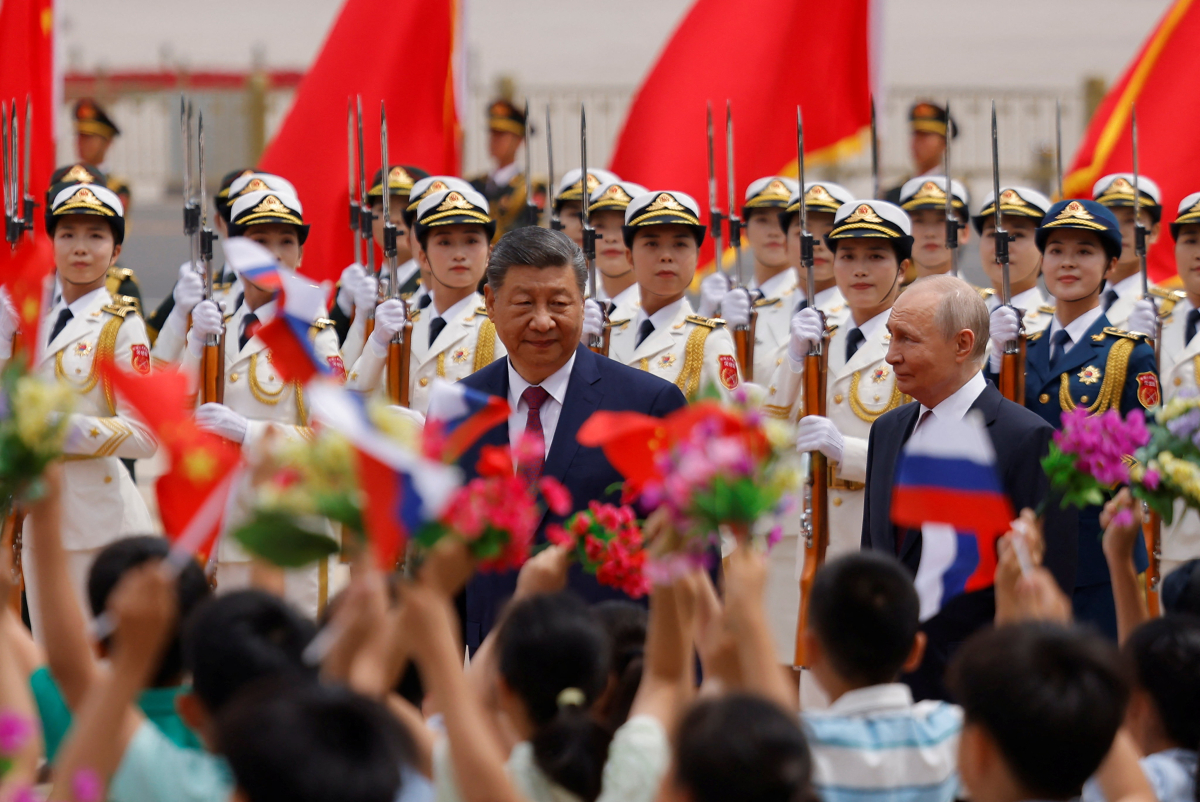
President Xi Jinping welcomed President Vladimir Putin with an honour guard and a gun salute at the Great Hall of the People, as children waved Chinese and Russian flags. Alongside formal talks, the pair are expected to cap the day with an intimate meeting over tea.
Coming on the heels of U.S. President Donald Trump's visit to the Chinese capital, the optics and outcomes of the summit between the Chinese and Russian presidents will be closely scrutinised and compared.
Xi said the two countries should focus on long-term strategy and promote a "more just and reasonable" global governance system, according to a transcript from Chinese state news agency Xinhua.
"The reason China-Russia relations have reached this level is because we have been able to deepen political mutual trust and strategic cooperation," Xi said at the start of his meeting with Putin.
The Russian President said their relations were helping ensure global stability and stressed that Russia remained a reliable energy supplier amid Middle East disruption.
"Even against the backdrop of unfavourable external factors, our cooperation and economic ties continue to demonstrate good...dynamics," said Putin, who added that he had invited Xi to visit Russia next year.
Tea diplomacy
Xi is known for hosting visiting leaders over tea, but the setting and manner of such encounters can be viewed as a signal of the Chinese leader's regard for his guest.
When Xi hosted Putin for talks in May 2024, the pair ditched their ties as they spoke over tea outdoors in Zhongnanhai, a former imperial garden that now houses the offices of the ruling Communist Party and the government.
In contrast, Trump's stroll through a secret garden and tea with Xi in the same compound, as well as a tour of the Temple of Heaven last week, appeared more choreographed.
"Beijing is loving the optics of this. They're loving being the centre of world attention, and they will be playing it for their domestic audience for all that it's worth," said Graeme Smith, a senior fellow at the Australian National University's Pacific Affairs department.
The rare back-to-back visits to Beijing by the leaders of two major countries deeply at odds with each other politically, militarily and economically have been hailed by Chinese state media as recognition of China's global standing in an increasingly fragmented world order.
High expectations
Putin, who has called Xi a "dear friend" and been labelled an "old friend" by the Chinese leader, arrives at a time when bilateral trade is improving after a downturn last year. Two-way trade rose 16.1% in the first four months of this year over the same period in 2025 in value terms.
Trade between China and Russia was worth 1.63 trillion yuan ($240 billion) in 2025, down 6.5% from a record in 2024 and marking the first decline in five years.
Putin has acknowledged the need to reverse the downtrend, a nod to China's importance as an economic lifeline for sanctions-hit Moscow as the war in Ukraine takes a toll on its economy. He was accompanied by a delegation including deputy prime ministers, ministers and heads of state corporations and major banks.
The Kremlin set "serious expectations" for Putin's visit, which, alongside talks, included a signing ceremony and a banquet followed by a tea where the two leaders discussed key international issues in an informal setting.
Strengthening partnership
Some 40 documents were due to be signed and a 47-page joint statement on their strengthening partnership was issued, according to the Kremlin.
Negotiations on the Power of Siberia 2 gas pipeline, which is due to link Russia to northern China, were also thought to be on the cards, industry experts said.
The so-called "no limits" partnership between China and Russia has strengthened since the West imposed sanctions to punish Russia for the war in Ukraine.
Energy supply shortages linked to the conflict in Iran may back Russia's case for the pipeline as a long-term gas source, but Beijing may want to stick to its supply diversification strategy.
Read more:














What is your opinion on this topic?
Leave the first comment